
Rental Property Tree Care: Responsibilities for Landlords & Tenants
Rental property tree care covers the identification, maintenance, and mitigation of tree-related risks on leased properties to protect safety, reduce liability, and preserve asset value. This guide is written for landlords, property managers, and tenants who need clear, practical rules for who does what, how to spot hazardous trees, and when to involve a certified arborist. Many landlords benefit from proactive inspections and documented actions that reduce the chance of property damage, tenant injury, and insurance disputes; tenants benefit from clear lease clauses and reporting procedures that define reasonable yard duties. Below we explain responsibility splits, step-by-step hazard management, the professional services that matter for rental portfolios, and typical costs plus financial benefits of preventive care. Read on for sample lease language, an emergency triage flow for hazardous trees, comparison tables of core services, and tax-deduction guidance for routine tree care and safety work.
Who is Responsible for Tree Maintenance on Rental Properties?
Responsibility for tree maintenance on rental properties typically defaults to the landlord for major work and to the tenant for routine, minor yard care when the lease explicitly assigns those tasks. Landlords retain duty of care for large trees, limb removal, and actions that affect structures or public safety; tenants may accept obligations for mowing, removing small saplings, and reporting issues. Clear lease language and documented inspection schedules reduce disputes and help meet duty-of-care expectations, so landlords should spell out reporting procedures and liabilities. The following lists show common allocation rules and sample lease clauses to use as starting points.
- Landlord responsibility: major pruning, hazardous tree removal, stump grinding, and compliance with local ordinances.
- Tenant responsibility: routine yard maintenance, watering, and prompt reporting of damage or observed hazards.
- Shared duties: minor branch cleanup after storms when explicitly defined in lease language.
These allocation rules help set expectations and avoid ambiguity when safety issues arise; the next subsection explains landlord obligations and liability risks in more detail.
What Are Landlord Tree Care Obligations and Liability Risks?
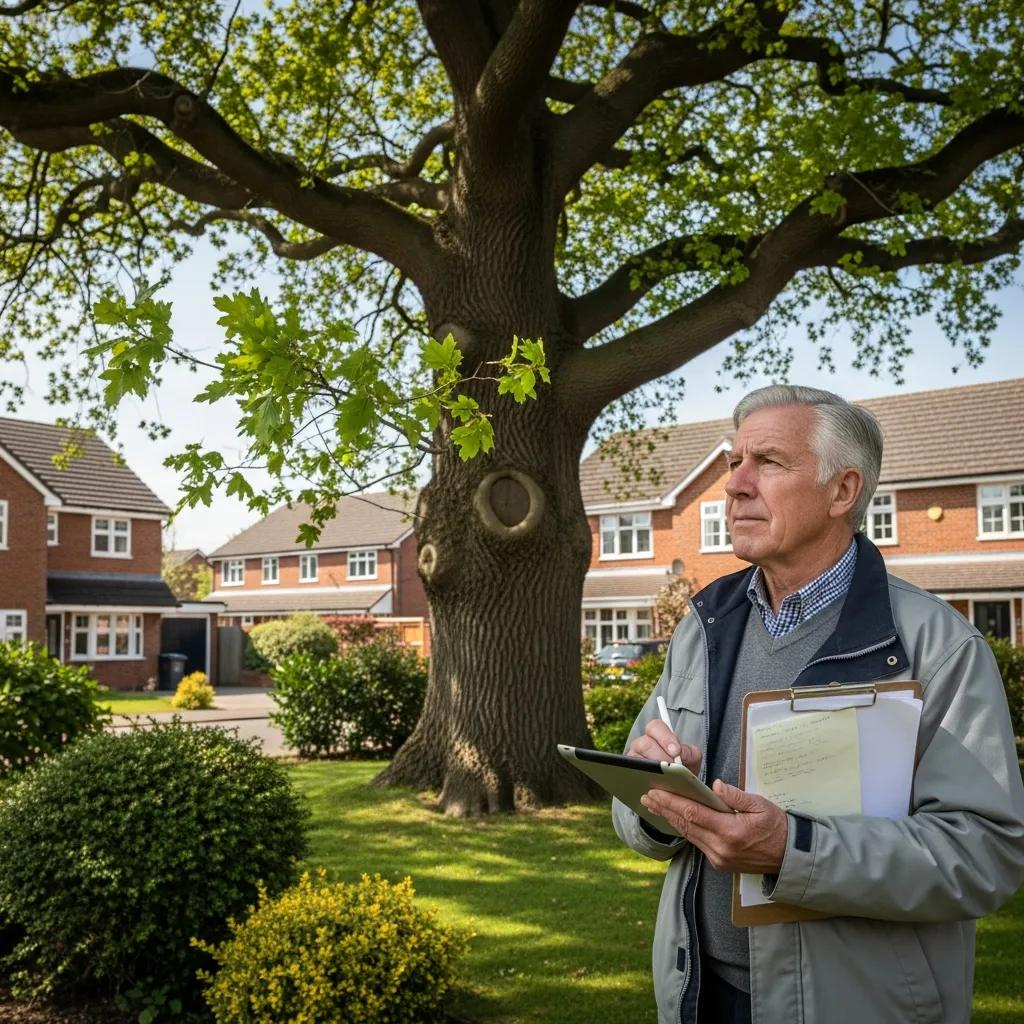
Landlords owe a duty of care to prevent foreseeable tree-related hazards that could harm tenants, visitors, or neighboring property, which means routine inspections and timely corrective action are essential. Negligence can arise if a landlord knew or should have known about a defect—such as a large dead limb—and failed to remediate it, potentially exposing the owner to liability for damages or personal injury. Landlords should document inspection dates, findings, tenant reports, and corrective work to support reasonable-care defenses with insurers and in disputes. Regular inspection schedules (for example, after major storms and annually) and prompt documentation of remediation create a defensible maintenance record and reduce long-term costs.
What Tenant Tree Maintenance Duties Should Be Included in Lease Agreements?
Tenants can be assigned reasonable, non-technical tasks while leases should prohibit unauthorized major tree work that risks safety or property damage. Sample clauses typically require tenants to report dead limbs, leaning trees, or root damage within a set timeframe, and to perform light maintenance like leaf removal and minor sapling weeding. Tenants must be explicitly forbidden to cut large branches, remove trees, or perform stump grinding without written landlord approval to prevent unsafe actions and liability shifts. Clear enforcement language and a defined landlord response time—such as acknowledging reports within 48 hours—help ensure hazards are addressed without tenants attempting dangerous DIY fixes.
How to Manage Hazardous Trees and Ensure Safety on Rental Properties?
Managing hazardous trees begins with correct identification, immediate safety steps, and a clear escalation path to professional assessment, which together limit risk and legal exposure. A practical triage flow is: observe or receive tenant report → secure the area if there is imminent danger → document photos and notes → call a certified arborist for assessment and schedule emergency removal when required. For properties in the Wake County / Research Triangle area, professional rapid-response services and certified-arborist assessments are central to safe mitigation. Below is a numbered decision flow that landlords and tenants can follow when a hazardous tree is suspected.
- Identify hazard: look for large dead limbs, significant lean, cracked trunks, or root heave near structures.
- Secure the area: restrict access to the immediate danger zone and notify tenants and neighbors.
- Document and report: take photos, note dates, and file a maintenance request with the landlord or manager.
- Call a professional: contact a certified arborist or emergency tree service when the tree threatens structures or people.
Following this flow reduces response time and helps preserve evidence for insurance or liability issues; the next subsection clarifies when removal or pruning is appropriate.
When Should Hazardous Trees Be Removed or Pruned?
Removal versus pruning decisions rest on criteria such as disease extent, structural instability, proximity to people or buildings, and recent storm damage that compromises integrity. Trees with irreversible decay, critical root loss, or severe trunk failure generally require removal on an expedited timeline, while structurally compromised but salvageable trees may benefit from corrective pruning and bracing. Emergency removals should be completed immediately when a tree poses imminent risk, whereas scheduled pruning can be planned for lower-risk cases to reduce cost and disruption. Permit requirements and local ordinances—including those in Raleigh and Wake County—can affect timelines, so verify local rules before major work.
What Are the Consequences of Neglecting Hazardous Trees?
Neglecting hazardous trees increases the risk of property damage, personal injury, higher emergency removal costs, and complicated insurance claims that may be denied for lack of maintenance documentation. Beyond direct costs, tenant safety concerns and increased turnover can erode rental income, while legal claims can result in additional liability expenses and reputational harm. Preventive pruning and timely removal typically cost less than emergency responses and litigation, creating a clear financial incentive to act proactively. Regular maintenance therefore reduces long-term expense escalation and preserves both safety and asset value.
What Professional Tree Care Services Are Essential for Rental Properties?
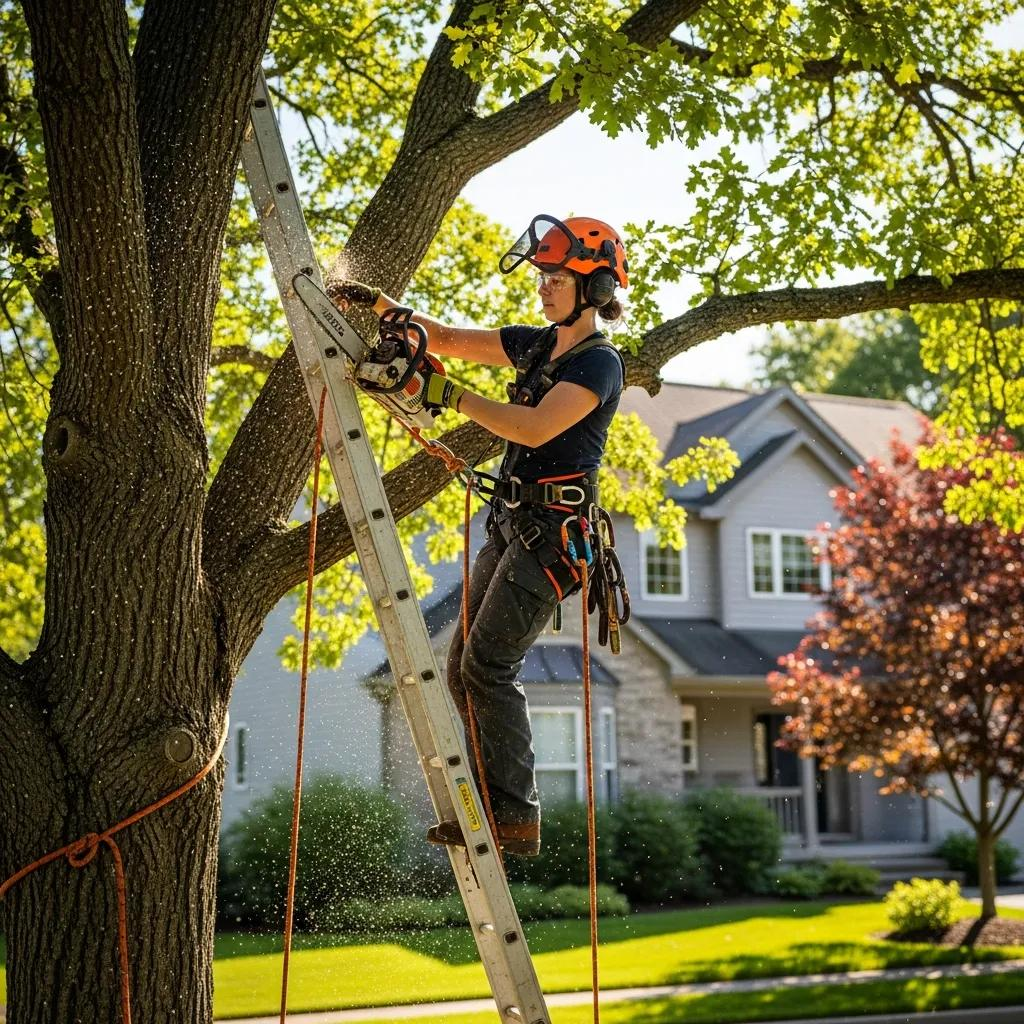
Professional tree care services landlords rely on include health and risk assessments, pruning, hazardous tree removal, stump grinding, and 24/7 emergency response to storm damage—each serving a distinct role in safety and asset protection. Certified arborist assessments identify structural defects and create prioritized work plans; pruning manages canopy weight and disease; removal and stump grinding address clear hazards and site restoration; emergency response contains immediate threats after storms.
The quick list below shows when each service is typically used and why landlords should include service clauses in vendor agreements.
- Assessment: for portfolio risk ranking and maintenance planning.
- Pruning: to reduce branch failure and extend tree life.
- Removal: for dead, diseased, or irreparably unstable trees.
- Stump grinding: to eliminate tripping hazards and enable site reuse.
This service mix supports both safety and tenant satisfaction; the table that follows compares common services and their typical uses and frequencies.
Introductory note: The table below helps landlords compare core tree care services by common rental-property use and typical cost or frequency expectations.
| Service | Typical Uses on Rental Properties | Typical Cost Range / Frequency |
|---|---|---|
| Arborist Assessment | Risk ranking, health evaluation for large trees | One-time per property or annually; variable cost per inspection |
| Tree Pruning | Structural pruning, clearance from buildings/power lines | Routine every 3–5 years; moderate per-tree cost |
| Hazardous Tree Removal | Immediate risk removal after failure or severe disease | One-off emergency or scheduled removal; higher per-tree cost |
| Stump Grinding | Eliminate hazards, prepare site for landscaping | As-needed after removal; moderate one-time cost |
This comparison clarifies which services should be budgeted and scheduled to maintain safety and curb appeal; next we note how professional providers can assist with emergency triage.
Integration note: For landlords in Raleigh or surrounding Wake County, hiring a local firm with certified arborists, 24/7 emergency response, free estimates, and Spanish-speaking staff offers practical advantages for rapid assessment and documentation. Henry’s Tree Service provides certified-arborist assessments, emergency tree removal, pruning, and stump grinding across the Research Triangle area and can supply free estimates to support maintenance planning.
Summary: Professional services backed by certified arborists and emergency capacity shorten response times and improve documentation for liability and insurance purposes.
How Does Tree Trimming Improve Rental Property Safety and Value?
Tree trimming reduces the likelihood of limb failure near structures, lowers pest and disease spread, and enhances visual curb appeal that influences tenant retention and market value. Correct pruning targets weak unions and dead wood, improving structural integrity while stimulating healthy growth that reduces future maintenance needs. Recommended pruning schedules vary by species and site conditions, but routine trimming every 3–5 years for mature trees is a common preventive approach. Relying on certified arborists ensures pruning decisions preserve tree health and comply with local ordinances, which supports longer-term value preservation.
When Is Tree Removal or Stump Grinding Necessary?
Removal is necessary when trees are structurally unsound, extensively diseased, or create persistent conflict with structures, utilities, or safety zones; stump grinding is useful afterward to remove trip hazards and simplify replanting. Indicators for removal include extensive trunk decay, root failure, severe lean, or repeated limb collapse. Stump grinding accelerates site restoration and prevents regrowth, enabling quicker landscaping or redevelopment of rental units. Always confirm local permitting rules and restoration expectations before removal, as local ordinances in Wake County or Raleigh may require permits or replanting.
How Much Does Tree Care Cost for Rental Properties and What Are the Financial Benefits?
Tree care cost ranges vary widely based on tree size, accessibility, permit needs, and emergency status, but proactive maintenance generally yields lower lifetime costs and reduces the chance of costly emergency interventions. Typical cost drivers include tree height and diameter, proximity to structures or utilities, site access for equipment, and whether work is emergency or scheduled. Preventive pruning and assessments reduce the frequency of large removals and insurance claims, producing measurable ROI through fewer emergency charges and lower liability exposure. The following table breaks down major cost factors and their impact on price or ROI.
Introductory note: The table below summarizes cost drivers landlords should evaluate when budgeting for tree care across a rental portfolio.
| Cost Factor | What Affects It | Typical Impact on Price or ROI |
|---|---|---|
| Tree Size/Species | Larger or hardwoods increase labor and equipment needs | Significant price increase; higher removal cost |
| Accessibility | Tight yards or proximity to structures require special rigs | Increases cost and scheduling complexity |
| Permits & Ordinances | Local rules may require inspections or tree protection | Adds time and potential fees; affects ROI timing |
| Emergency vs Scheduled | Storm response is faster but more expensive | Emergency work raises cost; preventive care lowers lifetime expense |
Summary: Understanding these drivers helps landlords prioritize investments that reduce long-term costs and liability exposure.
What Factors Influence Tree Removal and Maintenance Costs?
Factors that most influence price are tree size and species, site access and proximity to structures, required permits, and whether the work is emergency response or scheduled maintenance. For example, a small ornamental tree in an open yard is far less expensive to remove than a large hardwood leaning over a roof with restricted access. Getting multiple written estimates—preferably from certified-arborist providers who offer free estimates—helps landlords compare scope and value, and bundled portfolio assessments can improve cost predictability. Henry’s Tree Service offers free estimates and can perform cost and ROI assessments for property portfolios in the Wake County and Research Triangle area to inform budgeting decisions.
Can Tree Care Expenses Be Tax Deducted by Landlords?
Tree care for rental properties is generally treated as an ordinary and necessary maintenance expense when the work preserves the property’s operability or safety, making it potentially tax-deductible in the tax year the expense is incurred. Major work that materially improves the property or extends its useful life may be capitalized and depreciated instead, so classification depends on the nature and scope of the work. Emergency limb removal or pruning for safety tends toward deductible maintenance, while extensive landscape overhauls may be capital improvements. Landlords should consult a tax professional for property-specific guidance and to align recordkeeping with IRS rules.