
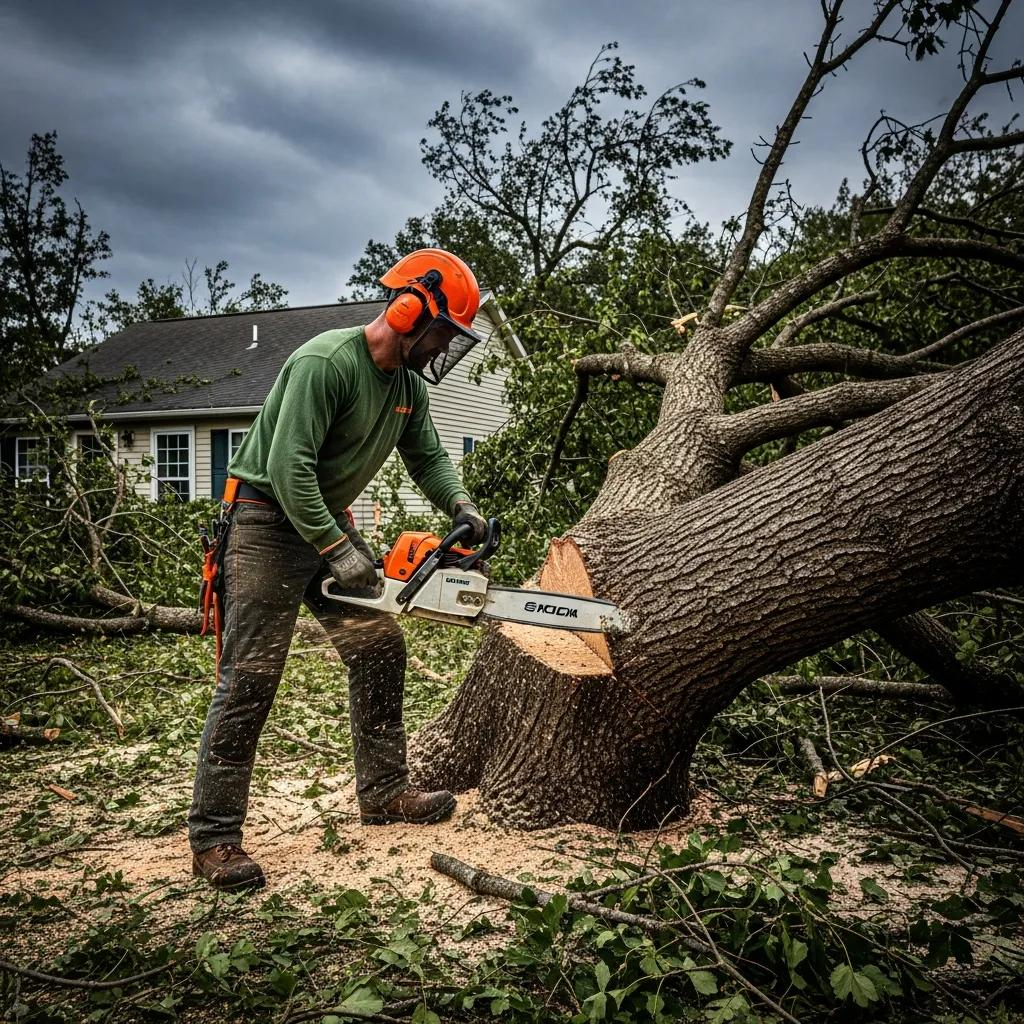
Emergency Tree Removal & Storm Cleanup in Raleigh, NC — Rapid Response, Expert Care
A strong storm can turn a healthy tree into an immediate hazard in minutes. Emergency tree removal is the safe, prioritized process of assessing, stabilizing, and removing tree material that threatens people, homes, utilities, or access. This guide helps you recognize true emergencies after wind, hail, or hurricane events and explains what to expect from rapid-response storm damage tree removal and fallen tree cleanup. You’ll find clear triage steps, how our certified arborists evaluate structural failure, the common services performed after a storm, and practical tips for working with insurance. We also cover preventative care and follow-up to reduce repeat emergencies and protect your landscape’s value. Keywords like storm damage tree removal, fallen tree cleanup, emergency tree cutting Raleigh, and storm debris hauling NC are included so you can find precise guidance when every minute counts.
When Is Tree Damage an Emergency After a Storm?
An emergency is any situation where a tree or large limb poses an immediate threat to life, structures, utilities, or emergency access and needs urgent action. Emergencies usually come from structural failure—rootplate uplift, trunk splits, or suspended limbs—that can worsen quickly in wind or heavy rain, creating risks like collapse, contact with power lines, or blocked escape routes. Spotting these warning signs lets homeowners prioritize safety and call emergency tree removal Raleigh services without delay. The section below lists the specific tree conditions that typically require immediate removal or cleanup so you can triage correctly and avoid common mistakes.
Which Tree Conditions Require Immediate Removal or Cleanup?
Look for clear signs that a tree needs urgent removal: a split trunk exposing heartwood, a tree resting on a roof or vehicle, a large limb suspended over a play area, or an uprooted rootball with an increasing lean. Those signs mean the tree’s load-bearing capacity is compromised and collapse is more likely—audible creaking or cracking in wind raises the danger. Immediate steps are simple: evacuate the area, keep a safe perimeter, and call emergency responders or an emergency arborist. Do not attempt DIY cuts. Knowing these severity indicators helps you decide between emergency removal and scheduled mitigation.
How Do Fallen Trees and Hazardous Limbs Affect Safety and Access?
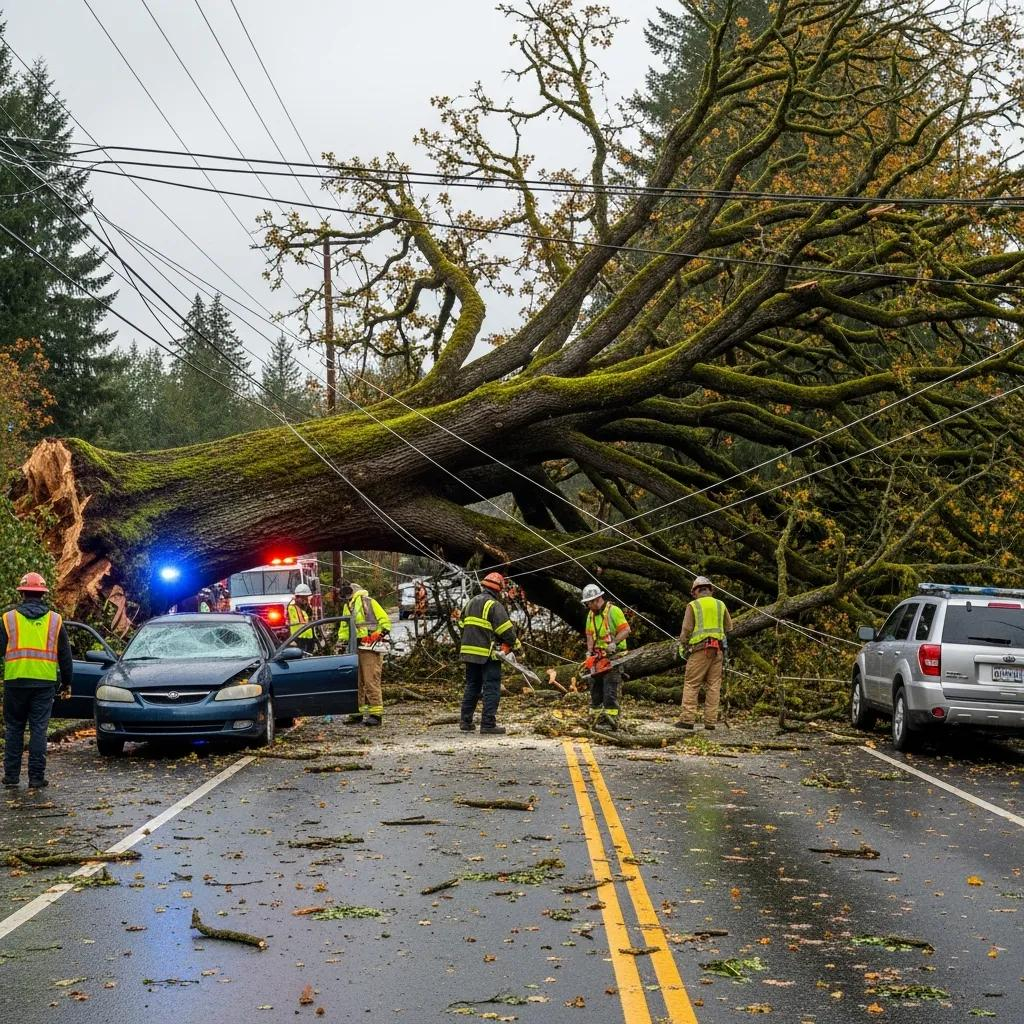
Fallen trees and dangerous limbs create multiple risks: they can puncture roofs, crush vehicles, snap utility lines, block driveways and roads, and slow first responders. A blocked driveway can delay medical or fire services, so access impacts often determine priority. If a tree contacts a powerline, stay clear and notify the utility company first—arborists coordinate with utilities before any removal. Recognizing how hazards affect safety and access helps you decide whether you need an immediate emergency response or a next-day cleanup.
Use this quick checklist to match common indicators with recommended immediate actions before professionals arrive.
| Scenario | Clear Indicator | Recommended Immediate Action |
|---|---|---|
| Tree on House | Structure breached or weight visible on roof or through siding | Evacuate areas under load, secure a clear perimeter, call emergency tree service |
| Tree on Powerline | Tree touching live wires, visible sparks or arcing | Keep everyone away, call the utility immediately, do not attempt removal |
| Leaning / Uprooted Tree | Exposed rootplate, increasing tilt, or cracking in the trunk | Keep people and vehicles clear, watch for movement, contact an emergency arborist |
| Hanging Limb (Widowmaker) | Large limb suspended over yard, walkway, or driveway | Clear the area beneath the limb, avoid using it, arrange priority removal |
This table gives a simple triage framework so you can act quickly and describe the hazard clearly to emergency dispatchers and arborists.
How Does Henry's Tree Service Handle 24/7 Emergency Storm Response?
Henry’s Tree Service runs a 24/7 emergency response built on fast dispatch, on-site assessment by certified arborists, and coordinated safety with utilities and traffic control when needed. Our process starts with an around-the-clock intake that prioritizes calls by severity. Crews arrive to secure safety perimeters, perform load-relief cuts, and stage removals to protect structures and access. We use rope-and-rigging techniques, bucket trucks, and partner with crane providers when heavier lifts are required. This approach reduces collateral damage, restores access quickly, and ensures all work follows industry safety standards.
Here are the core operational steps you can expect during a rapid response.
- Emergency Intake and Dispatch: Calls are triaged so life-safety and structural threats get top priority.
- On-Site Certified Assessment: A certified arborist evaluates the failure mode and chooses safe removal techniques.
- Safety Perimeter and Load Reduction: Crews stabilize tensioned limbs and relieve dangerous loads before major cuts.
- Phased Removal and Debris Management: Sections are lowered and staged for safe hauling and disposal.
These steps form the backbone of an effective storm response and lead into the detailed workflow below.
What Is the Step-by-Step Emergency Response Process?
Our emergency response follows a clear sequence: call and dispatch, rapid arrival and risk assessment, safety zone setup, targeted load reduction, full tree or limb removal, debris hauling, and a final site inspection. During assessment, the certified arborist documents hazards and determines if extras—like crane rigging or traffic control—are needed, escalating when necessary to protect people and property. Debris is sorted for safe hauling and disposal, with priority given to clearing access routes and protecting structures. This stepwise approach keeps time on site efficient while maintaining strict safety standards.
How Do Certified Arborists Keep Removals Safe and Efficient?
Certified arborists use structural assessment protocols to identify how a tree failed and pick cutting sequences that minimize risk to crew and property. They decide when emergency pruning is enough and when full removal is the safer choice, and they document conditions that support insurance claims or permit needs. Arborists also work with utilities to de-energize lines when trees touch electrical infrastructure, ensuring legal and safety compliance. Their judgment prevents unnecessary removals and focuses resources where they deliver the most safety benefit.
What Types of Storm Damage Do We Handle?
Our emergency crews handle a full range of storm damage: trees completely down, uprooted specimens with exposed rootplates, cracked or split trunks, large hanging limbs, and heavy canopy damage that creates many smaller hazards. Each damage type brings different risks—structural penetration, ongoing collapse potential, utility interference, or road-blocking debris. Rapid-response teams triage to protect life and access first, then move into comprehensive cleanup and repair. The table below compares common storm damage types with typical risks and the emergency responses you can expect.
| Damage Type | Typical Risk | Typical Emergency Response |
|---|---|---|
| Fallen Tree (on structure) | Structural breach, water entry, risk of secondary collapse | Stabilize the structure, staged removal, coordinate with roofers if needed |
| Uprooted Tree | Unstable rootplate, progressive tilt, disturbed soil | Remove immediate threat; stump grinding can follow later |
| Hanging Limb / Canopy Failure | Sudden drop hazard over people or vehicles | Set an exclusion zone and lower the limb with rigging |
| Multiple Small Debris | Blocked roads, clogged drains | Triage critical routes, then prioritize hauling and cleanup |
This comparison shows how response techniques vary by damage type and helps homeowners describe conditions accurately to emergency crews.
How Do We Handle Hurricane and High-Wind Damage?
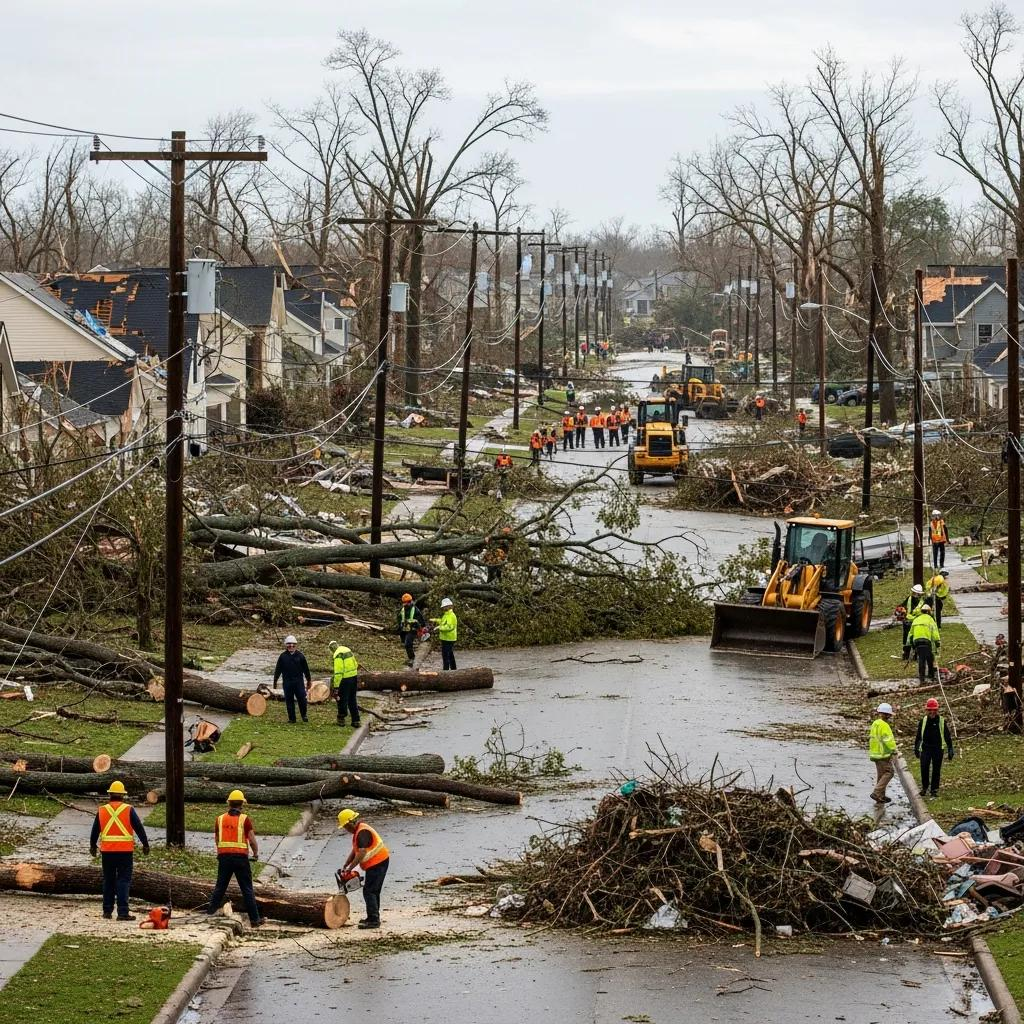
Hurricanes and high-wind events often cause widespread failure, so our approach is triage-first: crews address life-safety hazards and access-blocking trees before non-critical debris. The initial phase targets trees on houses, across roads, or touching powerlines, followed by clearing key routes and systematic debris hauling. During large events we increase staffing, stage equipment, and provide temporary protections like tarping or bracing for compromised roofs. Clear logistics and communication with utilities and local authorities speed recovery for the whole community.
What Services Are Included in Fallen Tree and Hazardous Limb Removal?
Emergency fallen tree cleanup services include immediate hazard mitigation (lowering hanging limbs), full or partial tree removal, temporary tarping or roof-protection coordination, debris segregation for hauling, and final site cleanup. Stump grinding and complete stump removal are often scheduled after emergency priorities and any insurance or permit requirements are handled. Services range from focused pruning to crane-assisted lifts when weight and location demand specialized rigging. Knowing which services apply helps set realistic timelines and expectations for crews and follow-up work.
How Much Does Emergency Tree Removal Cost and Will Insurance Help?
Emergency removal costs depend on tree size and species, accessibility, proximity to structures or utilities, complexity of rigging, and whether cranes or bucket trucks are needed. Emergency calls typically cost more than scheduled jobs because of rapid mobilization and higher-risk operations, but many insurance policies cover storm-related removals when a tree damages property or creates an immediate hazard. The table below breaks down cost factors so you can see how each element affects price and equipment needs.
| Factor | Typical Attributes | Impact on Cost / Required Equipment |
|---|---|---|
| Tree Size / Condition | Small, medium, large; dead vs. live | Larger or heavier trees increase labor and may require a crane or extra rigging |
| Location / Accessibility | Open yard, on structure, over road, on powerline | Trees on structures or near utilities raise complexity and cost; traffic control adds expense |
| Service Complexity | Basic removal, rigging, crane-assisted | Rigging and crane work add substantial hourly and mobilization costs |
What Changes a Fallen Tree Removal Quote?
Quotes vary with accessibility (open yard vs. tight spaces near buildings), entanglement with utilities, required traffic or utility coordination, and the tree’s condition (rotten trunks or multiple splits). For example, a medium tree in an open yard with no utilities is lower complexity, while a large uprooted oak on a roof near powerlines needs multiple crews and possibly a crane, increasing cost. Insurance often covers these situations if you document damage and keep receipts. Understanding these variables helps you compare estimates and decide whether immediate removal or temporary stabilization is the best option.
How Can Homeowners Work with Insurance After Storm Damage?
When filing with homeowners insurance after storm damage, document the scene thoroughly with photos and video, keep dangerous debris isolated if it’s safe to do so, and collect written estimates and invoices for removal and any temporary protections. Notify your insurer promptly and ask if an adjuster must inspect before removal; if immediate removal is necessary for safety, proceed and keep all documentation to support the claim. Henry’s Tree Service provides free estimates and written invoices to help with claims, which can speed communication with insurers. Clear documentation and quick reporting reduce processing time and risk of denials.
Why Choose Henry's Tree Service for Emergency Storm Cleanup?
Pick an emergency provider based on proven readiness, certified arborist leadership, and transparent operations—qualities we prioritize at Henry’s Tree Service. We offer 24/7 emergency response, certified arborists on staff, full insurance coverage, free estimates, and Spanish-speaking team members to support diverse neighborhoods. Our local experience in Raleigh, Zebulon, Wake County, and the Research Triangle helps crews navigate permits, typical weather impacts, and neighborhood logistics during storm response. Those credentials and bilingual support lower friction during stressful events and improve coordination with insurers and contractors. Here are the practical reasons customers trust our emergency service.
- 24/7 Emergency Response: Immediate intake and prioritized dispatch for life-safety hazards.
- Certified Arborists: Professional hazard assessment and safe removal strategies.
- Fully Insured Operations: Liability protection for customers and crews during complex removals.
These trust signals back up our technical work and make emergency outcomes safer and more predictable.
What Sets Us Apart: Local Roots, Certified Arborists, and 24/7 Availability?
Local knowledge matters in emergencies. Our crews know Raleigh-area storm patterns, local permit rules, and where to source tarping or crane resources quickly. Certified arborists make safety-first decisions while preserving trees when possible, using industry-standard rigging and cutting sequences to limit collateral damage. Around-the-clock availability ensures severe incidents get immediate attention and reduces secondary damage from delays. Together, these strengths deliver fast, community-focused emergency service.
How Do Our Fully Insured and Spanish-Speaking Teams Help Customers?
Being fully insured gives customers peace of mind—liability protection covers accidents and property impacts during hazardous removals. Spanish-speaking staff help non-English-speaking households explain damage, understand estimates, and navigate insurance conversations without extra stress. Henry’s Tree Service combines clear documentation, bilingual communication, and insured crews to make the emergency process smoother and faster for homeowners during a stressful recovery.
What Preventative Steps and Post-Storm Care Reduce Future Emergencies?
Preventative care—regular inspections, structural pruning, and targeted removals—cuts the chance of emergencies by fixing vulnerabilities before storms hit and improving tree resilience. Certified arborist inspections find decay, root problems, and species-specific risks so you can prioritize fixes like cabling, selective crown reduction, or removal of high-risk trees. After an emergency, follow-up inspections help assess nearby trees, schedule stump grinding if needed, and plan seasonal pruning. The list below outlines practical steps homeowners can take to lower future risk.
- Annual Certified Arborist Inspection: Catch hidden decay or root issues before failure.
- Structural Pruning: Remove co-dominant stems and deadwood to reduce wind load.
- Cabling and Bracing for Large Trees: Reinforce weak unions to delay or avoid removal.
- Prompt Stump Grinding: Eliminate trip hazards and reduce pest attraction after removal.
Following these measures lowers emergency frequency and lessens storm damage across your property.
How Does Preventative Care Improve Storm Resilience?
Preventative pruning and timely removal reduce canopy surface area, remove deadwood that can become dangerous projectiles, and correct structural defects that lead to trunk or root failure. Timing matters—late winter or early spring pruning reduces stress and helps wounds close before active growth. Species choice and planting location also affect resilience; an arborist can recommend replacements or planting strategies to lower long-term risk. Regular inspections create a prioritized maintenance plan that balances safety, aesthetics, and landscape value.
When Should Stump Grinding Follow Storm Damage?
We recommend stump grinding when the stump is a trip hazard, interferes with yard use, or risks resprouting and attracting pests. Grinding is usually scheduled after emergency removals once insurance and permit issues are settled and the site is stabilized. Grinding removes the visible hazard, leaves a graded surface for replanting or restoration, and prevents new shoots from creating ongoing maintenance. Timing can be adjusted to accommodate adjuster visits or permits, but for safety and curb appeal stump grinding is typically handled in a follow-up visit.
- Assess stump hazard and regrowth potential.
- Coordinate grinding after adjuster or permit requirements are met.
- Plan replanting or landscape restoration once stump debris is removed.
These steps complete the emergency-to-restoration process and help prevent repeat hazards from old root systems.