
Discover the Unique Traits of North Carolina's Native Trees: An Identification, Characteristics, and Care Guide
North Carolina is home to a rich tapestry of native tree species that beautifully shape its diverse landscapes, from the sandy shores of the coast to the rolling hills of the Piedmont and the majestic mountain ranges. Knowing how to identify North Carolina’s native trees empowers property owners and managers to boost local biodiversity, enhance resilience against storms, and increase property value. This guide delves into what truly defines a native tree, how these species are vital to our ecosystems, where they naturally flourish, and essential care practices. Throughout, you’ll find insights from Henry’s Tree Service, your trusted partner for expert planting, pruning, and disease management to keep your trees healthy and vibrant.
What Exactly Are North Carolina Native Trees, and Why Are They So Important?
Native trees in North Carolina are those species that have naturally evolved and adapted over thousands of years to the state’s specific soil conditions, climate patterns, and wildlife interactions. Their robust root systems help anchor the soil, their early-blooming flowers provide crucial nectar for pollinators, and their varied canopy structures create essential habitats for songbirds and other wildlife. Understanding these characteristics offers three key advantages: maintaining ecological harmony, promoting sustainable landscaping, and reducing long-term maintenance expenses.
What Criteria Define a Tree as Native to North Carolina?
A tree is considered native if its natural geographic range includes North Carolina, without any human intervention for its introduction. This definition is rooted in the tree’s inherent adaptation mechanisms, such as the drought tolerance seen in Piedmont species or the salt spray resistance of those along the coast. Extensive scientific research and historical records confirm species like the white oak (Quercus alba) and loblolly pine (Pinus taeda) as indigenous, underscoring their integral role in local biodiversity.
How Do Native Trees Sustain North Carolina’s Ecosystems and Biodiversity?
Native trees serve as a vital food source and provide essential shelter for wildlife throughout the changing seasons. The spring blossoms of the red maple (Acer rubrum), for instance, offer critical pollen for bees when other food sources are scarce. Mature oak trees drop acorns that are a vital food source for squirrels, turkeys, and woodpeckers. Beneath the dappled shade of dogwood and sweetgum trees, understory plants thrive, creating multi-layered habitats that support a rich diversity of species, from amphibians to birds of prey.
How Do Native Trees Enhance Property Value and Environmental Resilience?
Well-established native trees play a crucial role in reducing soil erosion, improving the absorption of stormwater, and moderating local temperatures. Studies have shown that properties shaded by mature native oaks and maples can see an increase in resale value of 5–15%. Their natural resistance to common pests and diseases also translates to lower long-term care costs, while their seamless integration into the local landscape enhances curb appeal and promotes ecological responsibility.
Which Biogeographic Regions Influence North Carolina’s Native Tree Diversity?
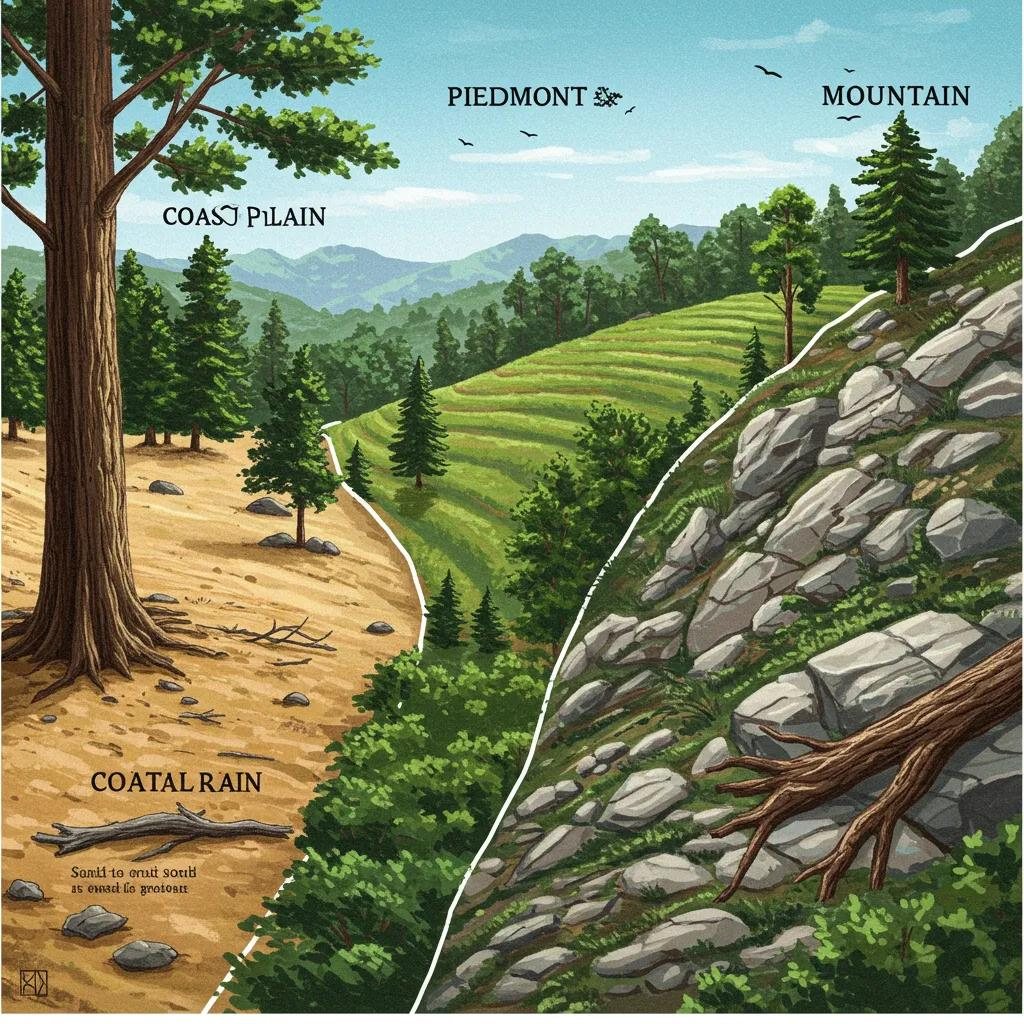
North Carolina’s remarkable tree diversity can be broadly categorized into three primary regions, each characterized by unique soil compositions, temperature ranges, and moisture levels that shape the traits and distribution of its native species.
| Region | Characteristic Soil & Climate | Representative Species |
|---|---|---|
| Coastal Plain | Sandy, acidic soils; hot summers, mild winters | Sweetgum, Live Oak |
| Piedmont | Well-drained clay loams; moderate rainfall | White Oak, Red Maple |
| Mountain | Rocky, acidic slopes; cooler temperatures | Red Spruce, Eastern Hemlock |
These regional distinctions equip trees with specific defenses—such as resistance to salt spray in the Coastal Plain, tolerance to summer heat in the Piedmont, and adaptation to frost in the Mountains—ensuring each species thrives in the environment where it naturally evolved.
What Are the Defining Characteristics of the Coastal Plain Region’s Native Trees?
Trees native to the Coastal Plain often exhibit a remarkable tolerance to salt, possess shallow root systems adapted to sandy soils, and grow rapidly, allowing them to outcompete invasive species. The sweetgum (Liquidambar styraciflua) produces distinctive spiky seed balls that disperse easily, while the live oak (Quercus virginiana) develops broad, sprawling limbs that are highly resistant to strong winds during storms.
How Do Piedmont Trees Differ in Their Traits and Adaptations?
Piedmont species, such as the white oak, develop deep taproots to access moisture in clay loam soils, and the red maple adapts its leaf structure to withstand both dry spells and occasional flooding. The bark textures of these trees vary significantly, from the smooth bark of young red maples to the deeply furrowed bark of mature white oaks, providing reliable cues for identification.
What Unique Tree Species Flourish in North Carolina’s Mountain Region?
Native mountain species like the Fraser fir and red spruce are well-equipped to endure cooler temperatures and higher levels of precipitation. Their needles and cones showcase specific adaptations: dense needle clusters minimize moisture loss, and sturdy branches efficiently shed ice. These trees play a vital role in stabilizing steep slopes, thereby preventing landslides and safeguarding water quality in downstream areas.
What Are the Key Native Tree Species of North Carolina and Their Distinctive Traits?
North Carolina’s iconic trees include a variety of oaks, maples, and pines—each group sharing common characteristics while displaying unique features that aid in identification and care.
What Are the Distinctive Features of North Carolina’s Oak Species (Quercus spp.)?
Oaks are celebrated for their lobed leaves, the production of acorns, and their exceptionally durable wood. Their ecological significance is unparalleled, providing habitat for hundreds of insect species and offering essential mast for wildlife populations.
How Can You Identify White Oak (Quercus alba)?
The white oak is characterized by its rounded leaf lobes, pale gray, scaly bark, and oblong acorns with nearly smooth cups. It thrives in well-drained upland sites and demonstrates superior drought tolerance.
- Leaf Shape → Rounded Lobes
- Bark Texture → Flaky, Light Gray
- Acorn → 1–1.5 inches, Smooth Cup
These identifying features help inform pruning schedules that respect seasonal sap flow and minimize stress on the tree.
What Are the Identification Traits of Northern Red Oak (Quercus rubra)?
The northern red oak features pointed leaf lobes tipped with bristles, dark, deeply furrowed bark that forms square ridges, and obovoid acorns that mature over two seasons. Its rapid growth makes it a popular choice for shade, but regular health assessments are crucial for detecting early signs of oak wilt.
What Makes North Carolina’s Maple Trees (Acer spp.) Unique?
Maples are admired for their brilliant fall foliage and their characteristic opposite leaf arrangement. Their sap provides a vital early food source for pollinators in late winter, and their shallow root systems help stabilize the topsoil.
How to Identify Red Maple (Acer rubrum) and Its Seasonal Colors?
Red maple leaves typically have three to five shallow lobes with serrated edges, turning a vibrant crimson in the autumn. The smooth gray bark of young trees gradually develops shallow furrows as it matures. Its early spring flowers and bright red samaras (winged seeds) mark this species as a distinctive seasonal feature in the landscape.
What Are the Characteristics of Iconic Pines (Pinus spp.) in North Carolina?
Pines are recognized by their needle clusters and woody cones, which vary in appearance among different species. They provide year-round structure to the landscape and, in some regions, exhibit resilience to fire.
How to Recognize Loblolly Pine (Pinus taeda) by Needles and Cones?
The loblolly pine typically bears three long needles per fascicle (bundle), each measuring 6–10 inches in length, and produces heavy, ovoid cones adorned with sharp prickles. It thrives in the loamy soils of the Piedmont and is important for timber production, though periodic thinning is recommended to reduce the risk of storm damage.
How Can You Identify North Carolina Native Trees Using Key Physical Traits?
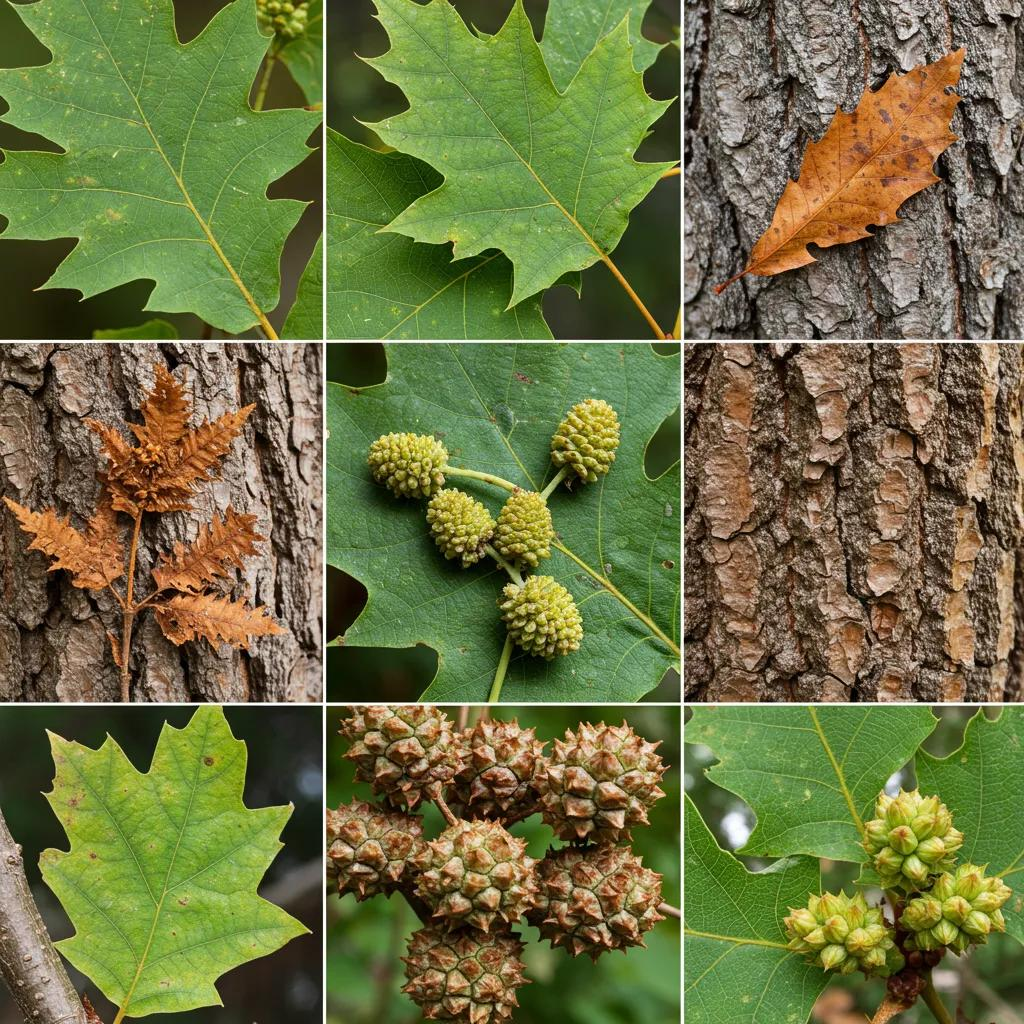
Accurately identifying individual tree species relies on a consistent examination of their leaves, bark, reproductive structures, and overall growth habit.
What Leaf Characteristics Help Identify Native Trees in North Carolina?
The shape, margin (edge), venation (vein pattern), and arrangement of leaves offer crucial taxonomic clues. Simple leaves with lobed margins often indicate oaks, while opposite, compound leaves might suggest maples or ash. Distinguishing between pinnate and palmate vein patterns can further differentiate species.
How Does Bark Texture Vary Among Native Tree Species?
Bark textures range widely, from the smooth surface of young red maples to the deeply furrowed appearance of mature oaks or the plated texture of sweetgum. Examining bark microtextures—whether scaly or fibrous—allows for year-round identification, even when leaves are absent.
What Role Do Flowers, Fruits, and Seeds Play in Tree Identification?
Observing seasonal blooms in spring, the distinctive spiked fruits of the sweetgum, or seed types like acorns and samaras can provide definitive species confirmation. Tracking these structures across multiple seasons helps build a reliable identification profile.
How Does Overall Tree Form and Habitat Assist in Identification?
The tree’s canopy architecture—whether pyramidal, rounded, or vase-shaped—combined with its preferred habitat (e.g., wet bottomlands versus dry ridges) can help narrow down the possibilities and inform decisions about planting or conservation efforts.
What Are the Benefits of Planting and Maintaining Native Trees in North Carolina?
Investing in native trees yields significant ecological, economic, and aesthetic rewards by harmonizing landscape design with natural processes.
How Do Native Trees Support Local Wildlife and Pollinators?
Native trees provide specialized food sources and habitats for a wide array of insects, birds, and mammals. For example, oak trees alone support over 500 species of caterpillars, which are essential for feeding songbirds, while maple trees offer vital early-season pollen for emerging bees.
Why Are Native Trees More Resilient to Climate and Pests?
Because they are naturally adapted to the local environment, native trees possess stronger resistance to common pathogens and environmental stressors. The longleaf pine, for instance, is resistant to the pine wilt nematode and can tolerate sandy, drought-prone conditions, thereby requiring fewer maintenance interventions.
How Do Native Trees Contribute to Stormwater Management and Soil Health?
Their extensive root systems enhance water infiltration, filter pollutants from runoff, and reduce the velocity of water flow. Over time, the natural decomposition of leaf litter enriches the topsoil, promoting healthier turf and understory plantings with minimal need for fertilizers or irrigation.
When and How Should You Care for North Carolina’s Native Trees?
Implementing proper timing and techniques for pruning, assessment, and disease management is essential for maintaining the vigor and structural integrity of your trees.
What Are Best Practices for Pruning and Maintaining Native Trees?
It is advisable to prune oaks during their dormant seasons to minimize the risk of disease transmission. Removing deadwood and crossing branches helps optimize canopy health. Light thinning in pine stands can improve wind resistance, while selective crown reduction can help maintain the health of mature maple trees.
How Can You Detect and Manage Diseases Affecting Native Tree Species?
Regularly monitor your trees for signs of discoloration in the foliage, cankers on the bark, or sap oozing from the trunk. Early detection of diseases like oak wilt or pine needle rust allows for targeted fungicide treatments. Annual health assessments conducted by certified arborists can identify issues before they cause irreversible damage.
When Is It Time to Consult Professional Tree Care Services?
Indications such as large cracks in limbs, exposed root crowns, or sudden dieback of the canopy signal an urgent need for professional intervention. Prompt action can ensure safety and preserve valuable trees, including heritage oaks or specimen maples.
How Does Henry’s Tree Service Support Native Tree Health and Longevity?
Henry’s Tree Service offers certified arboricultural expertise for every project, from implementing species-specific pruning techniques to providing integrated pest management solutions. Serving homeowners in Western Massachusetts and Connecticut, their commitment to safety and reliability ensures the long-term health and beauty of your trees and landscape.
What Are the Most Common Questions About North Carolina Native Trees?
Many homeowners frequently inquire about selecting the best native species for shade, how to assess a tree’s health, and which native varieties are most suitable for specific site conditions. Popular choices for planting include the white oak for drought-tolerant shade, the red maple for its striking seasonal color, and the loblolly pine for rapid screening. Identifying a native tree typically begins with examining its leaves—considering their shape, margin, and arrangement—followed by assessing the bark texture and reproductive structures. North Carolina’s state tree, the flowering dogwood, is easily recognized by its four-petaled bracts and bright red berries that attract thrushes.
Making informed planting and care decisions based on a tree’s specific traits—such as its soil preferences, moisture tolerance, and growth habit—can significantly reduce long-term costs and environmental impact. Consulting with professional arborists like those at Henry’s Tree Service ensures correct planting depth, appropriate mulching, and necessary follow-up treatments, transforming your investment in native trees into enduring landscape assets.
North Carolina’s native trees are far more than just decorative elements; they are dynamic living systems that purify our air, provide sanctuary for wildlife, and enrich our communities.
By embracing these species through thoughtful selection and expert care, we can ensure that future generations inherit forests and urban canopies that are as resilient and vibrant as nature intended.