
Exploring the Wisdom and Significance of Ancient Trees
Ancient trees hold profound wisdom, whispering tales of divine connection, cosmic harmony, and the earth’s primal knowledge, embodying the deep significance of ancient trees across global traditions. Delving into these myths offers more than just a glimpse into history; it reveals timeless principles for safeguarding our living monuments and informs the very best practices in modern arboriculture. This exploration uncovers seven key themes: the world’s most celebrated mythical trees and their captivating legends; how these narratives mirror our deepest cultural values; the scientific insights into tree longevity and preservation; common myths and frequently asked questions; local legends from Western Massachusetts and Connecticut; invaluable lessons for contemporary tree care; and the visual and interactive resources that enrich our understanding. By weaving together mythic narratives with expert arboricultural knowledge, readers gain practical perspectives on tree preservation and discover how professional consultations can protect these silent, steadfast sentinels. Henry’s Tree Service expertly blends centuries-old lore with the guidance of certified arborists, championing professional tree care consultations and preservation services that safeguard both our ecological heritage and living traditions.
What Are the Most Famous Mythical Trees and Their Legends?
The world’s most renowned mythical trees serve as powerful cultural archetypes, illuminating life’s mysteries, shaping moral frameworks, and symbolizing profound cosmic connections. Their legendary status stems from ancient narratives that intricately link humanity with the divine and natural worlds: the Bodhi Tree signifies Enlightenment, Yggdrasil connects the myriad realms, sacred oaks reinforce community bonds, Peepal and Banyan trees anchor Hindu cosmology, and tree spirits animate forests in folklore worldwide.
| Tree | Origin | Key Symbolism |
|---|---|---|
| Bodhi Tree | Buddhist India | Enlightenment and wisdom |
| Yggdrasil | Norse mythology | Cosmic unity and fate |
| Sacred Oak | Greek, Celtic, Germanic | Strength, protection, justice |
| Peepal & Banyan | Hindu tradition | Immortality, shelter, fertility |
| Tree Spirits | Global folklore | Nature guardians and renewal |
This overview sets the stage, illustrating how ancient narratives use arboreal metaphors to convey cultural values, preparing us to explore each legend in greater detail.
What Is the Story of the Bodhi Tree and Its Role in Buddhist Enlightenment?
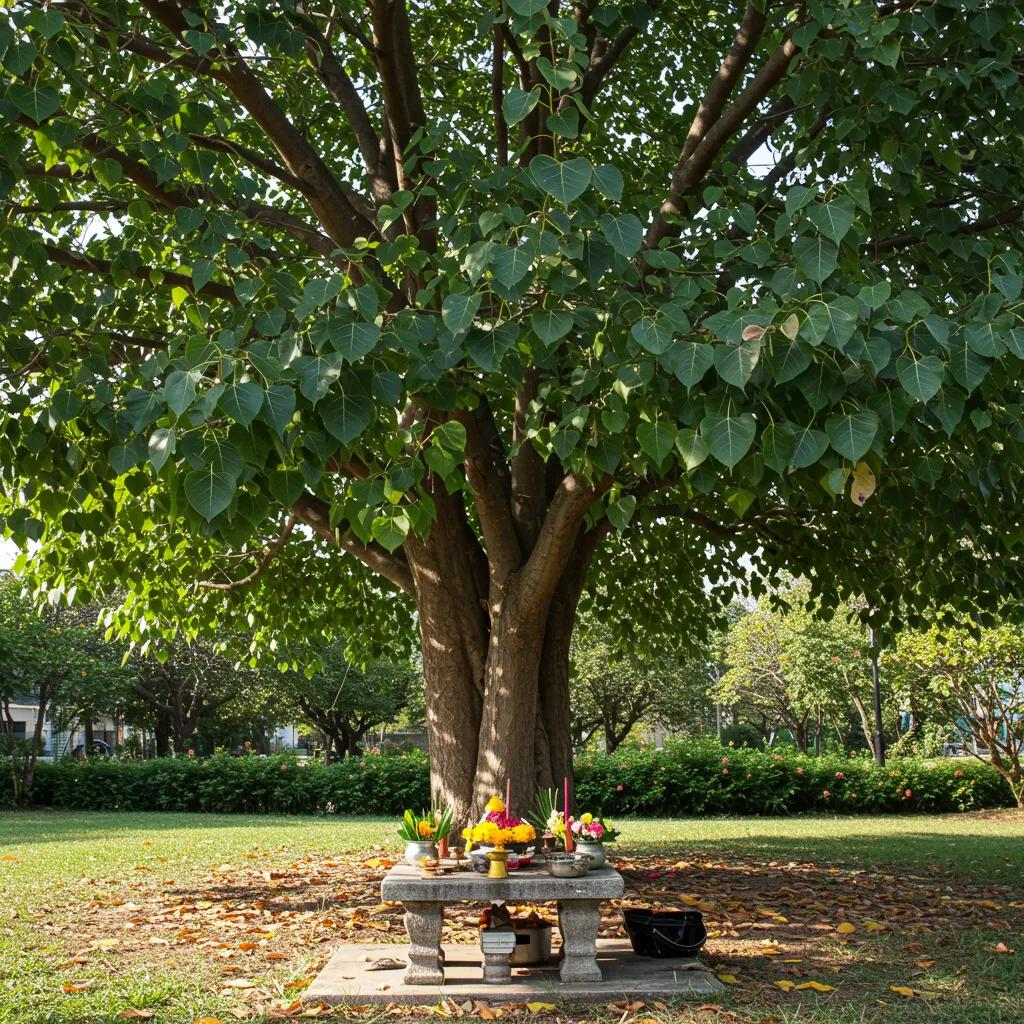
The Bodhi Tree, a sacred fig, is revered as the very tree under which Siddhartha Gautama achieved complete Enlightenment in 528 BCE, symbolizing profound insight into the true nature of existence. Its legend teaches that unwavering meditation beneath this specific Peepal species leads to ultimate awakening, establishing it as a living emblem of spiritual transformation.
Pilgrims in India and Sri Lanka hold deep reverence for descendant trees, often engaging in ritual circumambulation and offering prayers to honor this living relic.
The Bodhi Tree’s cultural significance extends directly to arboricultural conservation: caretakers diligently propagate cuttings to preserve its genetic lineage, and professional tree health assessments ensure these historic specimens continue to thrive. Understanding the Bodhi Tree’s specific care needs—such as proper soil aeration, root protection, and the pruning of deadwood—demonstrates how mythic reverence can guide practical preservation efforts in modern tree care consultations.
The Mahābodhi Tree: Sacred Pipal, Enlightenment Site, and Cultural Significance
1. The sacred pīpal, at whose foot the Buddha had attained Enlightenment, is generally known as the Mahābodhi Tree to distinguish it from the other bodhi trees. Though quite a few other bodhi trees appear to be older than the present Mahābodhi Tree, this pīpal is considered as the most sacred among all the bodhi trees for the reason that the Diamond Throne is located at its foot which the Buddhists believe to be the exact spot of Enlightenment. Indians have been worshipping the sacred pīpal since pre-historic period and it is quite probable that the Mahābodhi Tree existed as acaityavṛkṣa(tree-shrine) or avanacetiya(forest-shrine) during the pre-Buddhist period. The Hindus venerate the Mahābodhi Tree and perform their fourth day’s ritual ofpiṇḍadāna(oblations to ancestors) at its foot. The Buddhists believe that site of the Mahābodhi Tree forms the navel of the earth (pṛthvīnābhi). During the lifetime of the Buddha himself, the Mahābodhi Tree came to represent him and was used as a shrine (caitya). Emperor Aśoka visited the Mahābodhi Tree during the tenth year of his reign as part of his Dharma pilgrimage and either built acaityahere or most probably replenished the already existingcaitya. Some Buddhist texts mention that Aśoka’s queen Tiṣyarakṣitā and king Śaśāṅka had completely destroyed this tree. There is also at least one recorded incident when it fell down due to a storm in the year 1876 and Alexander Cunningham planted its sapling some distance away from the original spot “to protect the temple from being harmed” and another one some 80 feet away to the north for “Hindu worshippers”. Interestingly, a recent DNA fingerprinting conducted by the Forest Research Institute (FRI) of Dehradun indicates that “the north peepal tree is older and more authentic as compared to the current Bodhi tree.” On the basis of the report of the FRI, the Temple Management Committee has implemented a number of precautions over the years to ensure that the tree stays in good health. A
The Mahābodhi Tree, 2020
How Does Yggdrasil Represent the Norse World Tree and Cosmic Connections?
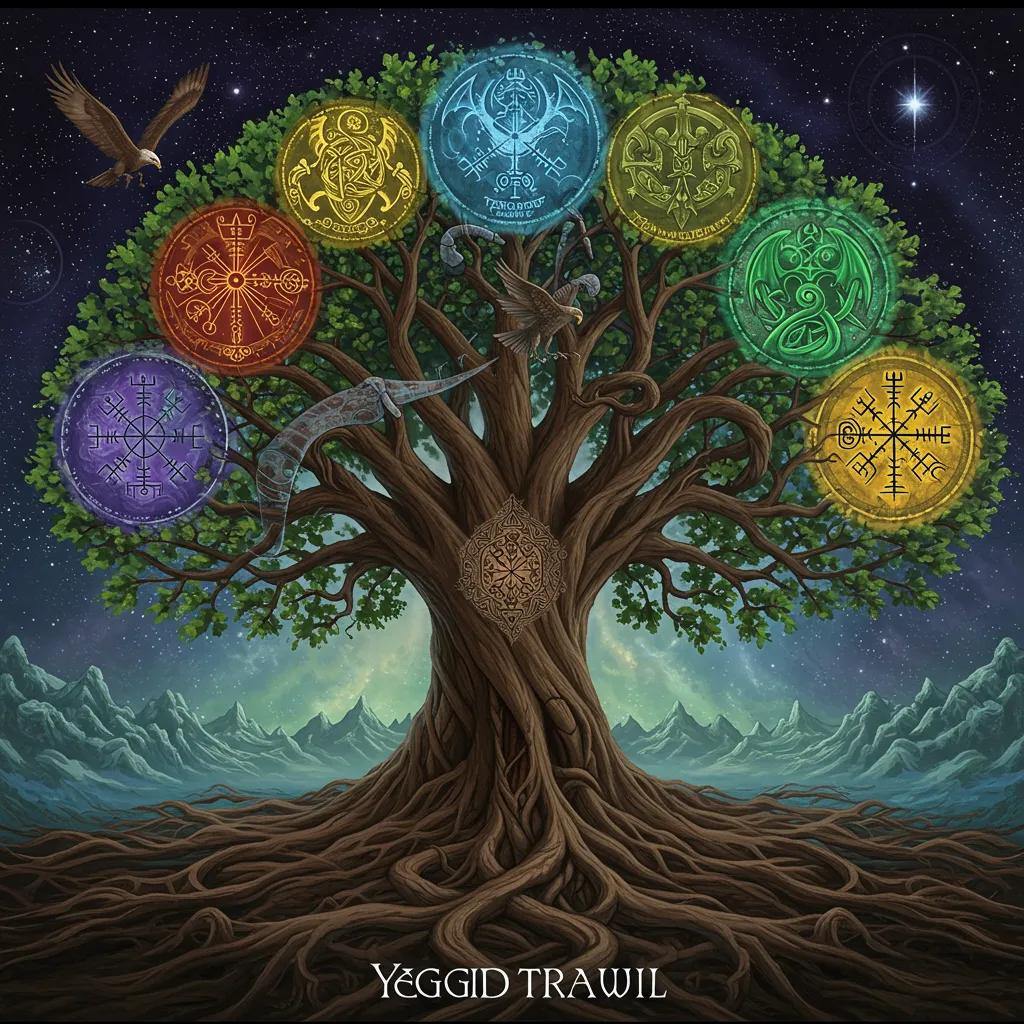
Yggdrasil, the immense ash tree at the heart of Norse cosmology, serves as a vital nexus, connecting nine distinct realms—including Asgard, Midgard, and Niflheim—through its sprawling branches and deep roots. It symbolizes the intricate interdependence of gods, humans, and the natural world, with creatures like the eagle at its crown and the dragon Níðhöggr gnawing at its roots, embodying the perpetual tension and renewal of existence.
As a powerful emblem of resilience, Yggdrasil inspires modern arborists to deeply respect the ecological roles of real-world ash trees. Certified arborists meticulously monitor ash bark health for invasive pests and employ precise, targeted pruning techniques to prevent decay, reflecting how mythic structures can inform scientific tree care and preservation strategies.
What Legends Surround Sacred Oak Trees in European Folklore?
Sacred oak trees are prominent figures in Greek, Celtic, and Germanic myths, universally recognized as symbols of authority, healing, and justice. In ancient Greece, the oracle at Dodona received divine pronouncements through the rustling of oak leaves; Celtic Druids conducted sacred ceremonies beneath mighty oaks to invoke fertility and protection; and Germanic tribes believed oaks were the dwelling places of powerful deities like Thor.
These enduring legends underscore the oak’s profound association with strength, endurance, and community well-being. The rich symbolism of the oak in European folklore actively encourages the preservation of veteran oak trees found in parks and historic estates. Arboricultural practices such as careful crown thinning and root-zone mulching are employed to protect these invaluable ecological and cultural landmarks, demonstrating how mythic reverence directly drives professional tree care.
Why Are the Peepal and Banyan Trees Central to Hindu Traditions?
Within Hinduism, the Peepal (Ficus religiosa) and Banyan (Ficus benghalensis) trees are revered as the divine wish-fulfilling Kalpavriksha and as cosmic shelters for deities. Devotees perform sacred rituals beneath Peepal trees to accumulate spiritual merit and pray under Banyans for longevity and prosperity. These living temples beautifully illustrate the profound belief that trees serve as vital conduits connecting earthly life with higher spiritual planes.
The conservation of these sacred Ficus species involves meticulous root management and careful canopy maintenance. Henry’s Tree Service offers specialized tree care consultations for Peepal and Banyan specimens, ensuring their continued health and preserving religious heritage through precision pruning and diligent soil monitoring.
What Are Tree Spirits and Guardians in Global Folklore?
Tree spirits—such as the Greek dryads, Japanese kodama, and West African forest jinn—embody the sentience of nature and inspire deep respect for woodlands. These benevolent guardians appear in ancient stories to reward acts of kindness or to punish those who harm trees, thereby reinforcing cultural taboos against wanton deforestation. Animistic beliefs universally view trees as living beings, deserving of reverent treatment and dedicated stewardship.
Acknowledging the lore of tree guardians actively inspires ethical forestry and arboricultural practices, fostering a strong conservation mindset. Integrating this mythic respect for tree spirits with professional arborist standards powerfully supports community conservation initiatives and promotes sustainable tree care practices.
How Do Ancient Tree Myths Reflect the Cultural Significance of Old Trees?
Ancient tree myths are instrumental in defining cultural identity by attributing profound spiritual, social, and environmental value to mature trees. The act of storytelling around these venerable specimens conveys collective memory, establishes authority structures, and transmits ecological ethics, revealing how societies deeply honor longevity and resilience.
Communities across the globe utilize tree myths to symbolize wisdom and the cyclical nature of life. From East Asia’s Daoist sacred groves to Mesoamerica’s Ceiba World Tree, these narratives consistently frame trees as essential sources of knowledge and cosmic balance. Examining these rich stories clarifies precisely why preserving old trees is crucial for maintaining cultural continuity and ecological diversity.
Here is a list of thematic roles that ancient trees play in cultural traditions:
- Repositories of wisdom, connecting generations across time
- Living archives of historic events and ancestor veneration
- Symbols of fertility and renewal in seasonal ceremonies
- Anchors for communal identity and social cohesion
These vital cultural roles underscore why professional tree care services must thoughtfully integrate heritage considerations alongside thorough botanical health assessments.
What Spiritual Meanings Are Commonly Attributed to Ancient Trees?
Ancient trees are frequently imbued with symbolism representing wisdom, longevity, strength, and acting as a bridge between the material and spiritual realms. They embody the enduring presence of ancestors and serve as focal points for meditation, prayer, and community gatherings. This deeply ingrained spiritual framework fosters profound respect and powerfully motivates preservation efforts that align harmoniously with cultural practices.
How Do Different Cultures Use Trees as Symbols of Life and Knowledge?
Across diverse civilizations, trees stand as potent symbols of the Tree of Life, the Tree of Knowledge, and their equivalents in local lore. In Judeo-Christian tradition, the tree in Eden conveys the concept of moral choice; in Celtic myth, the Tree of Knowledge imparts profound insight at sacred wells; and in Mayan belief, the Ceiba functions as a vital portal between worlds. These universal archetypes powerfully reinforce the central role trees play in mythic cosmologies.
What Role Do Trees Play in Religion and Mythology Worldwide?
Trees are integral elements in Hindu, Buddhist, Norse, Celtic, Greek, African, and Indigenous American religions, serving as deities’ abodes, sacred pilgrimage sites, and living scriptures. They are central to rituals, oracles, and oaths, embedding arboreal motifs deeply into doctrinal teachings. Their pervasive presence in scripture and folklore unequivocally affirms trees’ essential place in spiritual life.
How Have Ancient Trees Influenced Local Traditions and Heritage?
Local legends—such as Japan’s ancient sakura groves or Britain’s iconic Royal Oak—serve to anchor communal identity and attract tourism. Heritage-tree designations provide crucial protection for specimens deeply tied to historic events and cultural ceremonies. Recognizing these profound connections motivates both communities and professional services to diligently safeguard these invaluable living landmarks.
What Scientific Insights Support the Longevity and Preservation of Ancient Trees?
Scientific research has illuminated the genetic factors, growth rates, and environmental adaptations that underpin exceptional tree longevity. Dendrochronology studies, particularly of bristlecone pines, have established age records exceeding 4,800 years, while analyses of soil microbiomes reveal intricate symbiotic networks that significantly bolster resilience. These critical insights directly inform conservation strategies aimed at extending the lifespans of ancient trees.
Modern arboriculture effectively adapts these scientific findings by prioritizing soil health, providing structural support, and implementing targeted pest management. Recognizing how complex ecosystem interactions and inherent stress tolerance contribute to longevity allows certified arborists to design preservation plans that effectively mirror natural survival mechanisms.
How Do Bristlecone Pines Exemplify Tree Longevity and Resilience?
Bristlecone pines, found in North America, exhibit extraordinary resilience in harsh, high-elevation environments. They achieve this through slow growth, the development of dense, resinous wood, and remarkable adaptation to nutrient-poor soils. Their exceptional longevity—famously exemplified by the Methuselah tree, estimated to be around 4,800 years old—demonstrates how environmental stress can foster durable growth rings that serve as invaluable records of climate history.
What Arboricultural Practices Help Preserve Old and Historic Trees?
Professional arborists employ specialized techniques—including selective crown thinning, careful root-zone excavation, and structural cabling—to meticulously maintain the stability and health of veteran trees. These essential practices effectively mitigate storm damage, reduce the progression of decay, and balance canopy weight distribution without compromising the tree’s cultural significance.
| Practice | Purpose | Benefit |
|---|---|---|
| Selective Crown Thinning | Improve light penetration and airflow | Reduces limb failure and disease risk |
| Structural Cabling | Support large limbs | Prevents branch splitting and collapse |
| Root-Zone Mulching | Enhance soil moisture retention | Promotes root growth and nutrient uptake |
| Decay Bracing | Stabilize cavities | Extends safe lifespan of hollow trunks |
How Can Understanding Tree Biology Enhance Preservation Efforts?
A deep understanding of cambial growth, phloem-xylem transport, and mycorrhizal associations is crucial for guiding interventions that maintain vital nutrient flow and structural integrity. Arborists translate these fundamental biological principles into targeted fertilization, disease screening, and probiotic soil treatments, effectively strengthening trees’ natural defenses.
Why Is Professional Tree Care Essential for Protecting Ancient Trees?
Certified arborists uniquely combine scientific expertise with specialized equipment to accurately assess risk, diagnose hidden decay, and safely execute complex preservation strategies. Their professional services are vital for protecting public safety, preserving invaluable cultural heritage, and sustaining essential ecosystem services—demonstrating that myth-inspired reverence for ancient trees demands equally professional stewardship.
What Are the Most Common Myths and Questions About the World’s Oldest Trees?
Curiosity surrounding ancient tree myths frequently centers on the origins, symbolism, and spiritual meanings attributed to these iconic arboreal figures. Common inquiries often address which tree holds the record for mythic prominence, which specimens are universally considered sacred, and how legendary narratives continue to inform modern values.
Here is a concise list of prevailing curiosities:
- The oldest mythical tree archetype and its specific cultural context
- The most venerated sacred trees across various religions
- Spiritual interpretations of ancient tree symbolism
- Compilations of famous mythical trees and their associated stories
- Specific oak tree myths that illustrate their community importance
These recurring themes drive both academic research and widespread public fascination, effectively guiding content creation that satisfies informational intent and supports lead generation for essential tree care consultations.
What Is the Oldest Tree in Mythology and Its Significance?
The concept of the “World Tree” consistently emerges in Norse, Mayan, and Hindu cosmologies as the archetypal oldest tree, symbolizing primordial existence and eternal cycles. As a powerful archetype, it powerfully conveys humanity’s enduring search for origins and continuity.
Which Trees Are Considered the Most Sacred Worldwide?
Globally revered trees include the Bodhi Tree, the Peepal Tree, the Banyan, the Oak of Dodona, and Japan’s ancient Jōmon sugi cedar. Each holds unique ritual functions, significant pilgrimage status, and critical genetic conservation importance.
What Is the Spiritual Meaning of Ancient Trees Across Cultures?
Ancient trees consistently unify motifs of wisdom, protection, connectivity, and renewal. They stand as living symbols of enduring strength, effectively bridging human communities with ancestral landscapes and divine realms.
What Are Some Famous Mythical Trees and Their Stories?
The captivating stories of Yggdrasil’s cosmic balance, the Peepal’s wish-granting powers, and the oak’s role as an oracle host vividly reveal how myths profoundly shape environmental ethics and social cohesion.
How Do Myths About Oak Trees Reflect Their Cultural Importance?
Myths surrounding oak trees powerfully underscore their role in communal governance, as important councils frequently convened beneath oaks in Celtic and Germanic societies. This enduring tradition links civic identity directly with natural sanctuaries, reinforcing both legal and ecological stewardship.
How Do Local Legends in Western Massachusetts and Connecticut Connect to Ancient Tree Myths?
Local heritage trees in Western Massachusetts and Connecticut carry rich legends that powerfully echo global mythic themes of resilience, wisdom, and community identity. The Charter Oak, for instance, stands as a potent symbol of colonial unity and resistance beneath its expansive canopy, directly mirroring the sacred oak traditions found in European folklore.
The stewardship of these regional icons involves close coordination among historical societies, conservation groups, and professional arborists to maintain their structural health and ensure public access. As of October 2025, communities are actively designating champion trees and funding vital preservation projects, reflecting a shared and deep commitment to preserving living history.
What Is the Story of the Charter Oak and Its Historical Importance?
Famously alleged to have been used in 1687 to conceal Connecticut’s royal charter from confiscation, the Charter Oak swiftly became an enduring symbol of independence and civic pride. Its remarkable 350-year legacy continues to inform annual festivals and educational programs centered on community resilience.
Which Trees in the Region Are Considered Heritage or Champion Trees?
Western Massachusetts proudly recognizes sugar maples exceeding 300 years in age, while Connecticut highlights significant white oaks and ginkgo specimens adorned with historic plaques. These prestigious designations provide crucial protection for landmark trees through legal easements and meticulously crafted arboricultural care plans.
How Can Local Tree Myths Inspire Modern Tree Preservation?
Regional legends actively foster public engagement through tree-planting festivals, guided tours of historic groves, and comprehensive school programs. By skillfully linking mythic narratives to concrete conservation actions, communities effectively sustain both ecological health and invaluable cultural memory.
What Tree Care Services Support the Preservation of Local Ancient Trees?
Henry’s Tree Service provides expert heritage-tree assessments, thorough structural stability analyses, and customized maintenance schedules. These professional consultations expertly integrate soil diagnostics, effective pest management, and comprehensive crown care to protect these invaluable living monuments for generations to come.
How Can Understanding Ancient Tree Myths Inform Modern Tree Care and Preservation?
Ancient legends impart invaluable lessons about endurance, adaptability, and symbiosis, which directly translate into contemporary best practices for ensuring tree longevity. By deeply valuing trees as significant cultural assets, arborists are empowered to adopt holistic approaches that skillfully balance safety, health, and heritage.
Integrating a mythic respect for trees with sound scientific methods actively promotes sustainable landscapes and fosters robust community stewardship. Professional guidance is essential to ensure these living symbols remain vital components of both ecological systems and enduring cultural narratives.
What Lessons Do Ancient Tree Legends Teach About Tree Longevity?
Legends consistently emphasize the virtues of slow, steady growth and remarkable resilience under stress—principles that are directly mirrored in modern practices such as controlled pruning, diligent root protection, and adaptive management strategies during environmental extremes.
How Does Cultural Respect for Trees Influence Arboricultural Practices?
The recognition of trees as sacred entities profoundly influences arborists to minimize invasive interventions, diligently preserve wildlife habitats, and actively engage stakeholders in decision-making processes, thereby aligning professional care with deeply held community values.
What Tree Care Consultations Help Protect Significant Trees?
Heritage-tree consultations encompass comprehensive risk assessments, detailed structural analysis, thorough soil health evaluations, and meticulously tailored treatment plans. These essential services prioritize long-term preservation while rigorously ensuring public safety and maintaining aesthetic value.
Why Is Professional Guidance Important for Managing Old Trees Safely?
Certified arborists expertly apply industry-standard techniques and utilize specialized equipment to safely prune, brace, and support aging trees without compromising their structural integrity, effectively reducing hazard potential and preserving their historical significance.
What Visual and Interactive Resources Enhance Learning About Ancient Tree Myths?
Engaging infographics, interactive maps, educational videos, and meticulously annotated images transform complex mythological and scientific concepts into easily accessible learning tools. Visualizing cosmic tree structures or mapping ancient tree sites cultivates a deeper appreciation and significantly enhances knowledge retention.
For instance, infographics that clearly illustrate Yggdrasil’s nine realms or videos that narrate the Bodhi Tree legend, thoughtfully paired with practical care demonstrations, provide truly immersive learning experiences. High-resolution images, complete with descriptive alt text, support both visual understanding and crucial semantic indexing for search engines.
Ancient Trees are intrinsically associated with Myths that explain Cultural Significance through compelling visual storytelling, guiding both public engagement and the development of professional tree care strategies.
Preserving these living legends demands a harmonious blend of profound cultural respect and expert scientific knowledge. To safeguard your own cherished arboreal heritage, we strongly encourage considering a comprehensive tree care consultation with our certified professionals, who are dedicated to protecting longevity and legacy.