
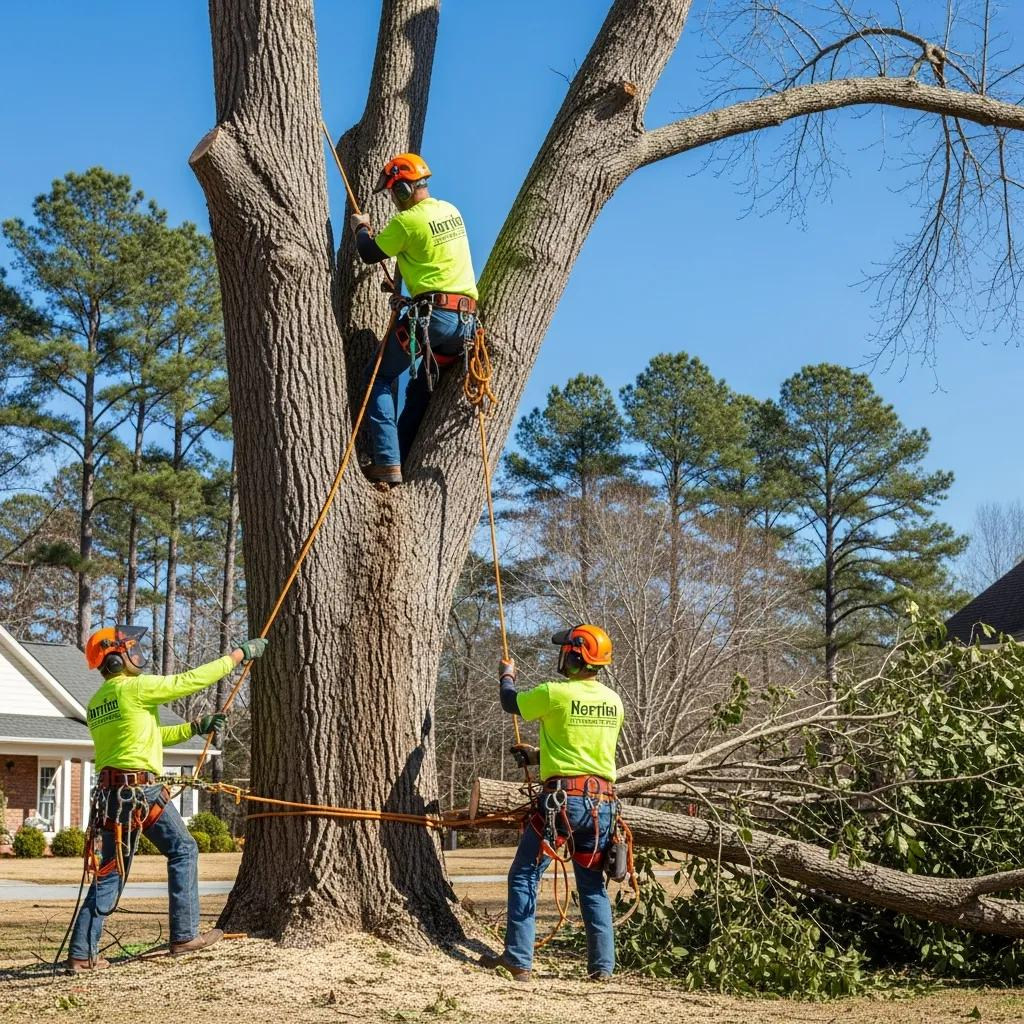
Comprehensive Tree Services for Apex, NC Homeowners
Tree service in Apex NC encompasses professional removal, pruning, stump management, emergency response, and certified arborist care designed to protect property and promote long-term tree health. This article explains what constitutes local tree care services, why timely intervention matters for safety and landscape value, and how arboricultural best practices reduce risk and preserve canopy assets. Readers will learn the main types of tree removal, the role of ISA-level arborist assessments, essential trimming and pruning techniques, when to call emergency tree service, the importance of stump grinding, and typical cost drivers affecting local estimates. The guide integrates practical checklists, comparison tables, and concise action steps to help homeowners evaluate urgency, plan maintenance, and prepare for on-site assessments. Throughout, local terms like “tree service Apex NC,” “arborist Apex NC,” and “emergency tree service Apex NC” are used to connect concepts to neighborhood conditions and common municipal permitting considerations.
Henry’s Tree Service operates in Apex, NC as a local provider that can assess urgent risks and schedule arborist consultations for homeowners seeking professional support. Their team offers on-site evaluations and free assessment invitations to help property owners understand safety priorities without obligation. Mentioning a local provider here is to help readers imagine the next step: a site visit that clarifies scope, equipment needs, and timeline. For readers ready to act after learning the essentials below, requesting a professional assessment helps translate this guidance into a safe, permit-compliant plan.
What Are the Key Tree Removal Services Offered in Apex NC?
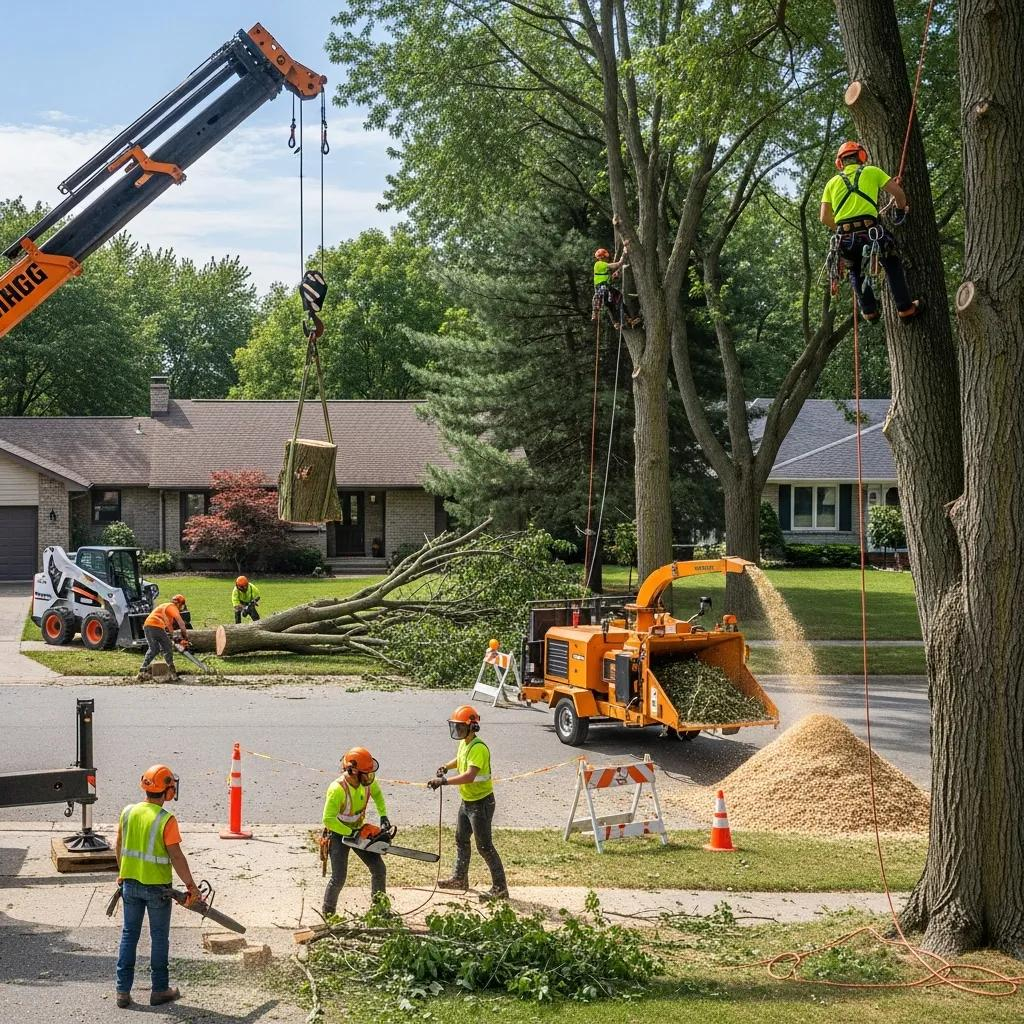
Tree removal in Apex NC covers a spectrum from hazardous tree removal to lot clearing, each defined by risk level, size, and site complexity. Removal types address specific scenarios—fallen tree removal focuses on debris and obstruction clearance, large tree removal requires cranes or sectional dismantling, and selective removals preserve surrounding trees while eliminating target specimens. Understanding these removal hyponyms helps homeowners choose the right service and anticipate equipment such as rigging, cranes, or chippers used for efficient, safe extraction. The following quick list defines common removal categories and their primary use cases to clarify options before a site assessment.
Common tree removal types in Apex NC include:
- Hazardous Tree Removal: Removing trees that show structural failure or immediate threat to people or structures.
- Fallen Tree Removal: Clearing trees that have already collapsed from storms or failure, focused on safety and access restoration.
- Large Tree Removal: Sectional dismantling of mature specimens using cranes or advanced rigging to protect surroundings.
- Lot Clearing / Selective Removal: Removing multiple trees for construction or landscape redesign while protecting retained trees.
| Removal Type | When Used | Safety/Equipment Considerations |
|---|---|---|
| Hazardous tree removal | Visible structural failure, severe lean, or proximity to structures | Requires rigging, aerial access, and traffic control to protect people and property |
| Fallen tree removal | Trees blocking driveways, on lawns, or partially on structures | Chainsaws, winches, and staged cutting for safe piece-by-piece removal |
| Large tree removal | Mature specimens with heavy limbs or limited fall zones | Crane or sectional dismantling, experienced rigging crew, and load planning |
These removal categories clarify typical methods and help homeowners self-identify needs before a professional assessment. Recognizing the removal type speeds communication during an estimate and informs required permits and neighborhood notifications.
When Is Professional Tree Removal Necessary?
Professional tree removal becomes necessary when a tree exhibits structural signs, presents an immediate hazard, or lies in a location where DIY efforts would create greater risk. Key indicators include a sudden lean, large dead crown, visible root plate uplift, or major trunk cracks that compromise stability. Performing removal without trained crews and specialized equipment increases the chance of property damage, personal injury, and improper handling of utilities. Homeowners should prioritize professional evaluation when trees are within striking distance of homes, garages, power infrastructure, or high-traffic areas, and when weight or height exceed safe DIY limits.
Recognizing urgent failure signs allows homeowners to triage risks and request prioritized service. A clear visual checklist and a professional inspection often reveal underlying decay or root failure that may not be immediately obvious, leading to a different approach than an informal estimate might suggest.
How Does Expert Tree Removal Ensure Safety and Efficiency?
Expert tree removal follows a predictable safety workflow that reduces risk to people and property while optimizing time and cost. Crews begin with site preparation, establishing exclusion zones, assessing overhead and underground utilities, and creating a stepwise dismantling plan tailored to the tree’s condition and site constraints. Specialized equipment—rigging hardware, cranes, aerial lifts, and chippers—enables sectional removal, which is safer in tight yards or near structures than felling. Post-removal tasks include debris handling, chipping, and minimal site restoration to leave the property safe and usable.
Emphasizing the critical nature of these procedures, industry standards further detail the precise techniques and safety protocols essential for preventing accidents during tree felling.
Safe Tree Felling Techniques & Procedures
This section covers the techniques used in the felling of trees, emphasizing the importance of following safe work procedures to prevent accidents caused by falling trees, dislodged tree limbs, or other trees or stags in the vicinity.
Tree Faller’s Manual: Techniques for Standard and Complex Tree-Felling Operations, 2011
This standardized approach ensures predictable timelines and lowers unforeseen costs from incidental damage. When crews use formal protocols and experienced riggers, they also reduce insurance exposure and improve compliance with local ordinances during the removal process.
How Do Certified Arborist Services Enhance Tree Health in Apex NC?
Certified arborist services in Apex NC focus on assessment-driven interventions that diagnose problems, prescribe targeted treatments, and implement maintenance plans that extend tree life. An arborist conducts systematic visual inspections, evaluates canopy structure and root health, and recommends corrective pruning, disease treatment, or soil improvements as appropriate. These services are part of the broader category of professional arboriculture, combining biological knowledge with practical techniques to manage tree risk and vitality. Below is a compact mapping of typical assessment types and the corresponding arborist actions and outcomes to show how assessments translate directly into measurable benefits.
| Assessment Type | Arborist Action | Benefit / Outcome |
|---|---|---|
| Structural assessment | Targeted pruning, cabling, bracing | Reduced failure risk and improved load distribution |
| Health & disease diagnosis | Lab testing, targeted treatments, injections | Confirms pathogens and applies precise treatment to arrest decline |
| Root and soil evaluation | Soil amendments, aeration, targeted fertilization | Improved root vigor and long-term nutrient availability |
What Benefits Do ISA Certified Arborists Provide?
ISA certified arborists bring formal training, standardized diagnostic methods, and a commitment to industry best practices that benefit both trees and property owners. Their certification indicates familiarity with species-specific growth responses, correct pruning standards, risk assessment protocols, and up-to-date disease management strategies. Working with certified professionals reduces the chance of improper cuts, unnecessary removals, or ineffective treatments that can accelerate decline. Certified arborists also document conditions and recommendations clearly, which helps homeowners with permit processes, insurance claims, or long-term landscape planning.
These professional standards are further reinforced by comprehensive industry guidelines, ensuring that tree risk assessments adhere to the highest levels of safety and expertise.
ISA Tree Risk Assessment & Best Practices
The survey findings highlight the widespread adoption of formal tree risk assessment standards, including ANSI A300 Part 9 – Tree Risk Assessment, and the International Society of Arboriculture (ISA) Tree Risk Assessment Best Management Practices. These practices are crucial for the development of the ISA Tree Risk Assessment Qualification, ensuring professional standards in urban forest management.
Municipal tree risk assessment in the United States: Findings from a comprehensive survey of urban forest management, AK Koeser, 2016
Homeowners gain value through improved tree health outcomes, fewer repeat visits for the same issue, and a documented maintenance roadmap. The professional judgment of an arborist often reveals preservation opportunities that conventional crews might overlook when focused solely on immediate removal.
How Are Tree Health Assessments and Disease Treatments Conducted?
Tree health assessments begin with a visual canopy and trunk inspection, followed by targeted evaluations of root zones and soil where needed, and laboratory testing when pathogens or nutrient imbalances are suspected. Typical treatments include corrective pruning to remove infected tissue, targeted trunk or soil injections for systemic diseases, and soil amendments or fertilization to address nutrient deficiencies. Common North Carolina pests and diseases—such as borers, fungal cankers, and root rot—are managed through integrated strategies combining cultural controls, pruning, and chemical or biological treatments when indicated.
Assessment findings map directly to interventions documented in a treatment plan with expected outcomes and monitoring steps. Regular follow-up ensures treatments take effect and helps adjust maintenance schedules based on observed tree responses.
What Are the Essential Tree Trimming and Pruning Services in Apex NC?
Trimming and pruning services in Apex NC are tailored to objectives like improving tree structure, promoting safe clearance from utilities, enhancing aesthetics, and encouraging desired growth patterns. Pruning is a corrective biological intervention—cutting specific limbs to influence structure and health—while trimming often focuses on clearance and shaping for safety or visual aims. Proper scheduling considers species growth patterns and local seasonal cues, and techniques follow standards that minimize large wounds and preserve crown function. Below are common pruning objectives and the techniques recommended to achieve them in a way that supports tree physiology and long-term resilience.
Indeed, the fundamental role of pruning in arboriculture is widely recognized for its profound impact on both the immediate health and long-term structural integrity of trees.
Arboriculture Pruning for Tree Health & Structure
Pruning is at the heart of arboriculture, one of the most important services arborists provide. To paraphraseAlex Shigo (1989), pruning can be one of the best things an arborist can do for a tree and one of the worse things an arborist can do to a tree. Pruning impacts both tree health and structure. It is practiced worldwide.
The research foundation to tree pruning: A review of the literature, N Matheny, 2010
Key pruning and trimming techniques include:
- Crown cleaning: Removing dead or diseased branches to reduce failure risk and disease spread.
- Crown reduction: Shortening branch length to reduce wind load without topping, preserving branch architecture.
- Thinning: Selective limb removal to improve light penetration and reduce sail effect in storms.
| Technique | Purpose | Typical Outcome |
|---|---|---|
| Crown cleaning | Remove deadwood and diseased limbs | Reduced failure risk and improved canopy health |
| Crown reduction | Reduce limb length near structures | Safer clearances and lower storm damage potential |
| Thinning | Improve structure and light | Better growth distribution and lower wind resistance |
These techniques, when executed by trained crews or arborists, maintain tree vigor and reduce the need for frequent corrective pruning. Proper cuts preserve the branch collar and encourage healing, which is essential for long-term tree health.
How Does Proper Tree Trimming Promote Growth and Safety?
Proper trimming influences tree physiology by removing competing, dead, or poorly attached limbs, which redirects growth to healthier branches and reduces structural defects. Correct cuts reduce the weight on weak attachments and decrease the likelihood of branch failure in severe weather, directly lowering property risk. Trimming for utility clearance prevents service interruptions and avoids emergency scenarios where rapid removal would be necessary. Implementing a scheduled maintenance interval based on species and site conditions keeps trees structurally sound and reduces cumulative risk over time.
Regular, well-timed trimming also supports desired landscape outcomes by shaping canopy form while minimizing stress. When crews follow pruning standards and consider growth response, trees tolerate reductions and maintain long-term vigor.
What Techniques Are Used for Effective Tree Shaping and Maintenance?
Effective tree shaping uses precise pruning cuts—such as thinning cuts at branch collars, reduction cuts for size management, and codominant stem correction—to influence canopy form without compromising health. Tools range from hand saws and pole pruners for small branches to lifts for higher work; equipment selection depends on target height and crew safety. Dos-and-don’ts include avoiding flush cuts or topping, preserving structural leaders on young trees, and removing no more than a recommended percentage of live crown in a single session. Professional crews also apply wound management principles and monitor regrowth to time follow-up pruning appropriately.
Following these techniques yields stable, attractive trees that fit site constraints and enhance property value while minimizing the need for emergency removals. Proper shaping also integrates with fertilization and soil care to support the trimming outcomes.
When Should You Call Emergency Tree Service in Apex NC?
Emergency tree service is required when tree failure presents an immediate danger to people, structures, or critical access. Emergency responses triage hazards, stabilize or remove imminent threats, and coordinate with utilities or first responders as needed. Homeowners should follow safety steps—evacuate the area under fallen limbs, avoid touching downed power lines, and document damage—while calling for professional emergency response. The list below identifies clear signs that warrant immediate action and explains the typical quick-response workflow used to protect life and property.
Emergency triggers include:
- Downed or sagging power lines in contact with trees or debris.
- Trees that have uprooted or show major root plate lift threatening structures.
- Large limbs or trunks leaning onto homes, vehicles, or occupied spaces.
- Split or shattering trunks with active failure risk during wind.
- Trees blocking main access routes or trapping vehicles or people.
- Rapidly advancing decay or visible collapse during storm events.
- Immediate safety: Evacuate the area and keep clear of hazards.
- Contact professionals: Request emergency tree service with a clear description of the hazard.
- Utilities coordination: When power lines are involved, notify the utility company and wait for their clearance before crews begin removal.
This triage list helps homeowners decide when to escalate to 24/7 response and what preparatory steps to take while awaiting crews. Quick, informed action often limits secondary damage and speeds restoration.
What Types of Storm Damage Require Immediate Tree Removal?
Storm damage that requires immediate removal includes trees that have fallen onto structures, trees that are pinned to power lines, and trunks that are split and at high risk of collapse. Uprooted trees with exposed root plates are unstable and can shift further, especially in saturated soils, posing ongoing danger to adjacent buildings or roadways. Trees with large limbs impaled in roofs or leaning heavily against a structure can cause progressive damage if not stabilized promptly. Coordination with utility providers is essential when lines are involved to prevent electrocution risks and ensure safe cutting sequences.
Prioritizing based on human safety, structural exposure, and critical infrastructure yields the fastest protective outcomes. Emergency crews typically stabilize the scene before executing controlled removals to prevent additional collapse or injury.
How Does 24/7 Emergency Tree Service Protect Your Property?
A 24/7 emergency tree crew responds with a rapid triage plan that secures the site, stabilizes hazardous elements, and routes safe removal operations. Initial steps include cordoning off danger zones, assessing immediate collapse risks, and implementing temporary bracing if removal must be delayed. Crews then remove sections in a controlled sequence, using rigging and lifts to prevent uncontrolled falls, and coordinate with utilities or emergency services when needed. Finally, they clear debris to restore access and perform basic site protection measures to minimize water intrusion or additional structural damage.
These standardized emergency procedures preserve life and reduce repair scope by preventing secondary damage. Fast professional intervention also documents conditions for insurance and repair planning.
Why Is Stump Grinding Important After Tree Removal in Apex NC?
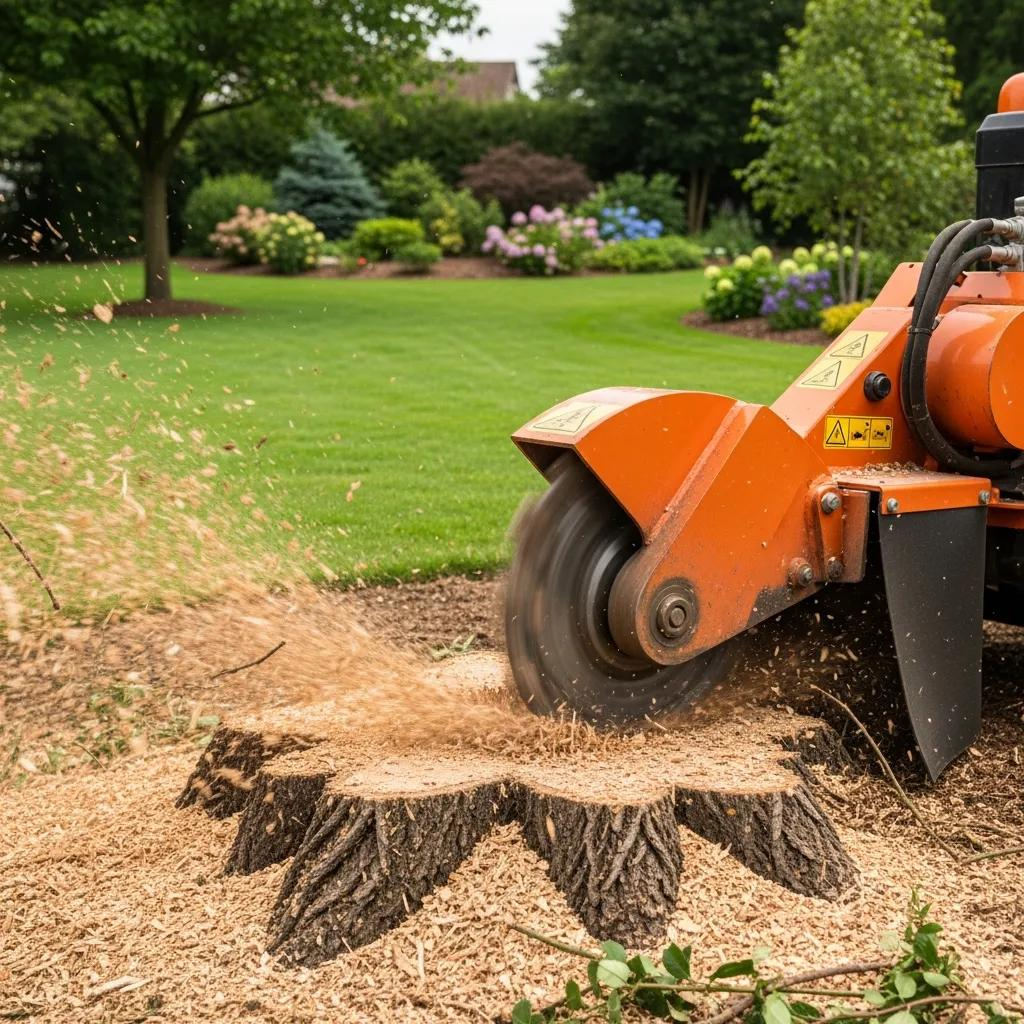
Stump grinding is a practical post-removal service that eliminates tripping hazards, reduces pest habitat, and clears space for replanting or landscape restoration. Unlike full excavation, grinding chips the stump and roots to a specified depth, allowing soil backfill and immediate reuse of the area for lawn or planting. The process preserves usable topsoil and generates mulch that can be recycled on-site or removed, while excavation-based stump removal is more invasive and costly. The table below compares stump grinding to full stump excavation to help homeowners decide which approach fits their restoration goals and budget.
| Approach | Typical Process | Primary Benefit |
|---|---|---|
| Stump grinding | Use of grinder to reduce stump to below grade and chip roots | Faster restoration, lower cost, and mulch byproduct |
| Full stump excavation | Mechanical removal of stump and major roots | Complete root removal, useful for large landscape projects |
| Chemical stump treatment | Application to accelerate decomposition over months | Low-cost option but slower and may affect soil chemistry |
Stump grinding balances speed, cost, and site usability for most residential scenarios. Homeowners who plan immediate replanting or landscaping often choose grinding for its faster turnaround and reduced disturbance.
What Are the Benefits of Professional Stump Grinding?
Professional stump grinding delivers safety, efficiency, and predictable depth control that DIY equipment rarely matches. Contractors use purpose-built grinders to reach recommended depths that minimize regrowth, handle large root systems safely, and manage debris and chip removal to keep the site clean. Professional grinding also avoids accidental damage to nearby structures, underground utilities, or irrigation lines through pre-job checks and careful machine operation. Finally, professionals can advise on soil backfill, compaction, and planting timelines after grinding to ensure successful replanting.
Hiring trained crews reduces the chance of incomplete grinding that leads to suckering or re-sprouting and ensures the work meets landscape plans. Proper disposal or recycling of grindings is also part of professional service, simplifying homeowner cleanup.
How Is Stump Removal Performed Safely and Efficiently?
Safe stump removal begins with a site evaluation to locate utilities and assess root extent, followed by isolating the work area and setting safety perimeters for bystanders. The grinding machine is positioned for optimal reach, and operators reduce the stump in layers until the target depth is achieved, typically several inches below grade depending on the plan. After grinding, operators remove large root chunks, grade the area, and recommend backfill or turf restoration steps. Typical small-to-medium stumps can be ground in a short window, while extensive root networks or rocky soils may extend the timeline.
Efficient grinding minimizes surface disturbance and allows homeowners to resume landscaping quickly, while safety protocols protect crew and property during the operation.
How Much Do Tree Services Cost in Apex NC and What Factors Affect Pricing?
Tree service costs in Apex NC vary by tree size, species, accessibility, proximity to structures, disposal needs, and urgency—each factor directly influences labor, equipment, and time required. Smaller routine pruning projects may fall at a modest price point, while large hazardous removals requiring cranes or extended hoisting raise costs significantly. Emergency calls frequently carry surcharges due to rapid dispatch and after-hours work. The table below summarizes service types, primary cost factors, and typical sample ranges to give homeowners a realistic starting point for budgeting before requesting a site-specific estimate.
| Service Type | Cost Factors | Typical Cost Range (Example) |
|---|---|---|
| Trimming / pruning | Tree size, access, number of trees | $150–$800+ depending on scale |
| Tree removal | Diameter, location, equipment needed | $300–$2,500+ for large or crane-assisted jobs |
| Stump grinding | Stump diameter, root complexity | $75–$600 depending on size |
| Emergency tree service | Response time, hazard level, after-hours | Premiums apply; variable by scenario |
These ranges are illustrative and actual quotes require on-site inspection to verify access, species, and disposal requirements. Requesting a free assessment provides a detailed breakdown that aligns scope with municipal permit needs and safety protocols.
What Influences the Cost of Tree Removal and Trimming?
Several specific factors increase or decrease the price for removal and trimming, often in predictable ways that homeowners can evaluate from a photo or brief description. Accessibility is a major driver: tight yards or obstacles that limit machinery use require more labor and time. Tree condition—such as decay or unpredictable limbs—necessitates careful staged removal and raises labor intensity. Species and wood density affect cutting time and chip volume, while required permits or coordination with utilities add administrative work. Disposal needs, such as extensive chipping, hauling, or stump grinding, also increase the total.
Example scenarios illustrate variance: a small ornamental tree on an open lot is far less costly than a 60-inch oak adjacent to a home needing sectional crane removal. Understanding these variables helps homeowners plan and compare estimates sensibly.
Are There Affordable Options for Emergency and Routine Tree Care?
Managing costs starts with preventative maintenance: regular pruning and health assessments reduce the likelihood of costly emergency removals and extend tree longevity. Bundling routine trimming into a scheduled program can lower per-visit costs and spread maintenance over time. For emergency needs, triage options such as temporary stabilization or priority assessments may offer lower initial costs than full removal, depending on risk. Some providers offer financing or phased work plans to spread large removal costs, but homeowners should confirm terms and compare trade-offs between immediate full mitigation and interim measures.
Preventative investment in assessments and scheduled trimming frequently reduces lifetime tree care costs by minimizing emergency interventions and preserving valuable landscape assets. When cost sensitivity is high, request a prioritized plan that sequences work by risk and budget.
Service Pricing Comparison
The following comparison highlights how service type and access interact to shape final pricing and helps homeowners identify where savings are achievable without compromising safety.
| Service | Typical Low-Complexity Cost | Typical High-Complexity Cost |
|---|---|---|
| Single-tree pruning | $150–$350 | $400–$800+ |
| Routine stump grinding | $75–$200 | $300–$600+ |
| Standard removal (medium tree) | $300–$800 | $1,000–$2,500+ |
This compact comparison helps set expectations and supports informed conversations during free assessments. Site-specific inspections remain the only reliable method to produce an accurate, permit-aware estimate.