
Expert Tree Cutting Services for Safe Tree Removal in Raleigh, Zebulon, and Surrounding NC Communities
Hazardous or overgrown trees pose serious risks to homes and businesses throughout Raleigh, Zebulon, and nearby areas like Cary and Wake Forest. Our expert tree cutting services utilize professional arborist techniques, strict safety protocols, and local knowledge to efficiently remove dangerous trees while safeguarding your property. This guide explores the key advantages of professional tree removal, identifies critical times to call for emergency service, breaks down cost factors, clarifies the differences between cutting, trimming, and pruning, explains how stump grinding completes your landscape care, highlights why Henry’s Tree Service is the leading choice for expertise, and addresses common questions about permits, insurance, and service options. By incorporating current industry standards, ISA certifications, and regional regulations, this resource empowers homeowners and businesses to make informed decisions for safe, dependable tree management.
What Are the Key Benefits of Professional Tree Removal Services?
Professional tree removal services combine certified arborist expertise with proven safety measures to protect property, minimize environmental impact, and maintain landscape aesthetics. Risk assessments, directional felling techniques, and debris management protocols work together to reduce liability and deliver predictable, efficient outcomes.
| Benefit | Mechanism | Outcome |
|---|---|---|
| Safety Assurance | Risk assessment and precision cutting | Eliminates hazards without property damage |
| Operational Efficiency | Specialized equipment and crew coordination | Faster removal with minimal site disruption |
| Comprehensive Cleanup | Debris removal and landscape restoration | Clear, usable space and improved curb appeal |
These core advantages establish a foundation for understanding the technical processes and professional credentials that underpin safe tree removal.
How Does Expert Tree Cutting Ensure Safe Tree Removal?
Expert tree cutting begins with a thorough evaluation of tree lean, weight distribution, and surrounding obstacles. Arborists apply directional felling techniques—such as hinge cuts and rope rigging—to guide the tree’s descent safely. This controlled approach prevents unpredictable drops and protects adjacent structures, utilities, and bystanders.
ANSI Z133.1 Safety Standards for Arborists
The Standard is revised every six years. To mitigate high injury rates and promote safe arboricultural operations, the Standard provides comprehensive guidelines. These guidelines encompass…Compliance with the ANSI Z133. 1—2006 safety standard among arborists in New England, B Kane, 2006
Why Hire Certified Arborists for Tree Removal?
Certified arborists hold credentials from the International Society of Arboriculture and adhere to ANSI A300 standards, combining tree biology expertise with industry best practices. Their extensive training in hazard assessment and equipment operation reduces the risk of injury and property damage, signaling a commitment to professional accountability and safety.
Arboricultural Standards and Professional Development in Tree Care
Authored by arborists, urban foresters, and tree nursery professionals, this narrative highlights the demand for enhanced services and the establishment of safe, resilient trees, referencing standards such as ANSI A300 and the ISA Certified Arborist® credential.Building and growing professionals for trees: Arboricultural standards and credentials, RJ Hauer, 2016
What Are the Advantages of Local Tree Cutting Services in NC?
Local tree cutting services deliver rapid response times and deep familiarity with native North Carolina species such as live oak and loblolly pine. Proximity enables quick scheduling for both routine and emergency work, while knowledge of Wake County permitting requirements streamlines project approval and ensures compliance with municipal regulations.
When Should You Call Emergency Tree Service in Raleigh and Zebulon?
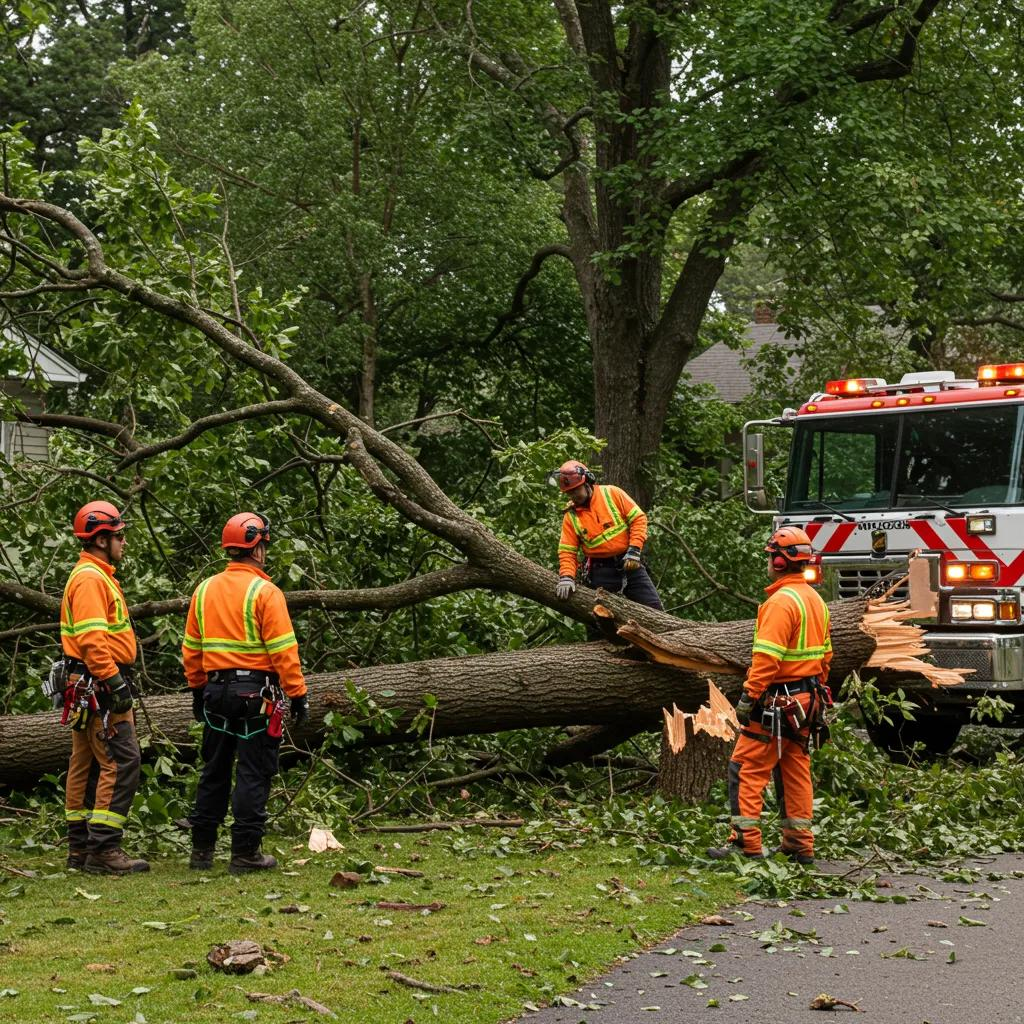
You should call emergency tree service immediately when a tree poses an imminent threat to life or property, such as after severe storms, structural failure, or sudden limb collapse. Emergency response combines rapid assessment, priority scheduling, and safety-first removal protocols to prevent further damage and restore security.
What Situations Require 24/7 Emergency Tree Removal?
- Fallen trunks blocking driveways or entrance points.
- Trees or large limbs threatening power lines and utilities.
- Leaning or cracked trunks after high-wind events.
- Lightning-struck or fire-damaged trees at risk of collapse.
These high-risk scenarios demand specialized crews and equipment for safe, immediate removal.
Arboricultural Operations: Analysis of Fatal and Non-Fatal Incidents
The objective of this study was to identify and quantify the hazards present during arboricultural operations. The Occupational Safety and Health Administration (OSHA) Fatality and Catastrophe incident database and other Bureau of Labor Statistics (BLS) sources were analyzed for arboricultural operation incidents occurring between 2001 and 2017. A total of 865 fatal and 441 non-fatal incidents were reviewed from this period. The four leading causes of fatal incidents, listed in descending order of frequency, were climber falls, workers struck by falling trees, workers making indirect contact with electrical currents, and workers struck by falling branches. Climber falls were also the leading cause of severe non-fatal injuries, followed by ground workers struck by falling branches, workers struck by chainsaws, and falls by aerial device operators. The American National Standards Institute (ANSI) Z133 American National Standard for Arboricultural Operations—Safety Requirements…A review of United States arboricultural operation fatal and nonfatal incidents (2001–2017): Implications for safety training, J Ball, 2001
How Does Emergency Tree Service Protect Your Property?
Emergency crews stabilize compromised trees using rigging lines and support hardware before sectional removal. This methodical staging prevents uncontrolled falls, safeguarding fences, roofs, and landscaping from collateral damage during the extraction process.
What Are the Steps to Take During a Tree Emergency?
- Evacuate the immediate area and keep bystanders at a safe distance.
- Contact a certified emergency tree service with 24/7 availability.
- Provide clear details about the tree’s condition, location, and risks.
- Follow arborist instructions to secure pets, vehicles, and entry points until professionals arrive.
These steps facilitate quick mobilization of resources and ensure personal safety while awaiting expert assistance.
How Much Does Professional Tree Removal Cost in Raleigh and Zebulon?
Professional tree removal costs in Raleigh and Zebulon typically range from $200 to $2,500, influenced by tree size, condition, location, and accessibility. Transparent pricing reflects labor, equipment, and debris disposal fees, allowing property owners to budget accurately and avoid unexpected charges.
| Factor | Influence | Pricing Impact |
|---|---|---|
| Tree Size | Diameter and height | Major driver of labor and equipment needs |
| Tree Condition | Health, rot, stability | Hazardous trees require extra safety measures |
| Access Difficulty | Obstructions or tight spaces | Increases time and specialized tool usage |
| Debris Removal | Chipping, hauling, disposal | Adds directly to total project cost |
Understanding these variables clarifies how estimates are calculated and sets the stage for obtaining a free, tailored quote.
What Factors Influence Tree Removal Cost Estimates?
Estimators assess trunk diameter, canopy spread, lean angle, and proximity to structures to determine crew size and equipment requirements. Diseased or insect-infested trees often incur higher costs due to additional safety protocols and specialized disposal methods.
How Can You Get a Free Tree Removal Estimate?
Henry’s Tree Service provides complimentary onsite evaluations, combining visual inspections with drone-assisted measurements for precise volume calculations. This transparent process delivers detailed quotes without obligation, helping clients compare options confidently.
What Are Typical Price Ranges for Residential vs. Commercial Tree Removal?
Residential removal of mid-size trees (up to 30 ft) averages $300 to $800. Larger specimens or those near utilities may cost $1,500 to $2,500. Commercial projects involving multiple trees, complex access, or stringent site requirements can range from $2,000 to $10,000 depending on scale.
What Are the Differences Between Tree Cutting, Trimming, and Pruning Services?
Tree cutting, trimming, and pruning address distinct landscape objectives and tree health needs. Cutting focuses on full removal, trimming refines canopy shape, and pruning targets specific limbs for structural integrity and disease prevention.
- Tree Cutting: Complete removal at ground level, typically for dead or hazardous trees.
- Tree Trimming: Selective reduction of overgrown branches to improve appearance and safety.
- Tree Pruning: Precise removal of dead or diseased limbs to promote healthy growth and reduce pathogen spread.
Clarifying these distinctions helps property owners choose the right service for their landscape goals.
How Does Tree Trimming Improve Tree Health and Appearance?
Tree trimming enhances light penetration and air circulation within the canopy, reducing fungal growth and stress on branching structures. By removing obstructive or overcrowded limbs, trimming promotes balanced growth patterns and maintains aesthetic harmony.
When Is Tree Pruning Recommended by Arborists?
Arborists recommend pruning during early dormant seasons to minimize stress and prevent sap loss. Techniques such as crown cleaning, thinning, and corrective pruning support structural strength and reduce the risk of branch failures during storms.
How Do Tree Cutting Services Support Safe Removal and Property Protection?
Professional tree cutting integrates directional felling and sectional removal with rope rigging systems, controlling each cut to prevent unpredictable drops. This precision avoids damage to nearby structures, driveways, and vegetation while ensuring efficient extraction.
How Does Stump Grinding Complement Tree Removal Services?
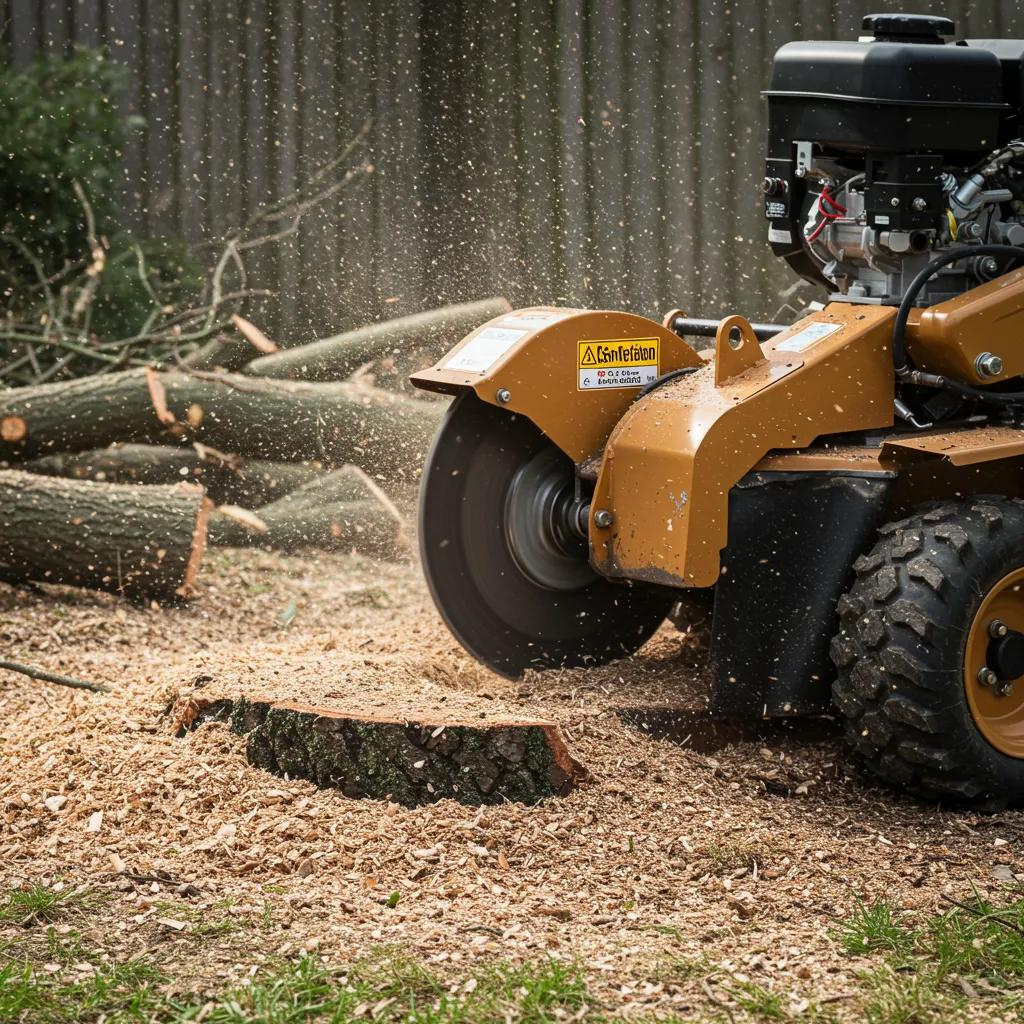
Stump grinding eliminates residual tree bases and root collars using a high-speed rotary cutter, converting wood into mulch and clearing the site to ground level. This process removes trip hazards, prevents pest infestations, and frees up space for replanting or landscaping.
| Step | Action | Benefit |
|---|---|---|
| Initial Assessment | Measure stump diameter and root depth | Determines required grinder size and power |
| Grinding Operation | Mill stump into wood chips below ground level | Eliminates decay sites and trip hazards |
| Mulch Management | Collect or distribute wood chips on-site | Provides soil enrichment or easy removal |
By completing the removal lifecycle, stump grinding restores full usability and aesthetics to the landscape.
What Is the Stump Grinding Process and Its Benefits?
Stump grinding uses specialized machinery to chip stumps into fine debris, eradicating decay points for insects and fungus. The resulting mulch can be incorporated into planting beds or removed entirely, leaving a smooth, clear surface ready for new plantings or hardscape installations.
How Much Does Stump Grinding Cost in Zebulon and Raleigh?
Stump grinding prices typically range from $100 to $400 per stump based on diameter and accessibility. Volume discounts apply for multiple stumps or when combined with tree removal services.
Why Choose Henry’s Tree Service for Expert Tree Cutting and Removal?
Henry’s Tree Service distinguishes itself through a safety-first culture, ISA-certified arborists, and decades of local experience across Raleigh, Zebulon, and surrounding communities. Their commitment to transparent pricing, rapid emergency response, and environmental responsibility builds customer trust and delivers consistent project success.
Key strengths include:
- ISA certifications and compliance with ANSI A300 pruning standards
- 24/7 emergency availability with rapid local deployment
- Free estimates backed by drone-assisted precision assessments
These advantages underscore Henry’s leadership in safe, professional tree management for residential and commercial clients alike.
What Certifications and Safety Standards Do Our Arborists Follow?
Our team holds International Society of Arboriculture credentials, incorporates ANSI A300 protocols, and adheres to OSHA safety requirements. This rigorous framework minimizes risks during all phases of tree removal, pruning, and emergency response.
How Does Local Expertise Enhance Tree Service Quality?
Decades of experience with native species like sweetgum and wax myrtle enable accurate disease diagnosis and tailored removal methods. Familiarity with Wake County permitting processes and municipal ordinances accelerates project approvals and ensures regulatory compliance.
How Can You Request a Free Estimate or Consultation?
Clients can schedule a no-cost onsite evaluation by phone or photo submission, providing property details and tree locations. Our arborists deliver detailed, obligation-free quotes that outline scope, timeline, and transparent pricing.
What Are Common Questions About Tree Removal and Cutting Services?
Homeowners often ask how to spot hazardous trees, whether permits are needed, and how to verify credentials before scheduling service. Clear answers to these concerns foster informed decisions and peace of mind.
How Do I Identify a Hazardous Tree That Needs Removal?
Look for large dead branches, significant trunk cracks, fungal conks at the base, or a pronounced lean. These indicators reveal structural weakness that can lead to sudden collapse.
Do I Need a Permit for Tree Removal in Wake County?
Permit requirements depend on city regulations and protected tree ordinances. Removal of trees above designated diameter thresholds or within conservation areas typically requires official approval. Checking local municipal codes clarifies specific obligations.
Are Tree Removal Services Insured and Licensed?
Professional providers carry comprehensive liability insurance and worker’s compensation coverage, protecting property owners from accidental damage claims. State or local licensing verifies adherence to industry standards and safety practices.
What Is the Difference Between Emergency and Scheduled Tree Removal?
Emergency removal addresses immediate safety threats—such as storm damage or fallen limbs—on a rapid-response basis without advance scheduling. Scheduled removal involves planned work under agreed timelines, allowing for detailed site preparation and cost optimization.
By understanding these service distinctions, property owners can select the right solution for their urgency, budget, and landscape objectives.
Safe, professional tree management safeguards property value, enhances landscape health, and ensures community safety. Partnering with a trusted local expert blends science, safety, and service excellence to deliver lasting results.