
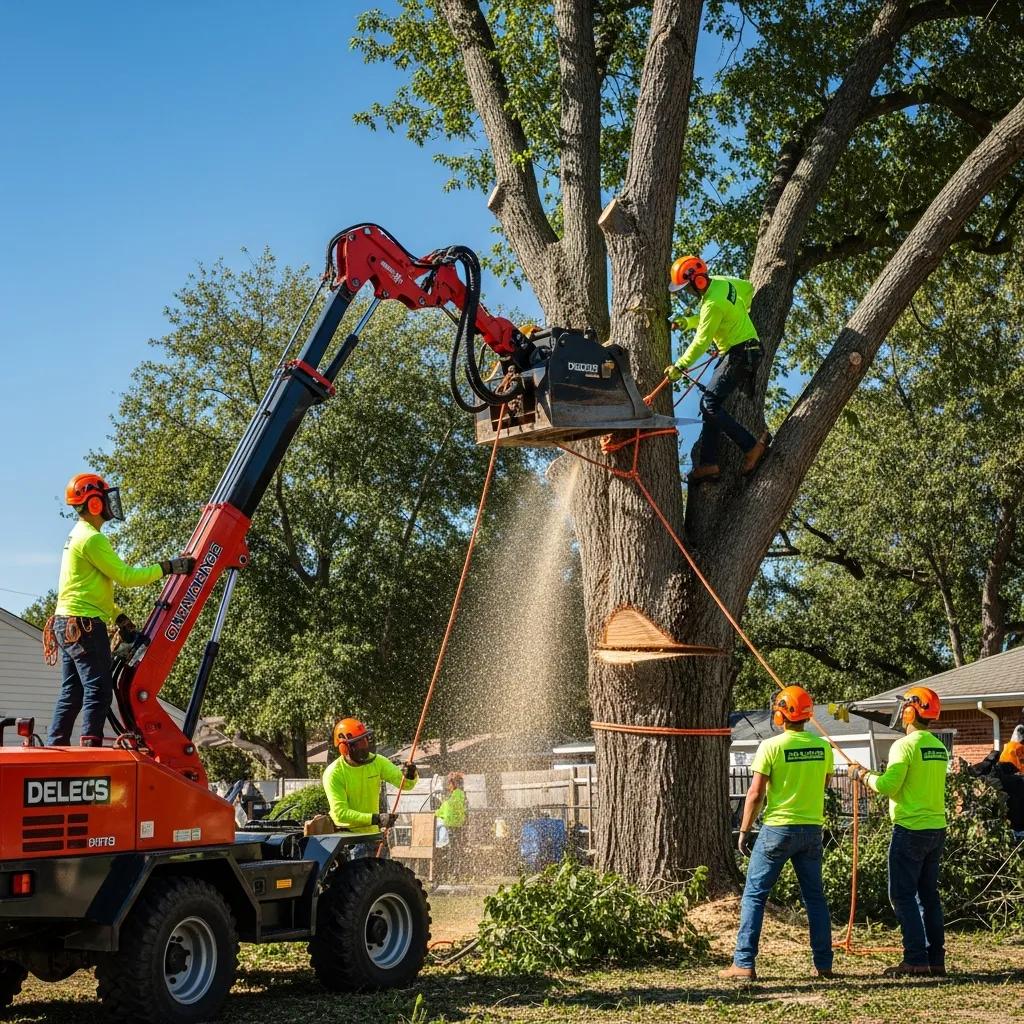
A Comprehensive Guide to Professional Tree Services in Raleigh, NC
Tree services in Raleigh NC encompass everything from hazard mitigation and structural pruning to stump grinding and emergency storm response, all tailored to the region’s mix of oaks, pines, maples, and crepe myrtles. This guide explains why property owners call professional crews for tree removal, trimming, stump work, and urgent storm cleanup, and how these services protect safety, preserve landscape value, and support long-term plant health. Readers will learn practical indicators for removal versus treatment, how pruning and ANSI A300-compatible practices support structural integrity, the trade-offs between stump grinding and removal, and when to engage 24/7 emergency crews. The article maps local regulatory considerations that often trigger permits and summarizes what to expect from certified arboricultural approaches and urban-forestry compliance. Throughout, targeted terms like tree care Raleigh NC, tree removal Raleigh NC, stump grinding Raleigh NC, and emergency tree service Raleigh are used to connect local search intent with actionable guidance for homeowners and property managers.
What Are the Key Benefits of Tree Removal Services in Raleigh NC?
Tree removal in Raleigh NC addresses immediate safety risks and broader landscape planning needs by removing trees that are hazardous, diseased, or obstructive to development. Professional removal reduces structural failure risk from leaning trunks and dead limbs, prevents disease spread to neighboring trees, and clears space to improve sightlines, sunlight, and usable yard area. Tree removal also affects liability and property value by mitigating hazards that insurers and buyers may flag, while making room for landscape renewal or replanting with species better suited to local conditions. The following list highlights core advantages that homeowners commonly prioritize before commissioning removal or replacement.
- Reduced Safety Risk: Removing structurally compromised trees lowers the chance of falling limbs or trunk collapse that can damage people or property.
- Disease and Pest Control: Removing infected or infested trees stops pathogens and pests from spreading to nearby healthy specimens.
- Improved Usable Space: Clearing trees creates functional yard areas for recreation, construction, or replanting with low-maintenance species.
- Aesthetic and Value Gains: Thoughtful removal and subsequent landscape planning enhance curb appeal and can increase marketability.
- Liability Reduction: Eliminating obvious hazards reduces homeowner liability and can simplify insurance claims after incidents.
This comparison table clarifies common reasons to remove trees and the direct, measurable benefits owners receive when removal is executed by trained crews.
| Removal Reason | Risk Addressed | Direct Benefit |
|---|---|---|
| Dead or dying tree | Sudden trunk or limb failure | Immediate reduction in collapse risk |
| Leaning or root-compromised tree | Uprooting during storms | Lowered property damage potential |
| Diseased or infested tree | Spread to adjacent trees | Disease containment and healthier canopy |
| Clearance for development | Interference with structures/utilities | Safe site for construction and utility access |
This table shows how targeted removal choices produce clear safety and landscape outcomes that justify professional assessment and execution. Local providers such as Henry’s Tree Service can be examples of companies offering these removal and assessment capabilities in the Raleigh/Triangle market.
How Does Professional Tree Removal Enhance Property Safety and Value?
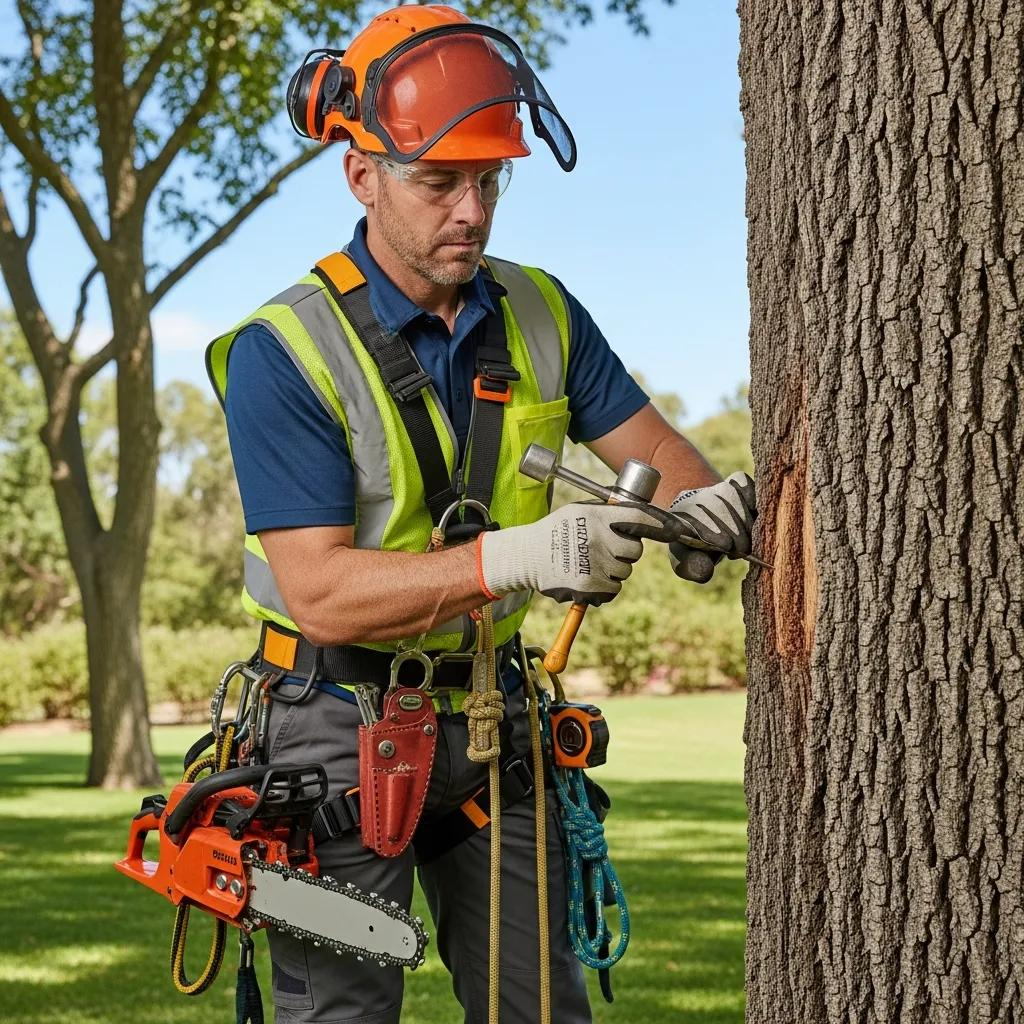
Professional tree removal enhances safety by systematically assessing structural defects—such as root plate instability, extensive decay, or crown dieback—and removing only those trees that pose imminent or long-term risk. Trained crews prioritize risk reduction through staged dismantling, securing drop zones, and protecting adjacent structures, which lowers the probability of secondary damage during removal. From a value perspective, properties with clear, hazard-free landscapes are more attractive to buyers and present fewer insurance complications, while careful removal can free space for higher-value plantings or functional outdoor improvements. Understanding the interplay between safety and valuation helps owners make informed decisions that balance immediate removal costs against future liability and renovation benefits.
What Equipment and Techniques Are Used for Safe Tree Removal in Raleigh?
Safe tree removal relies on specialized equipment and established techniques tailored to urban and suburban Raleigh settings, from chainsaws and aerial lifts to rigging hardware and chipper trucks. For large or awkward trees, crews may deploy cranes or sectional rigging to lower heavy sections in confined yards, while chippers and wood grinders convert removed material into manageable mulch, reducing cleanup time. Safety protocols include establishing exclusion zones, traffic control when trees are near roads, and aerial rescue readiness for complex removals. Rigging components, harnesses, and helmeted crew roles form part of the meronomy of a professional removal operation, ensuring each component—root plate, trunk, branches, and crown—is managed in sequence to minimize risk and landscape impact.
How Does Tree Trimming and Pruning Improve Tree Health in Raleigh NC?
Tree trimming and pruning improve tree health in Raleigh by removing dead or diseased wood, correcting structural defects, and shaping crowns to balance wind resistance and light penetration. Pruning reduces pathogen entry points and redirects growth to stronger branches, which enhances long-term stability and decreases the likelihood of failure during storms common to the region. Routine trimming also promotes airflow through the canopy, reducing fungal pressure and supporting plant health while enabling better sunlight distribution for underplantings and lawns. Homeowners who understand the physiological reasons behind pruning can time work seasonally and select species-appropriate approaches that maximize vigor and longevity.
- Disease Prevention: Removing infected limbs limits pathogen spread and reduces susceptible tissue.
- Structural Integrity: Selective cuts reshape weak crotches and reduce limb leverage on trunks.
- Aesthetic and Functional Outcomes: Trimming improves sightlines and clears structures without excessive canopy loss.
Proper pruning is a balance between corrective intervention and preserving photosynthetic capacity, and recognizing that routine trimming differs from corrective pruning is essential when planning tree care.
What Are the Differences Between Tree Trimming and Pruning?
Tree trimming generally refers to routine maintenance—shaping, crown thinning, and clearance cuts—while pruning is a targeted arboricultural practice focused on tree health, structural correction, and long-term vigor. Trimming often addresses aesthetics, sightline clearance, and minor overgrowth and is performed more frequently, whereas pruning is diagnostic and strategic, addressing defects like codominant stems, included bark, or decay. Timing also differs by objective: trimming for seasonal clearance may occur multiple times a year, while pruning to manage disease or structural problems follows species-specific windows to reduce stress and pathogen susceptibility. Choosing between trimming and pruning depends on the tree’s age, condition, and the desired outcome for both landscape function and biological health.
How Do Certified Arborists Follow ANSI A300 Standards in Tree Care?
Certified arborists implement ANSI A300 standards as a framework for safe and effective pruning, removal, and maintenance, using prescribed cut types, pruning heights, and decay-management techniques to minimize harm. Compliance indicators include proper pruning cuts at branch collars, retention of target crown architecture, and documentation of treatment plans that reflect best practices for wound closure and pathogen reduction. Homeowners can verify adherence by asking contractors about written work plans, equipment sanitation protocols, and references to A300 pruning categories appropriate to the service. Following these standards supports predictable outcomes, reduces unnecessary wood loss, and helps align contractor practices with professional arboriculture expectations.
What Are the Advantages of Stump Grinding Services in Raleigh NC?
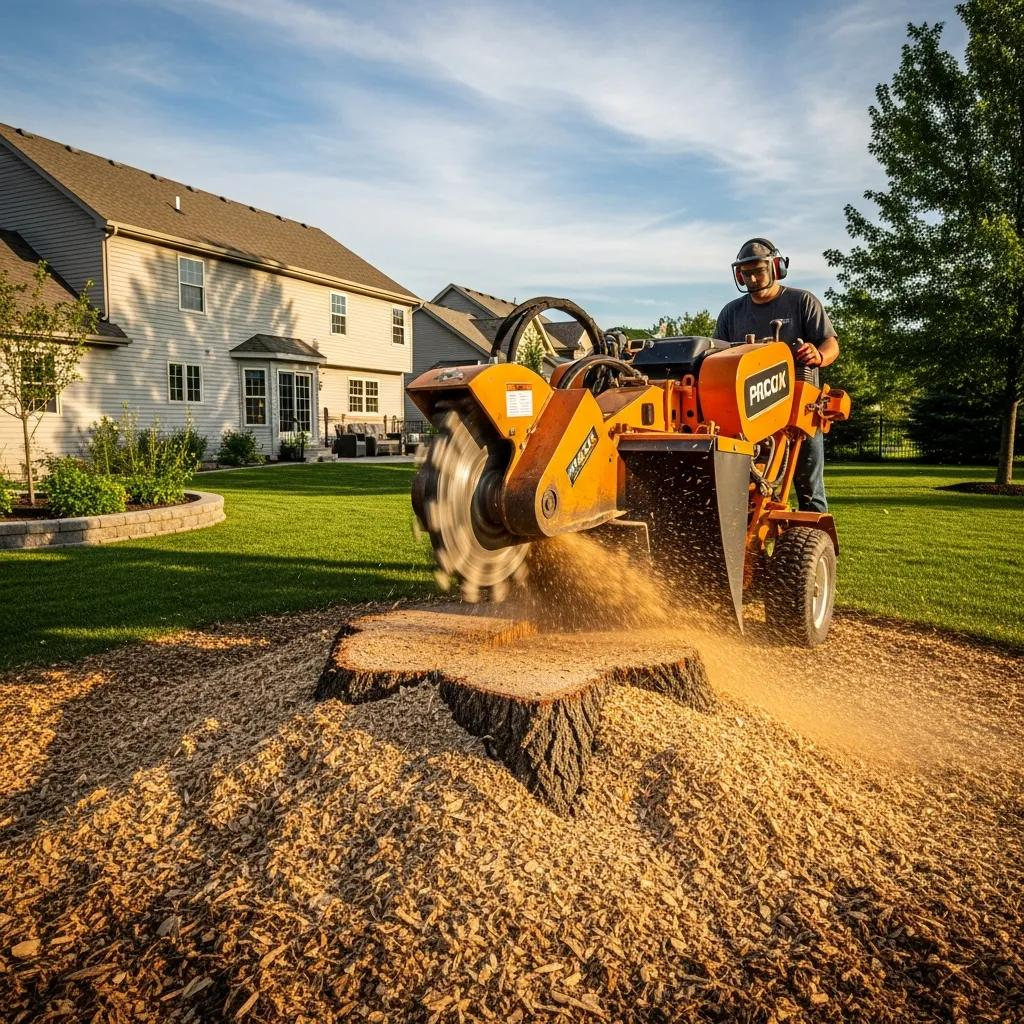
Stump grinding offers a minimally invasive solution to remove above-ground remnants after tree removal, reducing tripping hazards, eliminating pest harborage sites, and opening space for replanting or landscape restoration. Grinding targets the remaining stump and roots near the surface with specialized grinders, producing mulch that can be reused on-site, and it typically involves less soil disturbance than full stump extraction. For many homeowners, stump grinding is cost-effective and accelerates landscape rehabilitation compared with exhaustive root removal. Below is a comparison table that outlines how stump grinding stacks up against full stump removal across cost, timeline, landscape impact, and regrowth risk.
| Option | Characteristic | Typical Outcome |
|---|---|---|
| Stump Grinding | Surface removal, minimal excavation | Faster replanting, less disruption |
| Stump Removal | Root system extraction | Eliminates more roots but higher cost and more disruption |
| Chemical Removal | Slow decay over months | Avoids heavy equipment but prolonged site unusable |
This table clarifies trade-offs so homeowners can choose based on budget, timeline, and landscape goals; stump grinding often provides the best balance of cost, speed, and minimal disruption for typical Raleigh yards.
How Does Stump Grinding Compare to Stump Removal?
Stump grinding grinds the stump down to below-grade and leaves root structures largely intact, while stump removal excavates the root mass entirely, often requiring heavy machinery and more landscape repair. Grinding is typically faster, less costly, and creates reusable mulch, but it may leave deeper roots that decay over time and can produce minor resprouting in some species. Full removal is appropriate when roots interfere with foundations, utility lines, or future building plans. The choice depends on desired permanence, budget, and whether complete root extraction is necessary for construction or utility access.
What Are the Benefits of Professional Stump Grinding for Your Landscape?
Professional stump grinding provides efficient removal with minimal impact to surrounding turf, precise milling depth suited to replanting, and effective mulch production that can be integrated back into beds. Pros use grinders sized to the stump and access constraints, protect nearby plants during operations, and recommend soil backfill and compaction practices to optimize subsequent planting. Beyond aesthetics and usability, grinding reduces habitats for wood-boring pests and simplifies mowing and landscape maintenance. Planning for post-grind rehabilitation—such as topsoil addition and selection of replacement species—helps ensure the site recovers quickly and supports desired landscape outcomes.
When Should You Call Emergency Tree Service in Raleigh NC?
Call emergency tree service in Raleigh when a tree or limb creates an immediate threat to life, property, or critical infrastructure, particularly after storms or sudden structural failure. Emergency indicators include a partially uprooted trunk, a large limb that is suspended over a structure, or any tree making contact with live utilities; these scenarios require rapid triage to secure the site and prevent secondary damage. Response expectations typically involve same-day assessment, establishing safety perimeters, and prioritized removal or stabilization to reduce risk. The short decision checklist below helps homeowners determine when to escalate to emergency assistance.
- Is the tree leaning heavily toward a structure or line? If yes, call emergency service.
- Are large limbs hanging and at risk of falling? If yes, request urgent evaluation.
- Is the tree in contact with powerlines? If yes, treat as high priority and contact professionals immediately.
This checklist helps prioritize safety actions; when in doubt, a quick professional assessment reduces the chance of escalation.
Introductory table comparing emergency scenarios and recommended homeowner actions follows to help triage common threats.
| Scenario | Typical Response Time | Immediate Homeowner Action |
|---|---|---|
| Fallen tree on driveway | Same day to 48 hours | Keep clear, document for insurance |
| Leaning or partially uprooted tree | Immediate (hours) | Evacuate nearby area, avoid contact |
| Tree contacting a structure | Immediate (hours) | Move occupants/sensitive items away |
This table demonstrates how response time and homeowner steps align with scenario severity and helps owners take appropriate immediate measures.
How Does 24/7 Emergency Tree Service Mitigate Storm Damage?
A 24/7 emergency crew mitigates storm damage by enabling rapid triage and prioritized stabilization—securing hazardous sections, protecting utilities and structures, and removing immediate threats before further weather events occur. The process typically follows a sequence: notification, site assessment, stabilization or temporary bracing if needed, and staged removal to ensure safety and access for other emergency responders. Rapid intervention reduces secondary damages such as water intrusion from compromised roofs or falling debris that can affect neighboring properties. By focusing on containment first and complete removal second, emergency teams limit the scale of post-storm restoration required.
What Are Common Emergency Tree Situations Handled by Experts?
Emergency crews commonly address storm-downed trees blocking access, large limbs compromising roofs or vehicles, trees leaning after root failure, and trees that have fallen across driveways or fences. Technicians evaluate structural stability and the proximity to utilities, then establish exclusion zones and coordinate with utility providers when lines are involved. Homeowner do/don’t guidance includes keeping clear of the scene, not attempting removal with household tools, and documenting damage for insurers. Quick professional action not only restores safety but also helps preserve salvageable portions of the landscape where feasible.
Why Choose a Certified Arborist for Tree Care in Raleigh NC?
Choosing a certified arborist brings formal diagnostic skills, familiarity with local species and pests, and an expectation of adherence to industry standards that together deliver safer, more effective care. Certified professionals apply systematic assessment—crown, trunk, root analysis—and recommend treatments ranging from targeted pruning to integrated plant health care rather than defaulting to removal. This expertise is especially important for complex decisions like hazardous tree removal and disease management, where incorrect interventions can worsen structural problems or spread pathogens. Homeowners benefit from the combination of technical knowledge and documented practices that support long-term landscape resilience and compliance with urban forestry expectations.
- Trained Diagnostics: Arborists use inspection protocols to identify decay, pest presence, and structural defects.
- Standards-Based Work: Knowledge of ANSI A300 and other best practices guides pruning and removal decisions.
- Risk Management: Certified arborists plan removals and treatments to minimize liability and preserve asset value.
When selecting an arborist, ask for verification of credentials and examples of diagnostic reports to confirm the provider’s methodology and thoroughness.
What Qualifications Define an ISA Certified Arborist?
An ISA Certified Arborist meets credentialing criteria that typically include demonstrating knowledge of tree biology, pruning, safety, and local ecology through a standardized exam and ongoing education requirements. Prospective clients can look for indicators such as documented continuing education, membership in professional bodies, and familiarity with local urban forestry ordinances to confirm competence. While certification denotes baseline expertise, additional experience with regional species and storm-response work often separates routine providers from specialists. Verify qualifications by requesting the arborist’s credential details and a sample work plan that references accepted standards.
The importance of such professional credentialing is underscored by research into the availability and impact of certified arborists in various regions.
ISA Arborist Certification & Professional Tree Care
Professional credentialing refers to the process of obtaining a certification or license that validates an individual’s knowledge, skills, and abilities according to industry-accepted ethics and standards. The International Society of Arboriculture (ISA) confers and manages professional arborist certification as well as other arborist credentials. However, many communities, such as in the southern United States, have few if any credentialed commercial tree care professionals.
Motivations and barriers of professional certification for tree workers, JS Gordon, 2024
How Do Certified Arborists Diagnose and Treat Tree Diseases Locally?
Certified arborists diagnose tree diseases using a diagnostic flow: observe symptoms (leaf spots, dieback), identify likely causes (fungal, bacterial, or insect), and apply targeted treatments such as sanitation pruning, localized injections, or removal when necessary. They also consider site factors—soil compaction, drainage, and species susceptibility—that influence treatment efficacy and recurrence risk. Local treatments may include pruning to remove infected tissue, cultural recommendations to improve vigor, and monitoring plans to detect recurrence early. This diagnostic-to-treatment pipeline ensures interventions address root causes rather than just symptoms, improving long-term outcomes for the urban canopy.
Local providers, including firms like Henry’s Tree Service, are part of the Raleigh service mix that can perform assessments and coordinated care in line with industry best practices.
For professional assistance with tree removal, pruning, stump grinding, emergency response, or plant-health care in the Raleigh/Triangle area, consider contacting a local tree services provider that offers comprehensive assessments, mitigation planning, and skilled field crews. Henry’s Tree Service is one example of a local provider that participates in the Raleigh service ecosystem and can perform the types of work outlined above.