
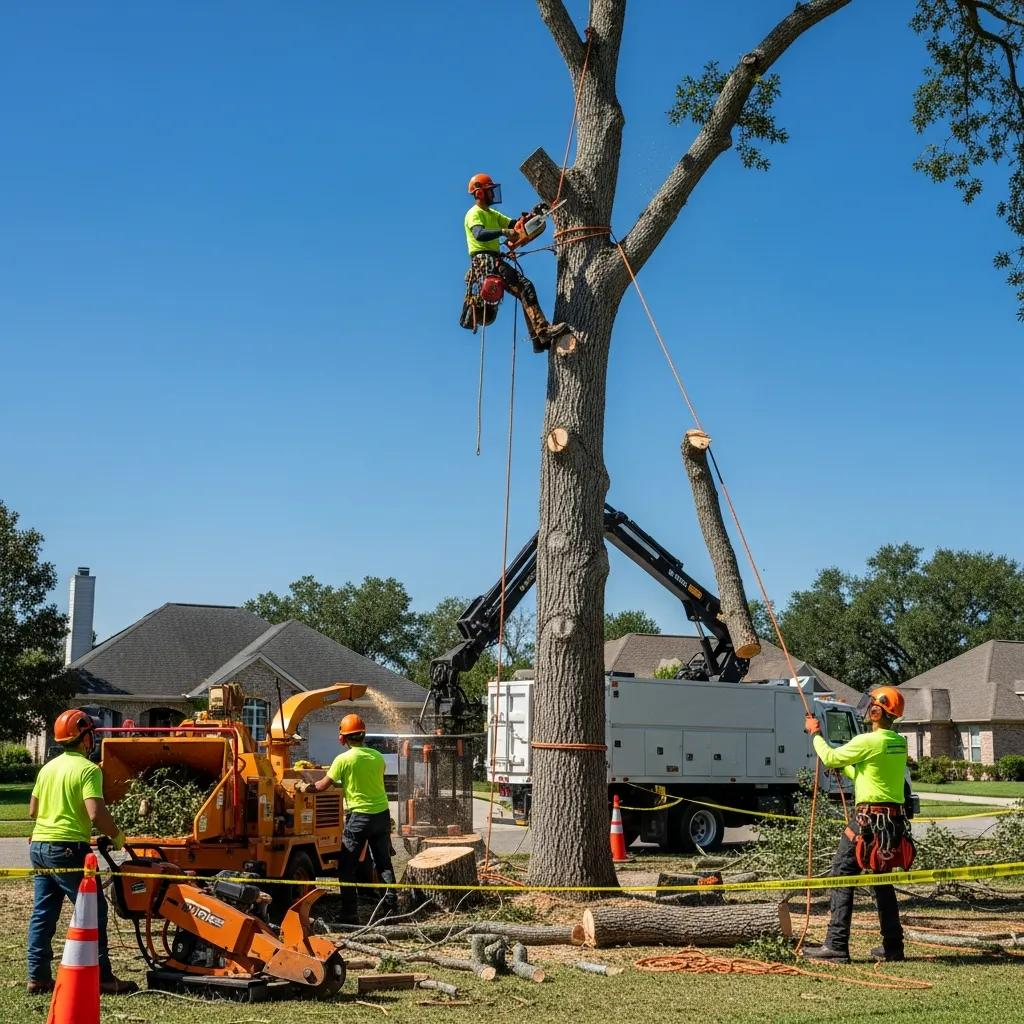
Efficient, Safe, and Environmentally-Conscious Tree Removal Services
Professional tree removal refers to trained crews and arboricultural specialists who assess, plan, and execute tree cutting and removal with safety, efficiency, and environmental care. Hiring professionals reduces the risk of property damage, personal injury, and regulatory noncompliance by combining risk assessment, the right equipment, and trained rigging techniques. This article explains what professional tree removal services include, when emergency removal is necessary, how pricing is determined, the types of specialized removal services, and how safety and sustainability are prioritized. You will learn practical signals to call for help after storm damage, the primary cost drivers and insurance considerations, and which service types (including stump grinding and crane-assisted removal) fit different site constraints. The sections that follow cover certified-arborist practices and common equipment, a step-by-step emergency response workflow, cost-driver tables that clarify pricing components, and guidance on choosing a reputable provider. Understanding these elements helps property owners make informed decisions that protect assets and the landscape while reducing long-term liability.
What Are Professional Tree Removal Services and Why Are They Essential?
Professional tree removal services deliver full-cycle arboriculture solutions that safely evaluate, cut, and remove trees when those trees present risk or no longer meet landscape goals. These services combine an on-site risk assessment, decision-making about topping versus full removal, and the execution of a planned disassembly using industry-standard rigging and containment. The result is reduced hazard to people and structures, minimized collateral damage to surrounding vegetation, and efficient disposal or recycling of woody debris. For homeowners and property managers, the primary value of professionals is liability reduction and predictable outcomes through documented assessment and procedural controls. The next section explains the role of certified arborists in that assessment and how their methods prevent tree-failure events.
Professional tree removal is essential when trees threaten structures, powerlines, or safe access, and when internal decay or storm damage creates an imminent risk that untrained efforts could worsen. Understanding the typical service components helps owners decide when to call a trained crew versus scheduling routine pruning or preventive care.
Professional tree removal provides clear benefits:
- Safety: Trained crews reduce the chance of injury and property damage through planned rigging and exclusion zones.
- Property protection: Controlled sectioning and directional felling protect nearby structures and landscape features.
- Efficiency and compliance: Professionals optimize equipment use and follow permitting and disposal rules to avoid fines and delays.
These benefits make professional removal the prudent choice when risk or complexity exceeds DIY capability, and the following subsection describes how certified arborists operate.
How Do Certified Arborists Ensure Safe and Efficient Tree Cutting?
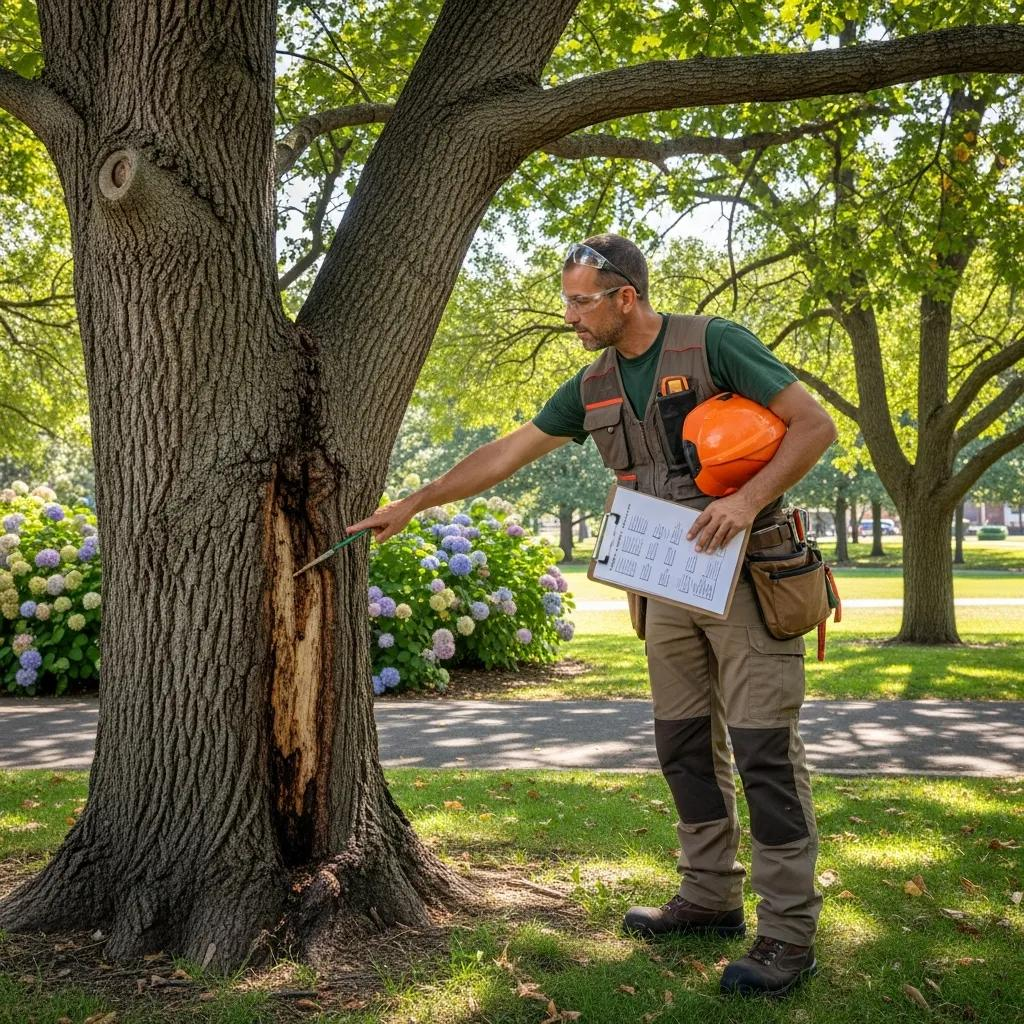
Certified arborists begin with a systematic tree risk assessment that documents structural defects, root health, soil conditions, and potential targets should failure occur. They use standardized criteria—inspecting trunk cavities, root plates, decay progression, and branch junctions—to determine whether mitigation, pruning, or complete removal is warranted. Based on that assessment, arborists select techniques such as sectional dismantling, directional felling, or crane-assisted lowering to control descent paths and limit collateral impact. Arborists also prepare written plans and communicate staging and exclusion zones to property owners before work begins, ensuring everyone understands the sequence and safety measures. This assessment-to-execution workflow directly reduces unexpected failure modes and speeds operations by matching the method to site constraints.
The systematic approach to evaluating tree health and potential hazards is a cornerstone of certified arborist practices, as detailed in professional standards.
Certified Arborist Tree Risk Assessment Standards
The now-standard method for tree risk assessment in the Certified Arborist Credential, the presence or absence of the ISA Tree Risk Assessment Qualification, and portion of the tree
Impact of assessor on tree risk assessment ratings and prescribed mitigation measures, AK Koeser, 2017
A clear assessment naturally leads to the choice of equipment required for safe removal, which is covered next.
What Equipment Is Used for Safe Tree Removal?
Safe tree removal uses a combination of handheld tools, mechanical equipment, and aerial access systems selected to match tree size, site access, and surrounding hazards. Common tools include chainsaws sized to the job, rope-and-rigging systems for controlled sectioning, and aerial lifts or bucket trucks for safe canopy access; heavier or complex removals may require cranes, large stump grinders, and specialized chippers. Equipment choice improves safety by allowing crews to lower large sections with controlled rigging rather than letting them free-fall, and by providing stable platforms for workers at height. When adjacent structures or narrow access restrict standard rigging, crane-assisted methods or sectional removal techniques become necessary to protect property and maintain crew safety. The next section outlines when conditions escalate to emergency removal and how to triage hazards quickly.
Specialized techniques like crane-assisted removal are often employed for challenging situations, as highlighted by industry practices.
Helicopter & Crane Assisted Tree Removal with Rigging
Trees in this area will be removed using Helicopter dismantling or by Crane assisted placed on to the matting by employing rigging techniques that offer maximum control with manual
Tūpuna Maunga Authority, 2019
When Should You Call Emergency Tree Removal Services?
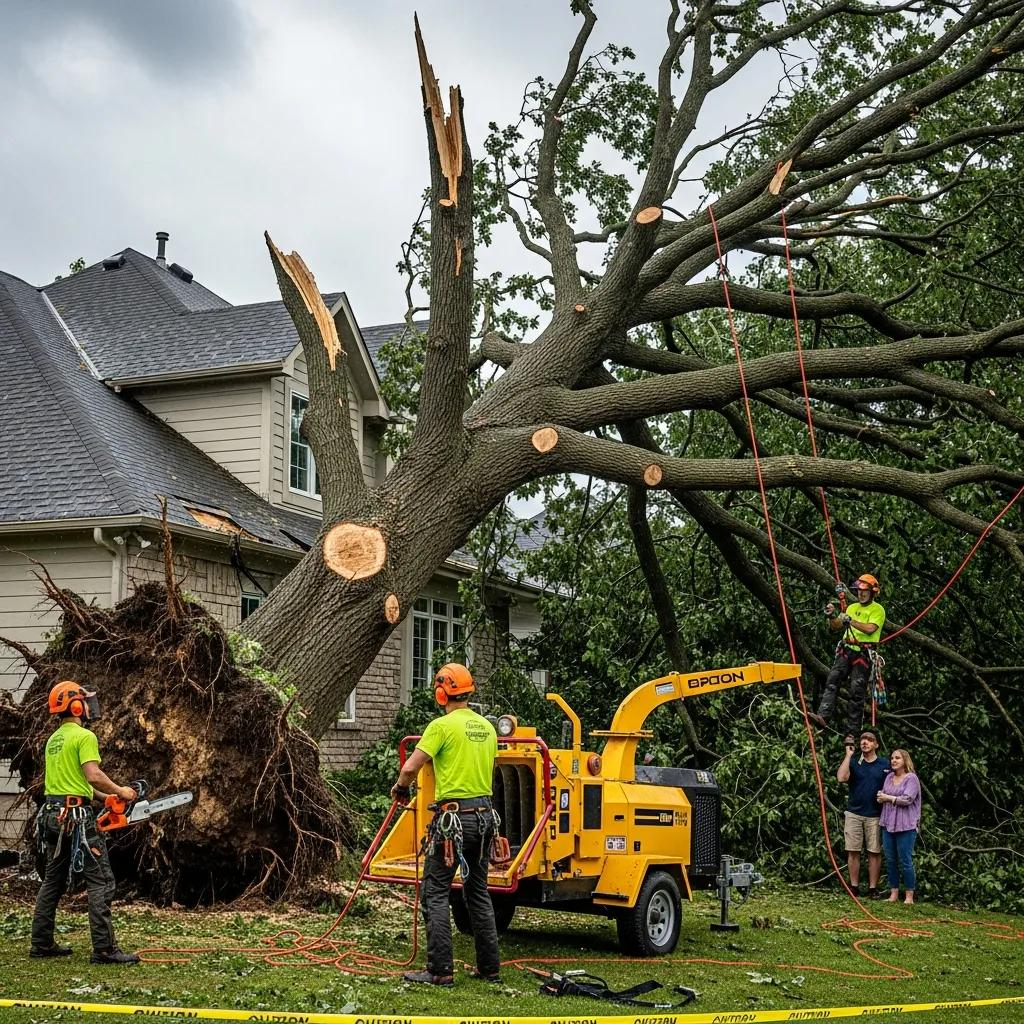
Emergency tree removal is necessary when a tree or large limb presents an immediate danger to life, property, or essential services and cannot wait for a scheduled service. Typical emergency indicators include trees leaning onto structures, large limbs entangled with utility lines, or trunks with sudden splits and exposed decay after a storm. Rapid response reduces secondary damage such as roof collapse, vehicle damage, or obstructed access for emergency responders, and professionals will prioritize stabilization and mitigation before full removal. If you observe any of the listed urgent signs, contact a trained crew for an assessment and emergency mobilization. The following checklist provides a quick decision aid for immediate action.
Call emergency tree removal if you observe any of these conditions:
- A tree or large limb resting on or entangled with power lines.
- A leaning tree that has recently shifted closer to a structure or road.
- Major trunk failure or vertical splits exposing inner decay.
- Blocked driveways, exits, or access required by emergency services.
This checklist highlights immediate hazards; the next subsection explains how storm damage changes removal priorities and insurance coordination.
How Does Storm Damage Impact Tree Removal Needs?
Storm-damaged trees present a range of failure modes—root uplift, trunk splitting, canopy loss, and hanging or cracked limbs—and each requires a targeted triage to prioritize safety. After a storm, crews look for signs of root failure (tilting or soil heaving), trunk fractures, and crown instability, then score the immediacy of risk to guide mobilization. Rapid stabilization—such as bracing, rope support, or temporary removal of hazardous limbs—can protect occupants while full removal is scheduled. Insurance considerations are important because storm-related sudden failures are more likely to be covered, so photographing damage, documenting location, and keeping removal invoices supports claims. Understanding these inspection priorities helps property owners know what to expect during an emergency assessment and prepares them for the removal process that follows.
Effective emergency response to storm-damaged trees relies on thorough planning and a clear protocol to mitigate immediate risks.
Emergency Tree Removal & Storm Response Planning
tree-related emergencies and represents a protocol that begins with planning, ends with emergency Planning and preparing for weather events that may damage trees is the foundation
VT Urban Forestry-Urban Forest Storm and Emergency Response Procedure 2023, 2023
Identifying the right emergency response leads to a predictable sequence of steps professionals follow on site, described next.
What Are the Steps in Emergency Tree Removal?
Emergency tree removal follows a clear sequence to secure the site and remove hazards with minimal collateral damage. First, a rapid remote intake and risk triage determine whether immediate stabilization is needed; second, crews secure the scene with traffic control and exclusion zones; third, specialized equipment is mobilized—often with sectional removal or crane assistance—to lower hazardous pieces safely; and fourth, crews complete debris management and document the work for insurance purposes. Each step is governed by safety checks, including PPE verification, attachment-point inspection for rigging, and a final sweep to confirm no remaining hazards exist. Documenting the process with photos and a written scope helps owners file claims and provides a record of emergency actions taken.
An ordered list summarizes the standard emergency response steps:
- Initial triage and remote assessment: Establish immediacy and required resources.
- Scene stabilization and safety setup: Create exclusion zones and secure utilities if needed.
- Controlled removal and lowering: Use sectional dismantling, cranes, or bucket trucks to remove hazardous components.
- Debris handling and documentation: Chip, haul, or stage wood and provide documentation for insurance.
This stepwise approach ensures safety and creates a clear paper trail for recovery and claims, which leads into the next discussion about costs and insurance.
What Factors Influence Tree Removal Cost?
Tree removal cost is driven primarily by size, species complexity, access, urgency, and required equipment; typical 2024 market ranges vary widely, but understanding the components helps estimate reasonable budgets. Larger diameter trunks and taller trees require more labor and heavier equipment, raising costs substantially. Restricted access, proximity to structures, and the need for cranes or traffic control increase time and permit requirements, while emergency callouts typically carry premium rates. Additional charges often include stump grinding, hauling and disposal, and required permits in regulated locales. Below is a compact table that maps the top cost drivers to attribute ranges to make these influences clear.
| Tree Feature | Attribute | Typical Impact / Example Range |
|---|---|---|
| Size | Trunk diameter and height | Larger trees (>50″ dia.) require crews and heavy equipment; cost increases substantially |
| Access | Site constraints and proximity to structures | Tight lots or overhead wires increase labor and may require crane use |
| Urgency | Emergency vs scheduled service | Emergency response often includes mobilization fees and higher hourly rates |
| Species | Wood density and limb complexity | Hardwoods and trees with dense branching demand more cutting time and rigging |
This table clarifies how specific features translate into cost drivers that affect final estimates. The next subsections break down size-based pricing and insurance coverage nuances.
How Does Tree Size and Type Affect Pricing?
Tree size and species directly affect the time, crew size, and equipment needed for safe removal. Typical pricing models scale with trunk diameter and height because larger sections require more complex rigging, larger chippers, and sometimes cranes; trees with deep or invasive root systems also require additional excavation or stump services. Species matters because hardwoods with dense wood and unpredictable limb structure can increase cutting time and blade wear, while trees with brittle wood or extensive decay may require more careful sectional removal to avoid uncontrolled breakage. Estimating costs by size brackets—small (under 25″ diameter), medium (25–50″), and large (over 50″)—helps property owners anticipate ranges and ask for line-item estimates that separate removal from stump grinding and disposal.
Understanding these size-driven cost components sets up the common question of insurance coverage, addressed next.
Is Tree Removal Covered by Insurance?
Yes — in many cases, tree removal is covered by homeowners insurance when the damage is sudden and caused by a covered peril, but policies vary and exclusions exist. Commonly covered scenarios include trees that fall due to wind, lightning, or an otherwise insurable storm and cause damage to a covered structure; coverage may include removal of the tree and repairs. Conversely, insurance typically excludes pre-existing conditions such as diseased trees the owner neglected, and policies may cap removal amounts or require an adjuster’s approval. To pursue a claim, document the damage with photos, retain invoices and a written scope of work, and coordinate with the insurer before disposing of significant evidence. These steps increase the likelihood of reimbursement and clarify whether removal costs fall to the homeowner or insurer.
Practical action steps for claims include documenting damage, obtaining a written estimate, and submitting paperwork promptly to the insurer for adjuster review.
What Are the Different Types of Tree Cutting and Removal Services Offered?
Tree cutting and removal services come in several hyponym categories—emergency removal, hazardous-tree removal, crane-assisted removal, commercial-scale removal, and stump grinding—each tailored to specific site needs and risks. Providers typically offer scheduled pruning and removals for routine landscape management, hazardous mitigation for structurally compromised trees, and crane-assisted sectional removals when access or adjacent structures make traditional lowering techniques impractical. Understanding which service fits a situation depends on access, tree condition, and the desired outcome for the site. The table below compares common service types with their typical use cases and equipment needs to clarify selection.
| Service Type | Typical Use Case | Equipment Required |
|---|---|---|
| Emergency removal | Trees posing immediate danger after storm or failure | Rapid-mobilization crews, chainsaws, rigging |
| Hazardous-tree removal | Severely decayed or structurally compromised trees near structures | Rigging, sectional removal, exclusion zones |
| Crane-assisted removal | Limited access or very large trees adjacent to structures | Crane, certified crane crew, lift rigging |
| Stump grinding service | Remove remaining stump for landscape restoration | Stump grinder, backfill equipment, hauling for debris |
This comparison clarifies when each service type is appropriate and what equipment to expect on site. The following subsections explain hazardous removal procedures and standard stump-grinding practices.
How Is Hazardous Tree Removal Conducted Safely?
Hazardous tree removal begins with staging and safety planning that establishes exclusion zones aligned with predicted drop paths and includes communication with occupants and neighbors. Crews set up rigging to control section descent, use tag lines to steer falling limbs, and often remove sections sequentially from the top down to minimize dynamic loads on compromised trunks. When stability is severely reduced, they may employ temporary bracing or cable support prior to cutting to prevent sudden collapse during work. Coordination with nearby property owners, traffic control if in public right-of-way, and clear signage are essential parts of the operation to keep bystanders safe. These safety-first protocols reduce the chance of secondary damage and permit a controlled workflow through hazardous material.
A well-planned hazardous removal reduces risk and prepares the site for final cleanup or restoration, which is often followed by stump services.
What Is Included in Stump Grinding and Removal Services?
Stump grinding services remove the visible portion of a tree’s root collar and grind to a specified depth to allow for replanting, hardscape installation, or improved aesthetics. Standard grinding depths vary but commonly target 4–12 inches below grade for replanting or deeper (up to 12–18 inches) when full root removal is desired; depth choice affects time and cost. After grinding, crews can haul away grindings, leave them as mulch, or backfill the cavity with soil depending on customer preference and site use. Optional follow-up services include soil remediation, regrading, and replanting advice to ensure successful landscape restoration. Understanding these options helps property owners choose a grinding depth and disposal method that match their post-removal plans.
These service definitions lead naturally into how professionals incorporate safety and environmental responsibility during all removal operations.
How Do Professional Tree Removal Services Prioritize Safety and Environmental Responsibility?
Professional tree removal services follow established safety standards and environmental practices that protect crews and reduce ecological impact while managing waste streams responsibly. Standards such as OSHA guidelines for fall protection, ANSI A300 pruning and removal practices, and ISA best-practice recommendations inform on-site procedures—including PPE protocols, aerial-rescue readiness, and documented job hazard analyses. Environmentally, many providers chip material for mulch, salvage timber for firewood when possible, and recycle green waste to reduce landfill loads. Managing site restoration, erosion control, and appropriate disposal are core responsibilities that professional crews plan and communicate with property owners. The table below maps common safety and environmental attributes to standard practices to show how responsibilities translate into on-site actions.
| Attribute | Standard or Practice | Typical Implementation |
|---|---|---|
| Arborist Certification | ISA or equivalent training referenced | Use certified personnel for risk assessments when available |
| Safety Protocols | OSHA-compliant PPE and fall protection | Hard hats, harnesses, and documented rescue plans |
| Debris Management | Chipping, recycling, or firewood salvage | On-site chipping, staged wood piles, hauling to greenwaste facilities |
| Permitting & Compliance | Local permit checks and utility coordination | Obtain permits and coordinate with utilities before work begins |
This mapping shows how standards and practices convert into concrete actions that improve safety and sustainability on each job. The next subsections detail industry standards and practical debris workflows.
What Safety Standards Do Arborists Follow?
Arborists and professional crews align with a suite of industry standards and regulatory guidance to maintain safe operations and protect clients. OSHA provides enforceable workplace safety requirements—especially for fall protection and equipment operation—while ANSI A300 standards outline accepted tree care practices, including pruning and removal methods. ISA and other professional organizations offer training and certification that emphasize risk assessment, proper rigging, and tree-health diagnostics; these credentials indicate a commitment to professional practice but are not a guarantee of specific performance. By following these standards, crews reduce on-the-job injuries and ensure methods are consistent with contemporary safety science. Understanding that these standards shape procedures helps property owners ask informed questions when comparing providers.
How Is Debris Managed and Recycled After Tree Removal?
Debris handling workflows prioritize on-site reduction, reuse, and compliant disposal to minimize environmental footprint and often reduce customer costs. Typical steps include chipping branches into reusable mulch, salvaging trunk sections for firewood or milling, staging material for green-waste pickup, and hauling non-recyclable material to appropriate disposal facilities. Customers are usually offered options—leaving cut wood for personal use, accepting chips as mulch spread on site, or choosing full removal and hauling—each with different cost implications. Recycling and repurposing woody biomass reduce landfill volumes and provide local reuse opportunities, while careful site cleanup prevents erosion and protects remaining vegetation. Clear communication about disposal options ensures owners choose an approach that aligns with environmental goals and budget.
These safety and sustainability practices flow into the final section, which explains why selecting a professional provider matters for long-term outcomes.
Why Choose Our Professional Tree Removal Services?
Choosing a professional provider for tree removal centers on predictable safety outcomes, documented risk assessment, efficient equipment use, and transparent pricing that separates removal, stump work, and disposal. Our approach emphasizes a documented plan before cutting, clear on-site safety controls, and responsible debris options so property owners understand scope and costs. When comparing providers, request a written scope, ask whether arborist-level assessments are performed, and confirm how debris and permits will be handled to avoid unexpected charges. Opting for a professional service reduces liability and often speeds the insurance process when damage is storm-related because documented procedures and invoices support claims.
Selecting a qualified service sets expectations for performance and provides a basis for comparing estimates, and the next subsections outline the unique benefits of certified arborists and how to use testimonials effectively when evaluating providers.
What Are the Unique Benefits of Hiring Certified Arborists?
Certified arborists deliver expertise in tree biology, structural assessment, and tailored care plans that minimize unnecessary removals and prioritize long-term landscape health. Their training allows them to identify disease progression, nutrient and root issues, and structural defects that untrained observers might miss, enabling options such as selective pruning or cabling instead of full removal. Certified practitioners also understand species-specific behaviors, which informs safer cutting sequences and reduced collateral damage to nearby plantings. Hiring arborists supports better decision-making that balances safety, aesthetics, and ecological value, and asking for documented assessments helps owners verify competency before work begins.
A clear understanding of arborist benefits leads naturally to evaluating providers through social proof without relying solely on marketing claims.
How Do Customer Testimonials Reflect Our Service Quality?
Customer testimonials, when presented transparently and paired with documented case details, highlight response times, cleanup thoroughness, and adherence to safety practices that matter most to prospective clients. Look for concise testimonials that reference specific outcomes—such as emergency response, minimal landscape impact, or clear invoicing—rather than broad praise, and consider aggregated ratings and case summaries that demonstrate consistent performance across multiple jobs. Using schema markup and verified review platforms helps authenticate testimonials, but owners should also request before-and-after photos and a written scope for significant jobs. When testimonials focus on safety, communication, and documented follow-through, they provide meaningful insight into a provider’s operational standards.
These evaluation criteria help owners select a service that aligns with their expectations for safety, efficiency, and environmental responsibility.