
Safely Removing Big Trees: Essential Tools, Safety and Planning
Large tree removal requires more than brute force; it combines specialized equipment, carefully sequenced safety protocols, and deliberate planning to reduce risk to people and property. This article explains how large tree removal, heavy tree removal, and big tree cutting are executed by professionals using appropriate machinery and techniques, and why each decision—from tool selection to permit review—affects outcome and cost. Readers will learn which tools matter most, the safety standards crews follow, how to plan projects (including arborist assessment and permitting), and which cost drivers influence service choices. Along the way, we reference practical examples, equipment comparisons, and checklists that help property owners evaluate options and prepare sites for safe dismantling or removal. Understanding these components clarifies when to call a professional, how emergency removals differ from planned jobs, and what to expect from certified arborist assessments and 24/7 response services offered by experienced providers.
What Are the Key Equipment Tools for Large Tree Removal?
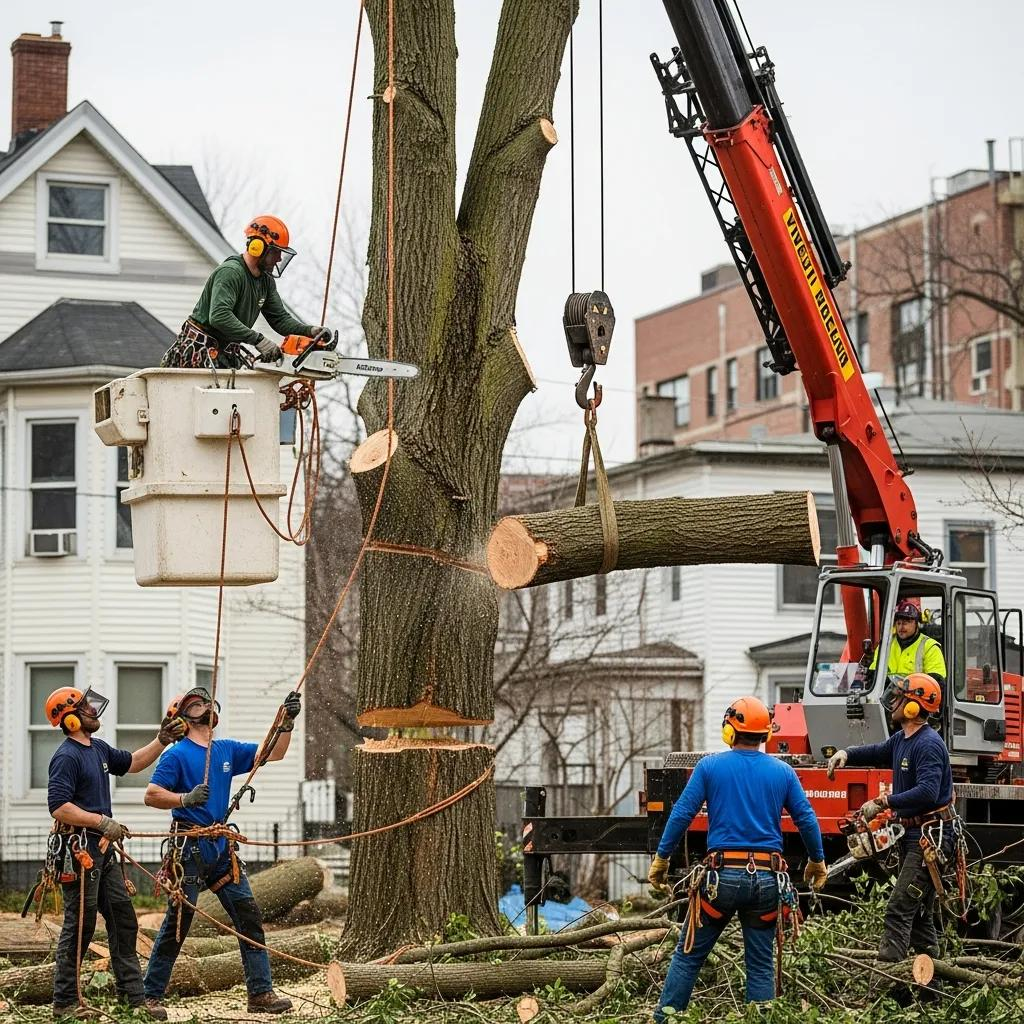
Large tree removal depends on a toolkit that balances cutting power, lifting capacity, and debris handling to execute controlled dismantling with minimal collateral damage. Crews combine portable cutting tools like chainsaws with mechanical systems such as cranes and grapple saws to perform heavy tree removal safely and efficiently, and they use stump grinders and wood chippers to finish the site. Selecting the right equipment is driven by tree size, proximity to structures or power lines, and site access; those constraints determine whether a job is tackled as sectional dismantling or with crane-assisted removal. The next subsections describe how core tools function and when each becomes the best choice for big tree cutting tasks.
This list summarizes the essential equipment used in large tree removal, with a brief note on function.
- Chainsaws and power saws: Provide primary cutting capability for limbs and trunk sections.
- Climbing gear and rigging: Allow safe worker access and controlled lowering of cut pieces.
- Cranes and grapple saws: Enable removal of large sections where access or hazards limit ground-based options.
- Stump grinders and wood chippers: Process leftover material for disposal and site restoration.
These tools interact: chainsaws create sections that cranes lift or crews lower via rigging systems, preserving safety and control while minimizing property impact.
| Tool | Primary Function | Typical Application |
|---|---|---|
| Chainsaw (various sizes) | Cutting trunks and large limbs | Sectional dismantling and felling prep |
| Crane with grapple saw | Lifting and remote cutting | Tight urban sites and removals near structures |
| Stump grinder | Surface and subsurface stump removal | Post-removal site cleanup |
This equipment table clarifies common tool roles and helps owners match machine choice to site constraints before moving into safety and planning discussions.
How Do Chainsaws and Climbing Gear Facilitate Safe Tree Cutting?
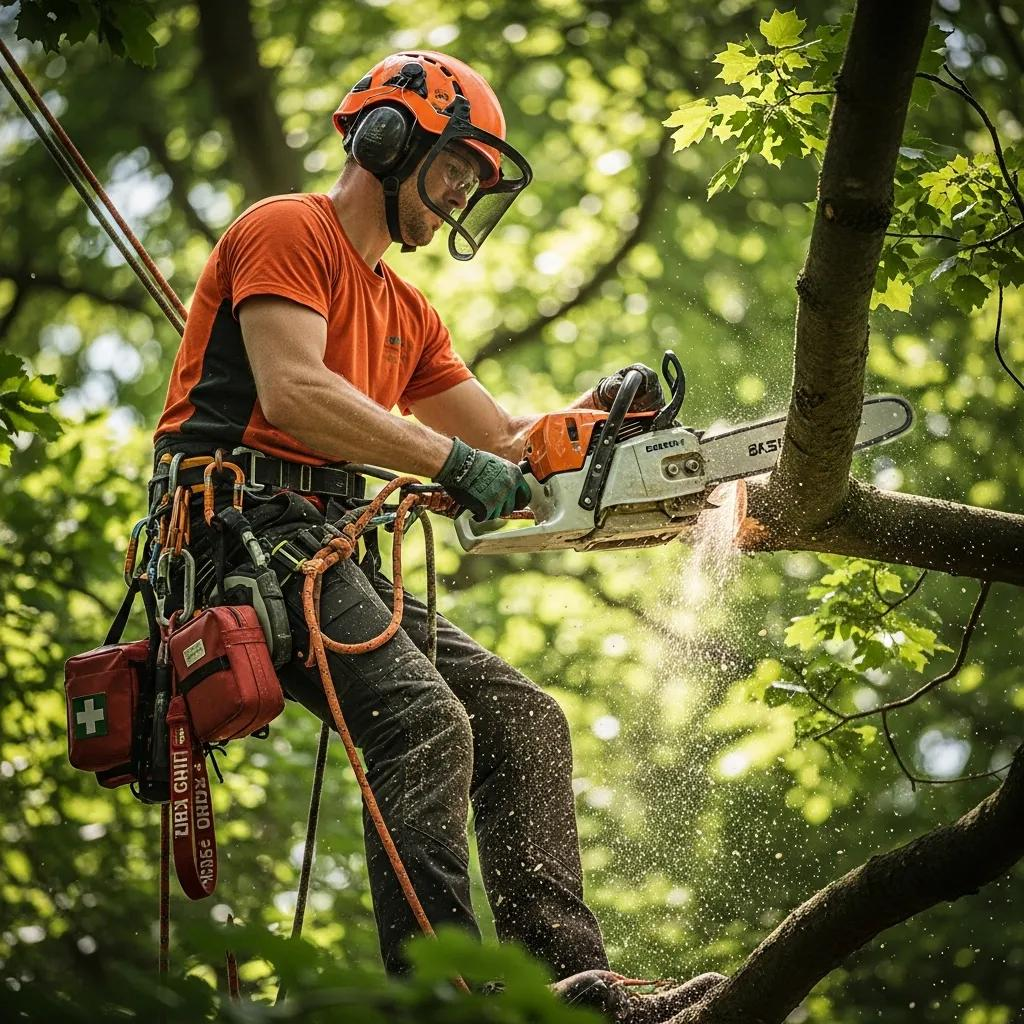
Chainsaws deliver the cutting power for large tree removal, and their selection (bar length, power class) is matched to trunk diameter and cutting complexity. Climbing gear and rope rigging create secure anchor points and controlled descent paths that let arborists cut from the canopy and lower large limbs in stages, which reduces uncontrolled falls and property damage. Proper technique combines directional cuts with rigging to control weight transfer and prevent kickback or bark-shear incidents, and modern climbing systems include fall-arrest backups that protect crews during repetitive canopy work. Understanding these interactions shows why training and equipment compatibility are integral to safe big tree cutting.
What Roles Do Cranes and Grapple Saws Play in Controlled Tree Dismantling?
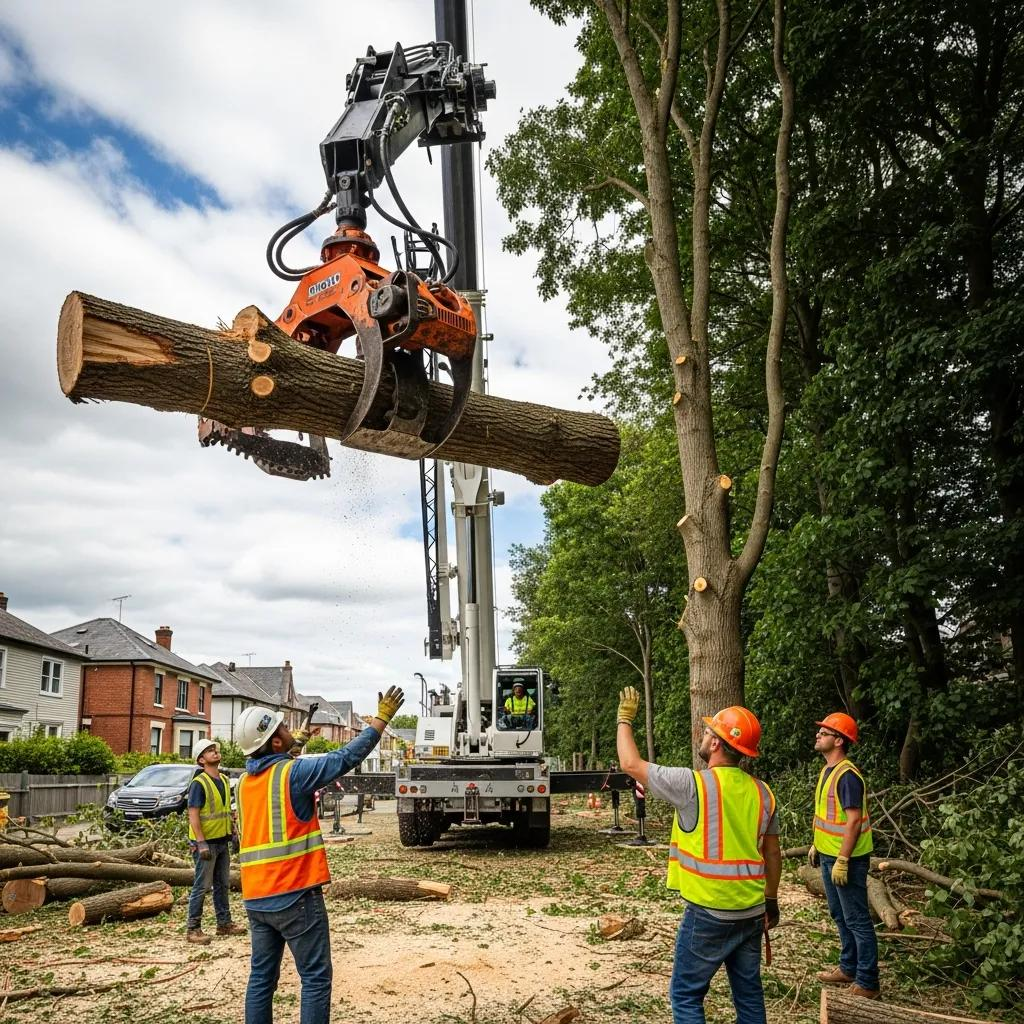
Cranes and grapple saws let crews perform heavy tree removal in confined spaces where sectional dismantling would risk nearby structures or utilities. Operators use crane lifts to support trunk sections while a grapple saw severs and secures them, effectively converting a high-risk removal into a series of controlled lifts; this approach minimizes ground footprint and speeds cleanup. Grapple saws combine gripping and cutting in a single tool, reducing the need for multiple crew members aloft and enabling safer operation near power lines when permitted. When crane access is available, heavy tree removal shifts from manual lowering to mechanized handling, improving safety and efficiency.
What Are the Critical Safety Guidelines for Professional Large Tree Removal?
Safety in large tree removal rests on clear procedures that reduce fall risk, electrical hazards, and equipment-related injuries while ensuring predictable material handling. Professional crews follow established fall-zone protocols, utility coordination steps, and personal protective equipment (PPE) standards that together form a safety system for big tree cutting and heavy tree removal. Risk assessment begins with a certified arborist evaluation to identify structural defects, rot, and lean that alter removal strategy, and those findings determine whether crane assistance, traffic control, or specialized rigging is required. The following subsections detail mandatory PPE and how crews manage fall zones and power line awareness on complex jobs.
Crews use specific PPE tailored to cutting operations and overhead work, which reduces injury from sharp tools, falling debris, and suspended loads. PPE choices are matched to task: helmet and eye protection for all team members, chainsaw-resistant chaps for cutters, and full-body harnesses with dual lanyard systems for arborists working aloft. Hearing protection and cut-resistant gloves minimize cumulative trauma from powered tools, while high-visibility clothing aids coordination around machinery. These layers of protection combine with training and equipment checks to maintain a controlled work environment during large tree removal.
This list highlights mandatory PPE for tree removal crews and why each item matters.
- Helmets with face shields: Protect from falling debris and saw kickback.
- Cut-resistant chaps and gloves: Reduce limb and hand laceration risk during chainsaw use.
- Full-body harnesses and lanyards: Prevent falls while working in the canopy.
- Hearing protection and high-visibility apparel: Protect senses and improve site coordination.
Together, PPE and training lower accident rates and set the stage for managing external hazards such as utilities and bystanders.
Which Personal Protective Equipment Is Mandatory for Tree Removal Crews?
Mandatory PPE includes head protection, eye and hearing protection, cut-resistant apparel, and certified fall-arrest systems for elevated work. Each item addresses a distinct failure mode: helmets for impact, eye shields for particulate hazards, chaps for severing risks, and harnesses for fall arrest during climbing or aerial rigging. In practice, crews pair PPE with procedural controls like pre-work hazard briefings and daily equipment inspections to ensure that protective gear functions as intended. That layered approach reduces incident likelihood and prepares crews to shift tactics if site conditions or weather introduce new risks.
How Are Fall Zones and Power Line Awareness Managed During Removal?
Establishing fall zones begins with mapping potential drop paths and enforcing exclusion areas that keep bystanders and vehicles clear during cutting. Crews coordinate with utility providers when work occurs near power lines and implement de-energized procedures, line guards, or minimum approach distances consistent with local regulations and safety standards. Communication protocols, ground spotters, and rope-tag systems ensure that everyone understands when a drop is imminent, and contingency plans route traffic or pedestrian flow when necessary. These controls preserve public safety and reduce liability while enabling precise, controlled dismantling.
How Should You Plan Large Tree Removal Projects Effectively?
Effective planning transforms a hazardous job into an organized sequence of assessment, permitting, and resource allocation that anticipates challenges like access, load handling, and post-removal cleanup. Initial steps include a certified arborist assessment to document tree health, risk factors, and recommended removal method, followed by a logistic plan for equipment staging, traffic control, and debris removal. Early engagement with local permitting authorities clarifies whether removal requires a permit, replacement tree, or special approvals in Raleigh and Zebulon, and factoring these requirements into project timelines prevents costly delays. Below are concrete steps to structure a successful removal project.
- Site evaluation by a certified arborist: Document defects, species, size, and hazard points.
- Access and equipment planning: Determine crane needs, staging areas, and haul routes.
- Permitting and utility coordination: Confirm local ordinance triggers and contact utilities for nearby lines.
- Final safety briefing and contingency planning: Assign roles and emergency procedures.
These steps convert assessment findings into an actionable plan that minimizes surprises during heavy tree removal.
What Steps Are Involved in Site Assessment and Arborist Consultation?
Site assessment begins with measuring tree size, inspecting crown and root defects, and identifying nearby targets such as buildings or lines that influence method selection. An arborist evaluates disease presence and structural integrity to advise on sectional dismantling, crane-assisted removal, or alternative mitigations like pruning or cabling. The consultation should produce a written plan outlining access requirements, rigging points, estimated crew size, and timeline, which owners can use to obtain permits and compare bids. Clear documentation ensures that the chosen removal strategy aligns with risk tolerance, budget, and local regulations.
How Do Local Permits and Regulations Affect Tree Removal in Raleigh and Zebulon?
Local ordinances in Raleigh and Zebulon can dictate when a removal requires a permit, tree replacement, or mitigation fee, and those requirements vary based on tree size, species, and conservation zones. Early permit checks avoid fines and force changes to timing or method—particularly in neighborhoods with canopy protections or historic districts. Coordinating with municipal planners and utility companies as part of the planning phase ensures compliance and smooth execution. Understanding these rules up front is essential to avoid project delays and to incorporate any regulatory conditions into the removal plan.
What Factors Influence Large Tree Removal Costs and Service Choices?
Costs for large tree removal reflect measurable factors—tree size and condition, site accessibility, equipment needs, and the urgency of the job—that together determine labor, machinery, and disposal requirements. A heavily decayed trunk or a tree leaning toward a house increases complexity and raises pricing because crews must use more rigging, slower sectional methods, or crane assistance. Accessibility limitations—narrow lanes, overhead utilities, or limited staging space—also push providers toward mechanized removal methods that raise costs but reduce property risk. The table below compares common cost factors to give owners a clear basis for estimating and selecting service levels.
| Factor | Attribute | Typical Impact on Cost |
|---|---|---|
| Tree size | Diameter and height | Larger trees increase labor and equipment time |
| Tree condition | Healthy vs. diseased/unsafe | Diseased or unstable trees require specialized rigging, higher cost |
| Accessibility | Open yard vs. constrained access | Tight sites may need cranes or longer labor, increasing price |
| Urgency | Emergency vs. scheduled | Emergency response often incurs premium rates due to rapid mobilization |
This comparison helps property owners prioritize factors that will most influence bids and service selection, enabling informed decisions between standard removal and higher-cost controlled dismantling.
This list outlines practical considerations that typically alter pricing or service scope.
- Tree dimensions and species: Densely grained hardwoods can be heavier and take longer to process.
- Site logistics: Driveway loading capacity, overhead wires, and neighbor access affect method choices.
- Waste handling: On-site chipping or hauling away logs shifts cost depending on disposal needs.
- Emergency requirements: Storm-damage removal demands rapid response and may use different crews or equipment.
These elements collectively explain why bids for large tree removal vary and why comparing written estimates that list method, equipment, and disposal terms is essential.
How Do Tree Size, Condition, and Accessibility Impact Removal Pricing?
Larger diameter trees require longer cuts, heavier rigging, and often crane support, each adding measurable crew time and equipment rental costs. A tree with internal decay or multiple defects increases worker risk and slows removal, because teams perform more conservative cuts and test rigging points repeatedly. Limited access forces crews to stage equipment farther away or to use smaller, slower machinery, increasing labor hours and potentially creating logistical expenses like traffic control or sidewalk protection. Clear communication about these factors during the estimate phase ensures that quoted prices reflect actual site realities.
When Is Emergency Tree Removal Necessary and How Is It Handled?
Emergency tree removal becomes necessary when a tree presents immediate danger—such as leaning into structures after a storm, sudden root failure, or contact with power lines—requiring priority mobilization and rapid stabilization measures. Emergency responses prioritize life and property protection: crews secure the scene, coordinate with utilities if lines are involved, and remove hazardous sections quickly before completing full cleanup. Providers offering 24/7 emergency response can reduce downtime and limit secondary damage, but owners should expect different protocols and costs compared with scheduled removals. Knowing when to activate emergency services helps protect both people and assets while enabling a planned restoration afterwards.
Henry’s Tree Service is a family-owned provider operating in Zebulon and Raleigh, NC, that offers certified arborist assessments, hazardous and large tree removal, storm-damage response, stump grinding, and pruning. Their emphasis on safety, free estimates, certified arborist input, 24/7 emergency response, and Spanish-speaking staff supports clear communication and rapid mobilization when heavy tree removal or emergency extraction is required. When evaluating contractors for big tree cutting, consider providers that document arborist findings, present method-specific quotes, and outline post-removal cleanup and stump grinding options to ensure the final condition meets expectations.