
Professional Tree Removal, Pruning & Care in Cary, NC
Professional tree removal, trimming, and care in Cary, NC ensure safety, curb appeal, and long-term landscape health for residential and commercial properties. This article explains what professional tree service entails, why qualified arboricultural practices matter, and how local factors in Cary shape decisions about removal, pruning, emergency response, and permitting. Many property owners face tree hazards after storms, see declining tree health from pests and disease, or want pruning schedules that promote longevity and value; this guide shows practical, actionable steps to address those needs. You will learn the primary benefits of professional removal, realistic cost drivers and sample price ranges, seasonal best practices for pruning, the nature of 24/7 emergency services, why certified arborists matter, and how to navigate Cary’s permit landscape. Throughout, the guide integrates local-service considerations—including common equipment and safety practices—and references service attributes reported for local providers such as ISA-certified arborists, 24/7 emergency response, free and transparent estimates, and advanced equipment for complex removals. Read on for checklists, comparison tables, and stepwise workflows to make informed decisions about tree care in Cary, NC.
What Are the Key Benefits of Professional Tree Removal in Cary NC?
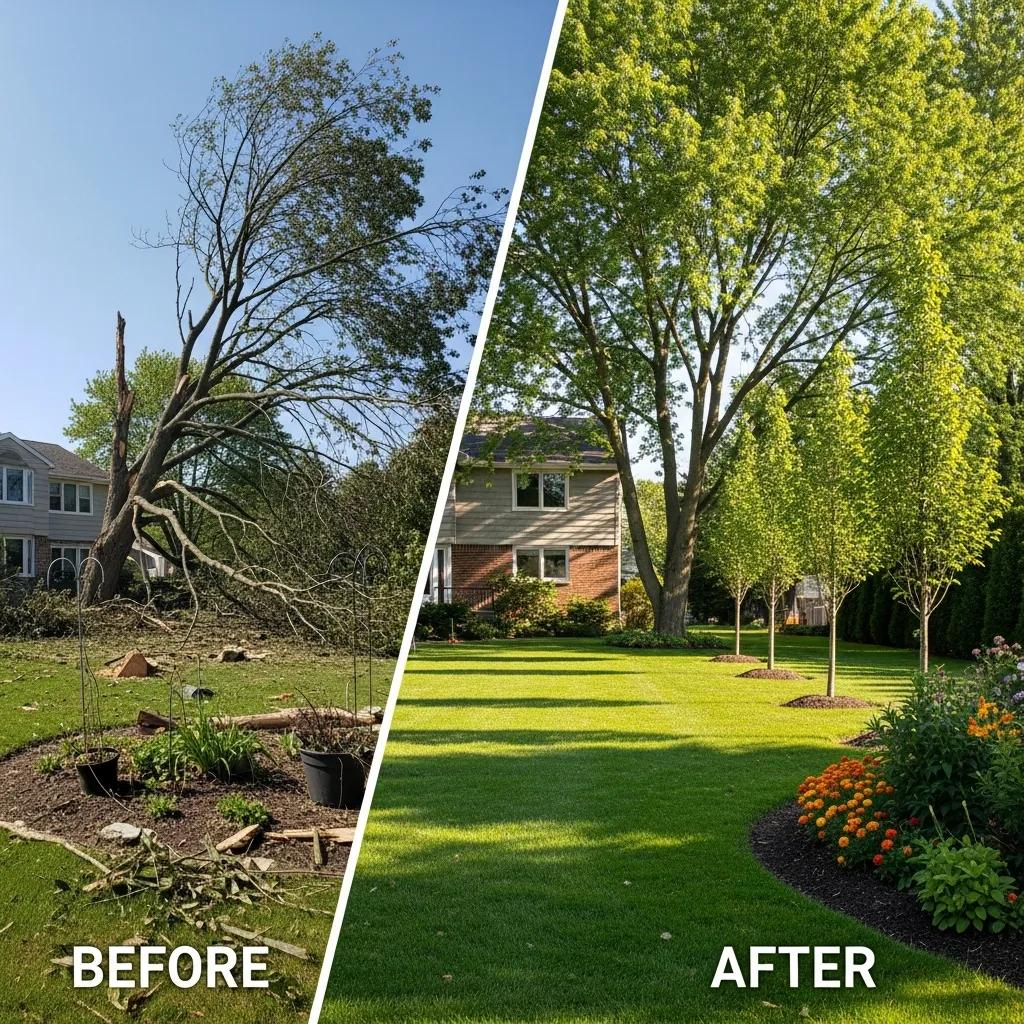
Professional tree removal in Cary NC eliminates hazardous specimens, improves landscape aesthetics, and protects surrounding vegetation by applying arboricultural standards and safe removal techniques. The primary mechanism is targeted removal of structurally compromised trees or limbs to reduce failure risk, which directly reduces property damage and liability while preserving desirable plantings nearby. Owners see immediate safety improvements and longer-term health benefits when removals are coupled with proper pruning and stump management. Below is a concise list of the top benefits for quick reference and featured-snippet optimization.
Professional tree removal delivers these immediate advantages:
- Improved Safety: Removing dead or unstable trees reduces the risk of collapse and falling limbs during storms.
- Enhanced Aesthetics and Property Value: Strategic removals open sightlines and create space for landscape improvements.
- Disease Control: Removing infected trees prevents pathogens from spreading to healthy specimens.
- Liability and Risk Reduction: Eliminating hazards helps reduce insurance exposure and neighbor disputes.
- Efficient Site Restoration: Coordinated removal allows for stump grinding and replanting plans for long-term recovery.
These benefits explain why homeowners prioritize removal when risk assessments identify imminent threats. Understanding specific removal methods and equipment clarifies how these benefits are achieved safely and efficiently.
How Does Expert Tree Removal Enhance Property Safety and Aesthetics?
Expert tree removal enhances safety by addressing structural defects—such as cracks, root failure, and deadwood—that create collapse risk during high winds and heavy precipitation. Arborists conduct a tree risk assessment that identifies failure points and prescribes sectional dismantling, cabling, or full removal based on hazard level and nearby targets like homes, power lines, or patios. Aesthetic outcomes follow safety work: crews remove unsightly deadwood, reshape adjacent trees when needed, and manage debris in a way that leaves the landscape ready for restoration or replanting. Property owners benefit from a coordinated plan that sequences removal, stump grinding, and soil preparation so new plantings thrive. This integrated approach preserves desirable trees while clearing hazards, and it naturally leads into the techniques and equipment used to perform removals safely.
To ensure safety and mitigate potential hazards, arborists employ various systematic methods for assessing tree risk.
Professional Tree Risk Assessment Methods
Tree risk assessment methods have been developed to assist arborists in conducting thorough and systematic inspections of trees and the threat they pose to people or property. While these methods have many similarities, they also have a few key differences which may impact the decisions of those employing them.
Evaluating the reproducibility of Tree Risk Assessment ratings across commonly used methods, RW Klein, 2023
What Equipment and Techniques Are Used for Safe Tree Removal?
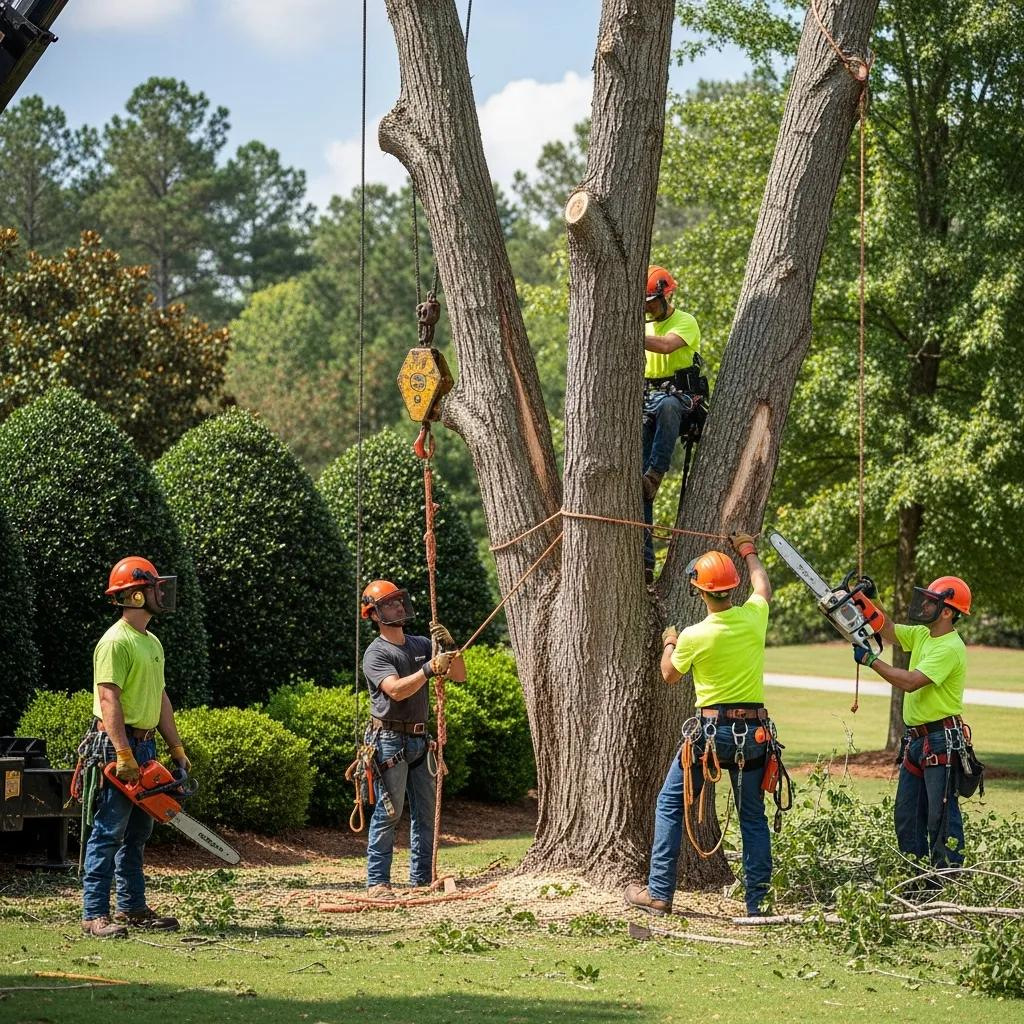
Safe tree removal in built environments relies on a toolkit of specialized equipment and techniques selected for site constraints and tree condition. Common equipment includes chainsaws for precision cuts, rigging gear to lower large limbs, stump grinders to remove roots below grade, wood chippers for debris reduction, and cranes for complex or oversized removals where sectional dismantling is unsafe. Techniques vary from directional felling in open areas to rope-and-pulley rigging in confined yards; crane-assisted lifts are chosen when access or adjacent structures make standard methods unsafe. Safety harnesses, traffic control, and a documented work plan ensure crew safety and property protection, while an ISA-certified arborist typically oversees diagnosis and method selection. These equipment choices and techniques directly reduce risk during removal and set the stage for cost and timeline considerations.
How Much Does Tree Removal and Stump Grinding Cost in Cary NC?
Understanding tree removal and stump grinding costs in Cary NC requires looking at core price drivers—size, species, access, disposal, and permits—plus whether specialized equipment such as cranes or traffic control is needed. Costs vary widely: small ornamental trees in easy-access yards typically fall at the lower end of local ranges, while large, leaning or near-structure trees requiring cranes or complex rigging increase labor and equipment fees. Below is a table comparing typical Cary-specific scenarios and sample price ranges to help homeowners estimate budgets before requesting a transparent estimate.
| Scenario | Characteristic | Typical Cary Price Range |
|---|---|---|
| Small yard tree removal | $250 – $700 | |
| Medium front-yard removal | 25–50 ft, moderate access, sectional removal | $700 – $1,800 |
| Large/complex removal | >50 ft, near structures, crane or traffic control | $1,800 – $5,000+ |
This table clarifies that height and complexity are primary cost multipliers. Next, consider specific factors that influence final estimates.
Factors that commonly influence Cary pricing include:
- Tree height and trunk diameter, which increase labor and time.
- Accessibility and proximity to structures or utilities, which may require cranes or lane closures.
- Species and condition, since diseased or brittle species demand cautious removal.
- Disposal and hauling, stump grinding or full stump excavation, and local permit fees.
- Emergency response or after-hours services, which may incur premium charges.
What Factors Influence Tree Removal Pricing in Cary NC?
Tree removal pricing in Cary NC depends first on measurable tree attributes and second on site-specific constraints that change method and crew size. Tree height and trunk diameter drive baseline labor and disposal costs because larger trees require more cuts and time; species matters because some woods are heavier or more prone to splitting during removal. Accessibility defines method selection: where access is tight, arborists use rope rigging or cranes, which increases time and equipment rental fees. Disposal obligations—whether wood is chipped on-site, hauled away, or retained for firewood—affect pricing, as does permit requirement or municipal coordination in protected zones. These priorities explain typical micro-examples: a small backyard oak with easy access may be a single-day job, while a tall pine overlooking a house could require crane mobilization and multi-day work.
How Does Stump Grinding Compare to Stump Removal Costs?
Stump grinding and full stump removal differ in invasiveness, timeline, and cost, and the right choice depends on future land use and budget. Grinding reduces the stump to below-ground wood chips quickly, generally costing significantly less than full excavations and minimizing soil disturbance—typical local grinding costs are modest relative to full removal. Full stump removal involves excavation, root extraction, and soil backfill, which is more labor- and equipment-intensive and therefore more expensive; it is chosen when complete root removal is necessary for construction or planting. Grinding allows faster replanting in many cases but may leave some roots to decompose over time; removal clears roots fully and requires subsequent soil restoration. Comparing the two clarifies options so homeowners can balance short-term cost against long-term project goals.
When and Why Should You Schedule Tree Trimming and Pruning Services in Cary NC?
Regular tree trimming and pruning in Cary NC preserve tree health, reduce storm-related failures, and guide structural growth for long-term vigor by applying species-appropriate cuts at the right seasons. Pruning stimulates compartmentalization of wounds, improves airflow through the canopy to limit disease, and removes weak branch unions before they fail; timing and technique matter for maximizing benefits. Homeowners should schedule professional pruning based on species and the desired outcome—safety pruning after storm damage, structural pruning for young trees, and selective crown cleaning to improve health. Below is a seasonal best-practice checklist to help plan service timing and scope.
Seasonal pruning best practices include:
- Late winter (dormant season): Best for many deciduous trees to set structure and reduce sap loss.
- Early spring: Useful for removing winter-damaged limbs and for species that bloom later.
- Avoid pruning during peak disease or nesting seasons: Minimize stress and ecological impact.
- Light summer pruning: For canopy thinning and maintenance after growth spurts.
These timing guidelines lead naturally to species-specific notes and the biological mechanisms by which pruning improves longevity.
What Are the Seasonal Best Practices for Tree Pruning in Cary NC?
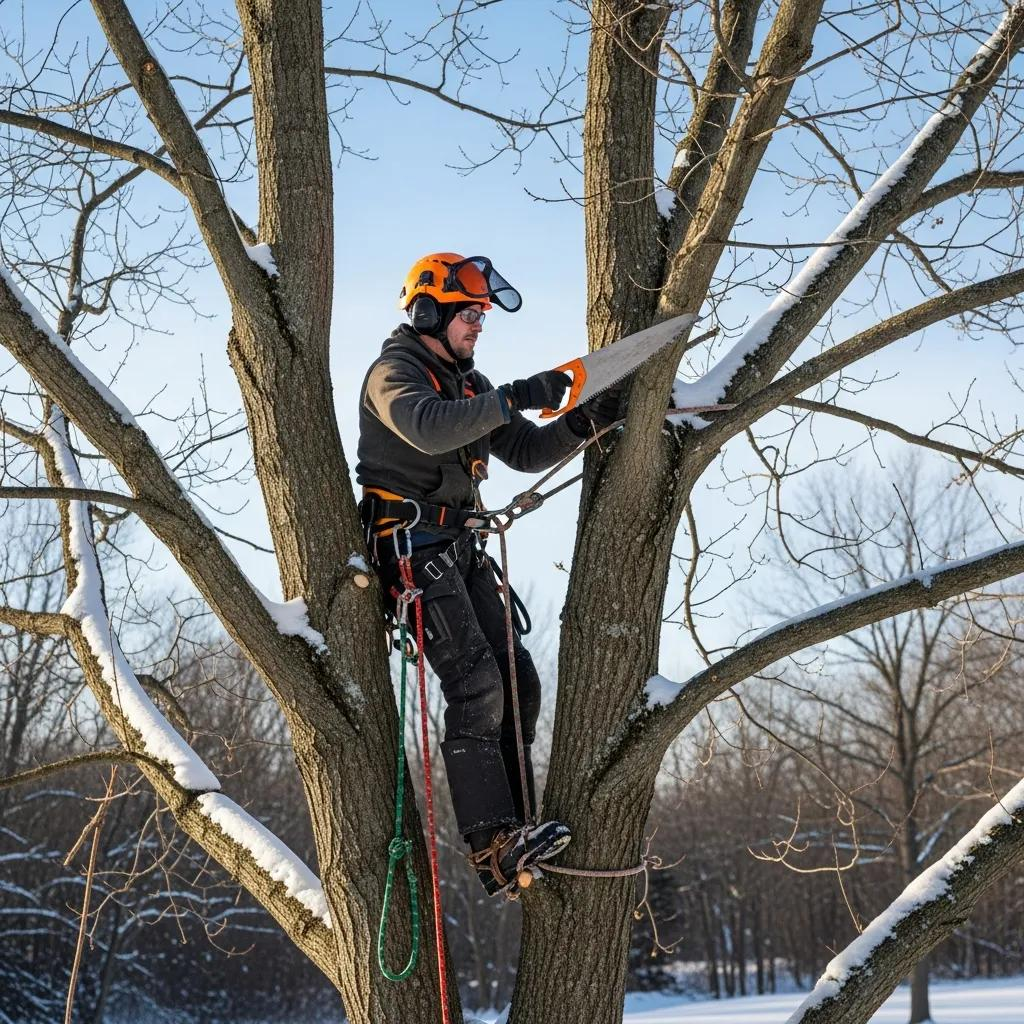
Seasonal best practices for Cary reflect the region’s temperate climate and common species like oaks, maples, and pines; pruning schedules aim to protect tree health and wildlife. For many deciduous trees, late winter (dormancy) is optimal for structural pruning because wounds close more effectively in spring growth, while avoiding heavy pruning during warm, wet periods reduces pathogen entry. Oaks may require careful timing to limit oak wilt risk—minimizing large cuts during high-risk seasons—whereas pines benefit from selective thinning outside of active budbreak to control density without stressing resin flow. Professionals follow ISA pruning standards to select cut types that preserve bark and cambium integrity and avoid topping or excessive crown reduction. Applying these seasonal rules prevents common pruning mistakes and supports long-term tree resilience.
How Does Tree Pruning Improve Tree Health and Longevity?
Pruning improves tree health by removing dead or diseased wood, which decreases pest harborage and pathogen reservoirs while promoting airflow and sunlight penetration that discourage fungal growth. Proper structural pruning directs growth away from weak crotches and reduces the likelihood of future limb failures, so trees develop strong branch architecture that withstands storms and snow loads. Biologically, pruning reduces internal competition for resources and stimulates compartmentalization of wounds, enabling trees to isolate decay and maintain healthy tissues. Regular, targeted pruning combined with soil and root care extends lifespan and keeps trees productive features of the landscape, which underscores why certified arborists emphasize diagnostic pruning over cosmetic or indiscriminate cuts.
What Emergency Tree Services Are Available in Cary NC and When Are They Needed?
Emergency tree services in Cary include 24/7 triage response, rapid stabilization and removal of hazardous trees, debris management, and expedited assessments for insurance purposes; these services activate when immediate threats to life or property exist. Emergency response begins with a safety assessment to mark hazards and prioritize removals that protect structures and utilities, then proceeds with stabilization or selective dismantling using crews trained for urgent conditions. Rapid-response equipment such as mobile chippers, rigging kits, and, when needed, cranes or heavy-lift gear support safe operations under time pressure. Below is a checklist homeowners can use to decide when to call emergency services and what to expect during an urgent callout.
- Assess immediate danger: leaning trunks, large hanging limbs, or trees contacting structures.
- Secure the site: keep people and pets away and mark hazard zones.
- Contact an emergency arborist for triage and stabilization.
- Expect staged work: assessment → stabilization → safe removal → debris cleanup.
How Do 24/7 Emergency Tree Services Address Storm Damage?
24/7 emergency tree services address storm damage through a rapid triage that identifies the highest-risk trees and limbs and implements immediate containment measures to protect occupants and structures. The initial team performs a visual risk assessment, prioritizes removals, and may use temporary bracing or rope systems to stabilize compromised limbs until full removal is safe. Crews often deploy wood chippers and sectional dismantling techniques to clear debris while protecting nearby structures, and they coordinate with municipal or utility crews if public safety hazards or power-line impacts are present. Rapid documentation of damage helps property owners with insurance claims and ensures that follow-up remediation—stump grinding, wound care, and replanting—proceeds on an efficient timeline.
Who Provides Certified Arborist Consultations During Emergencies?
During emergencies, ISA-certified arborists provide onsite diagnosis, risk assessment, and written recommendations that guide safe immediate actions and long-term recovery plans. A certified arborist evaluates structural defects, disease presence, and root stability to determine whether salvage pruning, bracing, or full removal is the prudent response; their expertise reduces the chance of unnecessary removals and ensures safety-driven prioritization. Deliverables commonly include a documented risk assessment, recommended scope of urgent work, and follow-up care steps such as targeted pruning or soil remediation. When rapid professional judgment is required, an arborist’s assessment aligns safety, regulatory considerations, and landscape objectives into an actionable plan.
| Emergency Service | Primary Action | Typical Outcome |
|---|---|---|
| Triage assessment | Onsite risk evaluation | Prioritized action list |
| Stabilization | Temporary bracing/roping | Reduced immediate collapse risk |
| Urgent removal | Sectional dismantling | Cleared hazard, protected structures |
Why Choose Certified Arborists for Tree Care Services in Cary NC?
Certified arborists bring formal training and diagnostic tools that improve outcomes for safety, health, and landscape value by combining scientific assessment with practical mitigation techniques. Certification—such as ISA credentials—signals knowledge of tree biology, pest and disease identification, and accepted pruning standards, which reduces the likelihood of improper cuts that compromise tree health. Arborists apply root and soil diagnostics, decay detection, and risk-assessment protocols to recommend interventions from pruning to removal. Below is a checklist homeowners should use when verifying qualifications and ensuring high professional standards.
Understanding the importance of professional credentials, the International Society of Arboriculture (ISA) plays a crucial role in setting industry benchmarks for arborists.
ISA Professional Arborist Certification & Standards
Professional credentialing refers to the process of obtaining a certification or license that validates an individual’s knowledge, skills, and abilities according to industry-accepted ethics and standards. The International Society of Arboriculture (ISA) confers and manages professional arborist certification as well as other arborist credentials.
Motivations and barriers of professional certification for tree workers, JS Gordon, 2024
- Verify ISA or equivalent certification listed in credentials.
- Confirm proof of insurance and local licensing as required.
- Ask for itemized estimates and method descriptions for proposed work.
- Request references or documented case examples of similar work.
What Qualifications Define a Certified Arborist in Cary NC?
A certified arborist typically holds an ISA certification or equivalent credential demonstrating competency in tree biology, diagnosis, pruning practices, and safety protocols; this credential is a primary indicator of professional training. Practical qualifications include familiarity with local species, knowledge of regional pests and diseases, and experience selecting appropriate removal or pruning methods for urban landscapes. Responsible providers also carry liability insurance and pertinent local licensing to operate on residential and commercial properties; these protections reduce homeowner risk if accidents or damage occur. Verifying these qualifications before contracting work ensures that decisions about removal, pruning, or treatment rest on sound arboricultural judgment.
How Do Certified Arborists Diagnose and Treat Tree Diseases?
Certified arborists diagnose tree diseases through a combination of visual inspection, assessment of canopy symptoms, bark and root examinations, and, when needed, laboratory testing to confirm pathogens or nutrient deficiencies. Treatment options range from targeted pruning to remove infected tissue, to soil amendments that correct deficiencies, to integrated pest management strategies that control vectors and minimize chemical use. Where biological or structural decline is irreversible, arborists recommend removal to protect surrounding trees and landscape values; this decision follows documented criteria for failure risk and disease spread. The diagnostic-to-treatment workflow—inspection → diagnosis → treatment recommendation → monitoring—ensures transparency and effectiveness in restoring tree health or mitigating loss.
Indeed, the diagnostic process for arborists often mirrors that of medical professionals, requiring keen observation and interpretation of symptoms.
Arborist Diagnosis of Urban Tree Disorders
The municipal arborist also has a great deal in common with the physician in that he is often called on to be a diagnostician. The arborist is greatly handicapped, however, in that his patients can’t talk to him. He must rely heavily on symptoms in his diagnoses.
The diagnosis of urban tree disorders, 1980
| Diagnostic Step | Purpose | Typical Action |
|---|---|---|
| Visual canopy inspection | Identify foliar and structural symptoms | Documented findings |
| Root and soil check | Detect root rot or nutrient issues | Soil amendment or aeration |
| Lab testing (if needed) | Confirm pathogen identity | Targeted treatment plan |
What Are the Local Regulations and Permit Requirements for Tree Removal in Cary NC?
Permits for tree removal in Cary depend on local ordinances concerning protected trees, canopy impacts, and commercial projects; determining whether a permit is required starts with identifying protected species and the scale of canopy change. The permit process usually involves documenting the tree(s), explaining the removal reason, and submitting a site plan; timelines and fees vary according to municipal rules. Homeowners should consult town resources early—especially for large or protected specimens—to avoid fines or forced mitigation. Below is a simple comparison table showing common scenarios that typically require permits versus common exemptions.
| Scenario | Regulatory Trigger | Likely Permit Need |
|---|---|---|
| Removing a protected specimen | Protected-species designation | Permit required |
| Removing multiple canopy acres (lot clearing) | Significant canopy loss | Permit required |
| Single small tree in private yard | Size below threshold | Often exempt |
| Emergency removal for immediate hazard | Safety exception | Usually permitted with notification |
When Is a Permit Required for Tree Removal in Cary NC?
A permit is commonly required when removing protected trees, when proposed removal will substantially reduce canopy cover, or when commercial or development activities involve clearing multiple trees. The main reasons for permit triggers are ecological protection, preservation of urban canopy, and ensuring that significant landscape changes undergo municipal review. Exceptions often exist for immediate hazard removals where public safety demands prompt action, but documentation or after-the-fact permits may still be required. Understanding these criteria before contracting work reduces the risk of enforcement actions and helps owners plan appropriate mitigation or replacement plantings.
How to Navigate Cary NC Tree Removal Permits Efficiently?
To navigate Cary’s permit process efficiently, start by documenting the tree(s) with photos and measurements, identify whether they are on a protected-species list, and prepare a concise site plan showing tree locations relative to structures. Submit a clear justification—safety, disease, or development—and include any arborist assessments that support the request; this often speeds review by providing professional evidence for the decision. Practical tips include contacting the town planning or forestry office early, asking about expedited review options for emergency cases, and following municipal submittal checklists to avoid common omissions. Proactive documentation and professional support minimize delays and align removal work with local requirements.
- Summary: A streamlined permit application combines clear documentation, professional assessments, and early communication with municipal staff to reduce turnaround time and ensure compliant tree removal.
Henry’s Tree Service is a local provider whose public profiles indicate offerings that align with the services described here—tree removal, trimming/pruning, stump grinding, 24/7 emergency response, and certified arborist consultations—plus service attributes often cited in the area such as ISA-certified arborists, fully licensed and insured operations, transparent estimates, and advanced equipment for complex removals. Where professional credentials and emergency availability matter, verify the provider’s stated certifications and request itemized plans to ensure safety and compliance with Cary regulations.