

Elevating HOA Tree Care: Enhancing Community Safety and Value
Community tree care for homeowners associations (HOAs) encompasses the coordinated management and ongoing maintenance of trees in common areas to protect residents, preserve property values, and reduce liability exposure. This article explains practical management steps, routine maintenance programs, and procurement strategies that HOA boards and property managers can use to develop predictable, safety-focused tree care plans. Readers will learn how professional tree risk assessments, structured pruning schedules, and emergency response protocols work together to maintain an urban forest that enhances curb appeal while minimizing hazards and unexpected costs. The guide maps core services, assessment outputs, vendor contract features, and budgeting templates so boards can prioritize interventions and forecast multi-year expenses. Beginning with why professional management matters, the sections that follow cover essential services, how a local provider can support HOA needs, and actionable policy and budgeting checklists for long-term tree stewardship.
Why Is Professional HOA Tree Management Essential?
Professional HOA tree management is the organized practice of assessing, maintaining, and mitigating risks associated with trees on shared property to ensure safety, aesthetics, and fiscal predictability. Certified assessments and standards-based maintenance reduce failure risk and documented inspections support board decision-making and insurance processes. Proactive programs preserve canopy value and lower long-term costs compared with emergency removals and reactive repairs, so investing in regular care often yields net savings. The next paragraphs explain the core benefits that drive that return and how standards guide safe practice.
Professional tree management delivers three core benefits for HOAs:
- Safety: Systematic inspections and mitigation reduce risk of limb or tree failure near people and infrastructure.
- Value: Healthy, well-placed trees increase curb appeal and can lift adjacent property valuations.
- Liability reduction: Inspections, documentation, and adherence to industry standards reduce legal and insurance exposure.
These benefits point directly to the types of services and documentation HOAs should require from providers, which are described next.
How Does Tree Care Enhance HOA Property Value and Aesthetics?
Tree care enhances property value by maintaining mature canopy structure, promoting uniform landscape composition, and preventing visual decline from deadwood and disease. Regular structural pruning and health programs improve sightlines and curb appeal, while properly sited, healthy trees provide shade that reduces energy costs and improves resident comfort. Well-maintained common areas also increase resident satisfaction and help marketability when homes are sold, so boards should track condition and plan replacement of high-value specimens. Understanding these aesthetic and economic mechanisms clarifies why investment in canopy maintenance is a strategic asset for community management.
What Are the Safety and Liability Benefits of Certified Arborist Services?
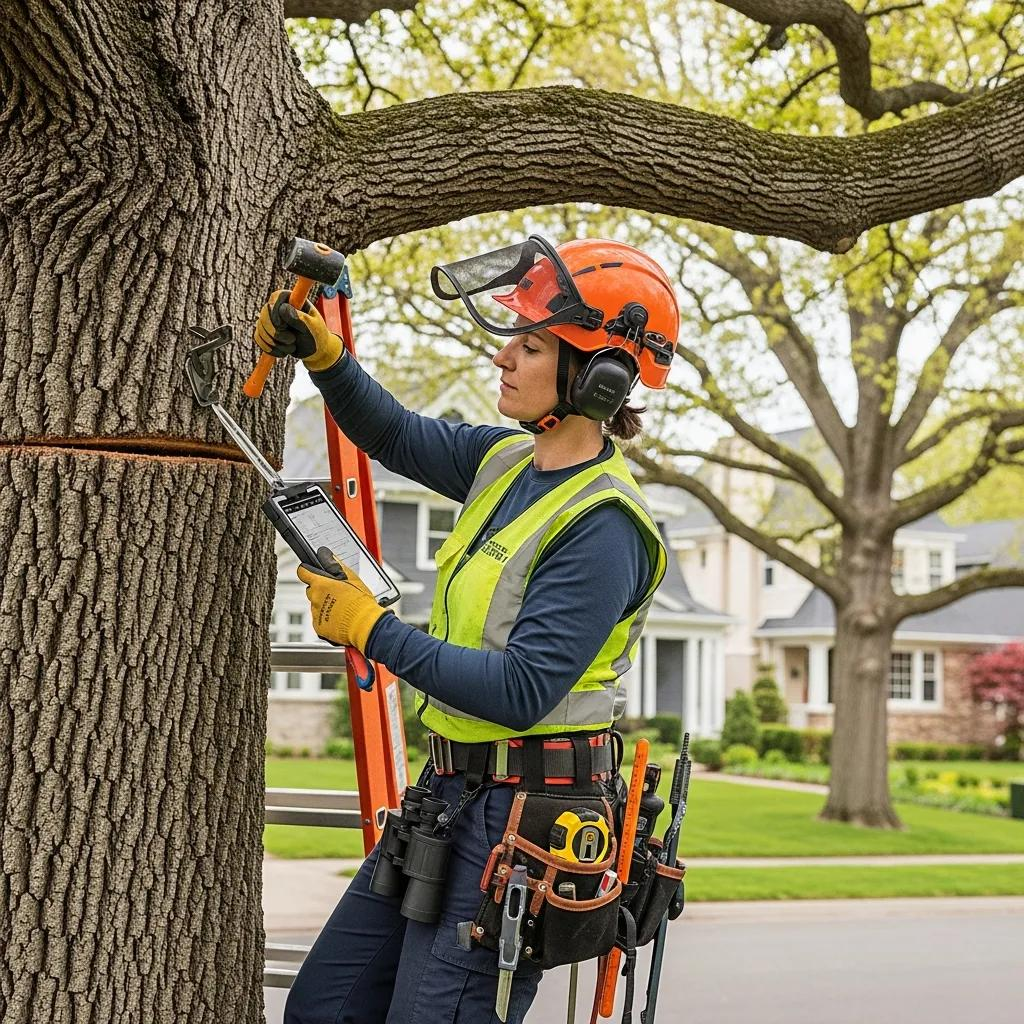
Certified arborists perform systematic tree risk assessments and deliver reports with risk ratings, recommended mitigations, and prioritized action lists that boards can use for decision records. These documented outputs reference standards such as ISA guidance and ANSI A300 practices, which help align work with insurer expectations and demonstrate due diligence in the event of disputes. Arborists also specify safe work methods and supervise crews to reduce accident risk during removal or pruning, creating a defensible paper trail for the association. That combination of technical evaluation and standards-based practice is essential for minimizing exposure and prioritizing resources effectively.
What Are the Core Tree Care Services for Homeowners Associations?
Core HOA tree care services are a set of repeatable interventions that protect community canopy health, safety, and appearance through planned inspection, maintenance, and emergency response. These services form the operational backbone of any HOA program and enable predictable budgeting and procurement.
Intro to service comparison table: This table helps HOAs match observable conditions to practical responses and resource planning.
| Service | Typical Findings | Typical HOA Action |
|---|---|---|
| Tree Risk Assessment | Structural defects, decay, high target exposure | Prioritize mitigation: prune, cable, or remove |
| Pruning Program | Overlong limbs, crown imbalance, clearance issues | Schedule structural or maintenance pruning cycles |
| Tree Removal | Dead or hazardous trees | Remove with safe protocols and site restoration |
| Stump Grinding | Trip hazards, mowing obstruction | Grind to recommended depth for reuse or planting |
| Disease & Pest Management | Foliar dieback, infestations | Implement monitoring and targeted treatments |
This comparison clarifies how inspection outputs translate into prioritized work orders and budgeting needs for community managers.
Below is a practical service list that describes each core offering and its HOA outcome.
- Tree Risk Assessments: Identify hazards and recommend prioritized actions to reduce public safety risks.
- Proactive Pruning Programs: Improve structure, reduce failure likelihood, and maintain clearance for utilities and paths.
- Safe Tree Removal: Execute removals of dead or hazardous trees with containment, safety gear, and debris management.
- Stump Grinding and Site Restoration: Remove stump hazards and prepare areas for turf or new plantings.
- Disease and Pest Management: Monitor and treat infections to protect neighboring specimens and preserve canopy health.
- Emergency Storm Response: Rapid hazard mitigation after storms to restore access and safety.
These services create an integrated maintenance program that reduces emergency interventions and stabilizes annual costs. In practice, some providers illustrate these services through local case work or documented inspection reports, which boards can request when evaluating proposals.
How Do Tree Risk Assessments Identify and Mitigate Hazards?
A tree risk assessment is a structured inspection that evaluates visible defects, decay, root conditions, target potential, and environmental stressors to assign a risk rating. Inspectors record indicators such as cavities, included bark, lean, root plate disturbance, and fungal fruiting bodies, then recommend mitigations—immediate removal for imminent failure, corrective pruning for moderate risk, or monitoring for low risk. Reports typically include prioritized action lists and estimated timeframes so HOAs can plan budgets and avoid surprises. Using assessment data, boards can sequence work by urgency and budget impact to preserve safety and value.
What Are the Benefits of Proactive Tree Pruning and Health Programs?
Proactive pruning and health programs extend tree longevity by correcting structural defects early, improving wind resistance, and reducing the incidence of limb failure. Scheduled maintenance—focused on structural pruning for young trees and cyclical clearance pruning for mature trees—reduces the need for emergency work and helps conserve high-value specimens. Integrated health measures like targeted fertilization and pest monitoring support resilience against stress and disease, which in turn lowers long-term maintenance costs. Regular pruning also maintains clearances for utilities and walkways, enhancing accessibility and resident safety.
How Does Henry's Tree Service Support HOA Tree Maintenance Needs?
Henry’s Tree Service is a family-owned tree care company operating in Zebulon and Raleigh, NC, that provides insured crews and ISA certified arborists to support HOA programs. The company offers core services used by HOAs—tree removal, pruning, emergency tree service, stump grinding, and tree health assessments—along with free estimates, 24/7 emergency response, and Spanish-speaking staff to improve accessibility for diverse communities. These attributes map directly to HOA needs for documented inspections, rapid storm response, and inclusive communication that help boards manage risk and resident expectations.
Intro to provider mapping table: This table maps specific provider capabilities to direct HOA outcomes for easier evaluation.
| Service or Attribute | Provider Attribute | Benefit to HOA |
|---|---|---|
| Insured Crews | Liability coverage for operations | Reduces association exposure from site accidents |
| ISA Certified Arborist | Standards-based inspection and reports | Supports defensible board decisions and insurance needs |
| 24/7 Emergency Response | Rapid storm mobilization | Restores safety and access quickly after events |
| Spanish-speaking Staff | Multilingual communication | Enhances resident outreach and consent processes |
| Free Estimates | No-cost initial assessments | Lowers barrier to program planning and budgeting |
What Emergency Tree Services Are Available for Community Storm Damage?
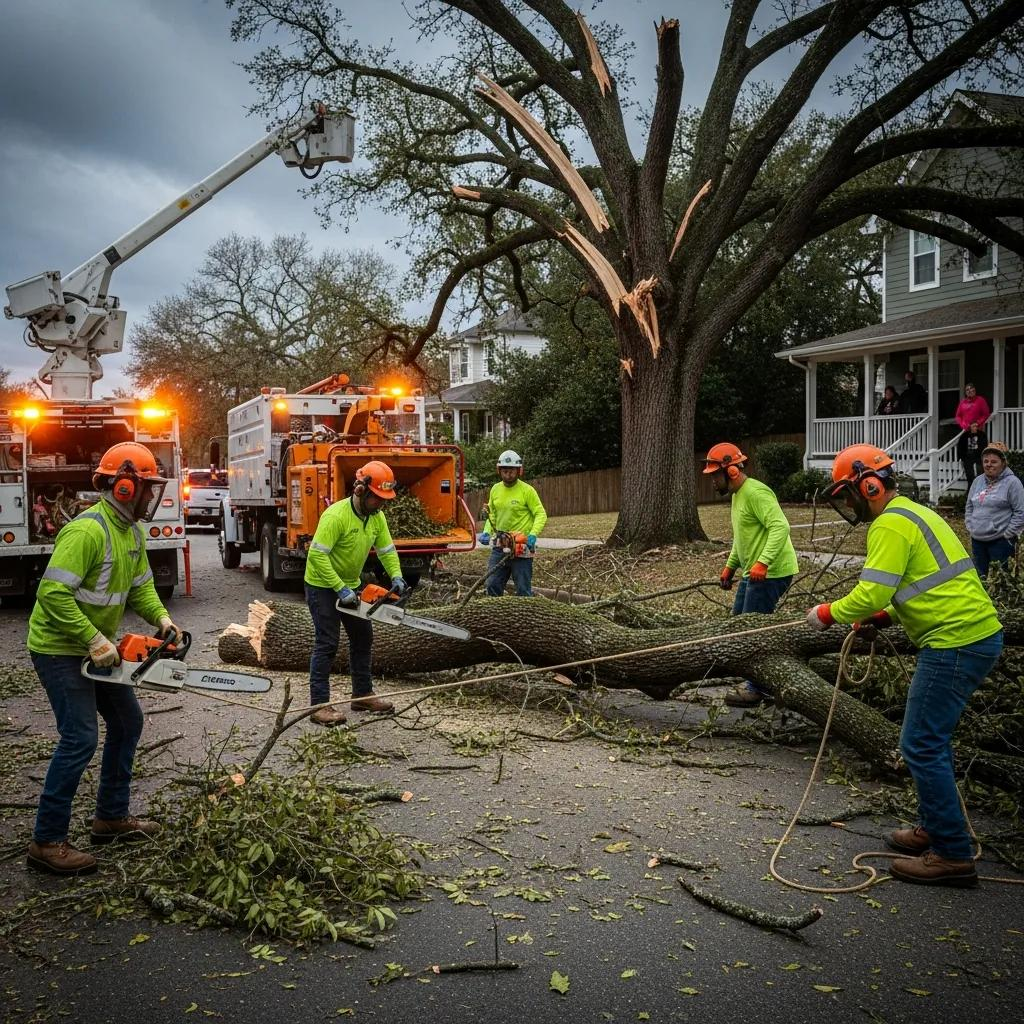
Emergency tree services for HOAs include immediate hazard triage, priority removal of trees or limbs that threaten life or property, debris removal to reopen roads and walkways, and temporary protections for damaged assets pending permanent repair. Providers typically deploy crews to secure the site, document damage for insurance, and coordinate with board leadership to confirm scopes of work. Preparation steps for HOAs include establishing emergency contacts, defining decision authorities, and keeping recent assessment reports accessible so responders can act quickly. These measures shorten disruption timeframes and reduce secondary damage following severe weather.
Typical emergency response steps include:
- Triage: Identify and isolate immediate threats to people and infrastructure.
- Removal: Remove hazardous trees and limbs in a safe sequence to prevent further collapse.
- Clearance: Clear debris from travel routes and common areas to restore access.
Having a clear emergency plan and pre-approved vendor terms significantly improves response speed and documentation quality for insurance claims and resident communications.
How Does Stump Grinding Improve Common Area Usability and Appearance?
Stump grinding removes the exposed portion of a tree stump to eliminate trip hazards, restore mowing efficiency, and prepare a site for replanting or turf repair. The process uses specialized equipment to grind the stump to a recommended depth, allowing topsoil to be replaced and the area to be reused. Grinding is typically faster and less disruptive than full excavation, and it reduces ongoing maintenance costs associated with snagged mowing equipment. After grinding, HOAs can rehab the site with soil amendment and new planting as part of common area renewal plans, improving both safety and aesthetics.
How Can HOAs Develop Effective Tree Care Policies and Budgets?
HOAs develop effective tree care policies by establishing inventory baselines, inspection cadences, prioritized maintenance lists, and budget lines that include reserve planning and an emergency fund. A clear maintenance policy defines scope, frequencies, documentation requirements, and approval workflows so vendors and boards share expectations. Contracts should include scope of work, frequency, pricing model, emergency response terms, insurance verification, and reporting deliverables to create predictable outcomes and support long-term asset management decisions. The checklist and budget table below give boards a practical starting point for policy and financial planning.
Intro to checklist: Use the following steps as a procedural framework to develop a defensible tree care policy.
- Inventory & Assess: Create a tree inventory and conduct baseline risk assessments.
- Prioritize: Rank trees by safety, value, and replacement cost to sequence interventions.
- Budget: Allocate annual maintenance, reserve funding, and an emergency contingency.
- Contract: Define scopes, SLAs, insurance requirements, and reporting in vendor contracts.
- Communicate: Share plans with residents and document decisions for board records.
These steps form a cycle that supports transparency and fiscal predictability while maintaining community safety and landscape value.
Intro to budget planning table: The table illustrates sample service frequency and estimated annual cost categories to aid forecasting.
| Service | Frequency | Example Annual Cost Range |
|---|---|---|
| Inspections & Risk Assessments | Annual or biannual | Low–moderate, depends on acreage and complexity |
| Pruning Program | Cyclical (every 3–5 years per tree) | Moderate, scheduled by zone |
| Emergency Fund | As needed | Reserve amount equal to several large removals |
| Stump Grinding | Per removal event | One-time per stump cost included in reserve |
This budget template helps boards forecast multi-year expenditures and incorporate tree assets into reserve planning, enabling stable homeowner assessments and fewer surprise special assessments.
What Are Best Practices for Creating Long-Term Tree Management Plans?
Long-term plans begin with a comprehensive inventory and condition baseline, then define a 5–10 year schedule for pruning, removals, replacements, and planting that aligns with available funding. Prioritization should be safety-first, with special attention to high-value specimens and areas of high public exposure. Replacement strategies emphasize species diversity and appropriate site selection to reduce future maintenance and pest vulnerability. Including measurable milestones and annual reviews ensures the plan adapts to changing conditions and funding realities.
How Do Tree Care Contracts Facilitate Predictable Maintenance and Costs?
Contracts create predictability by specifying scope, service frequency, pricing model (per-service or fixed annual), emergency response terms, proof of insurance, and documentation deliverables such as post-work reports and invoices. Essential clauses include defined response windows for storm events, change-order approval processes, and requirements for certified arborist oversight to maintain standards. Reviewing proposals against these elements enables boards to compare bids on equal terms and estimate annual obligations more accurately, which supports transparent budgeting and resident confidence.