
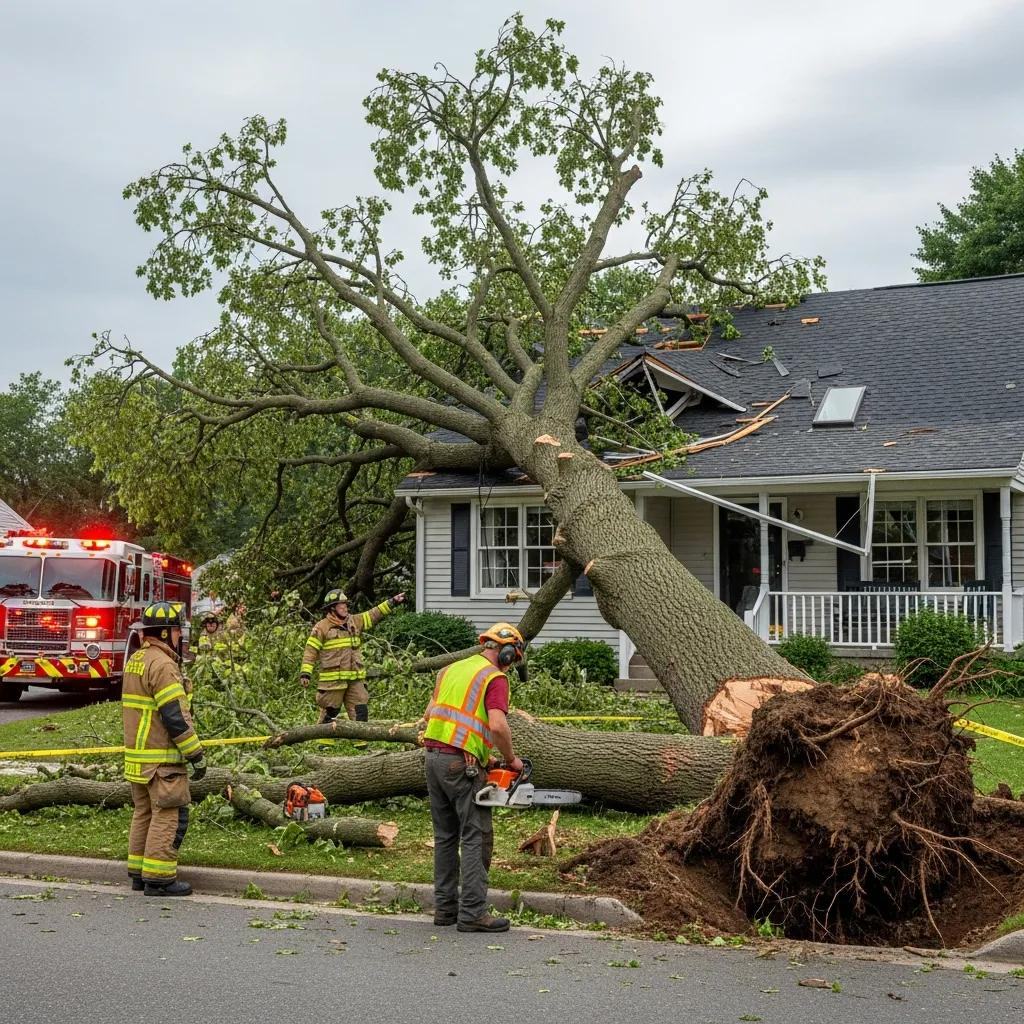
Emergency Tree Removal — What to Do When a Tree Falls on Your Property
A fallen tree can turn a calm day into an emergency. In those first 60–120 seconds your job is simple: protect people and separate them from hazards. This guide walks you through what to do on the scene, who to call depending on the danger, how to document damage for insurance, and when to bring in certified pros to remove large or hazardous trees. We’ll break down common worries — downed power lines, roof damage, temporary fixes — into clear decision points and practical next steps so you can act with confidence.
What Are the Immediate Safety Steps After a Tree Falls on Your Property?
First priorities are life-safety, stopping secondary hazards, and preserving evidence for recovery and insurance. Check that everyone is safe, move injured people only if they’re in immediate danger, and call 911 for injuries, structural collapse, fire, or a gas smell. Look for downed power lines — treat them as live and keep people and pets well back (many experts advise 10–30 feet). Call the utility company and do not touch or move wires. While you wait for responders, cordon off the area, take time-stamped photos or video from a safe distance, and don’t try to remove large limbs or trunks that touch structures or utilities. These basic steps keep people safe and protect the documentation you’ll need later.
- Move people away from immediate danger and call 911 if anyone is injured or trapped.
- Stay far from downed power lines and report them to your utility company.
- Take photos and video from a safe distance to document damage for insurance and repairs.
- Don’t try to move big limbs or trunks that are touching the house — wait for trained crews.
- If water or gas lines are affected, notify the proper utility and let professionals shut them off if needed.
These actions reduce risk and preserve evidence for claims and professional removal. The sections below explain how to assess specific hazards and who to contact first.
How to Assess Danger from Fallen Trees and Downed Power Lines
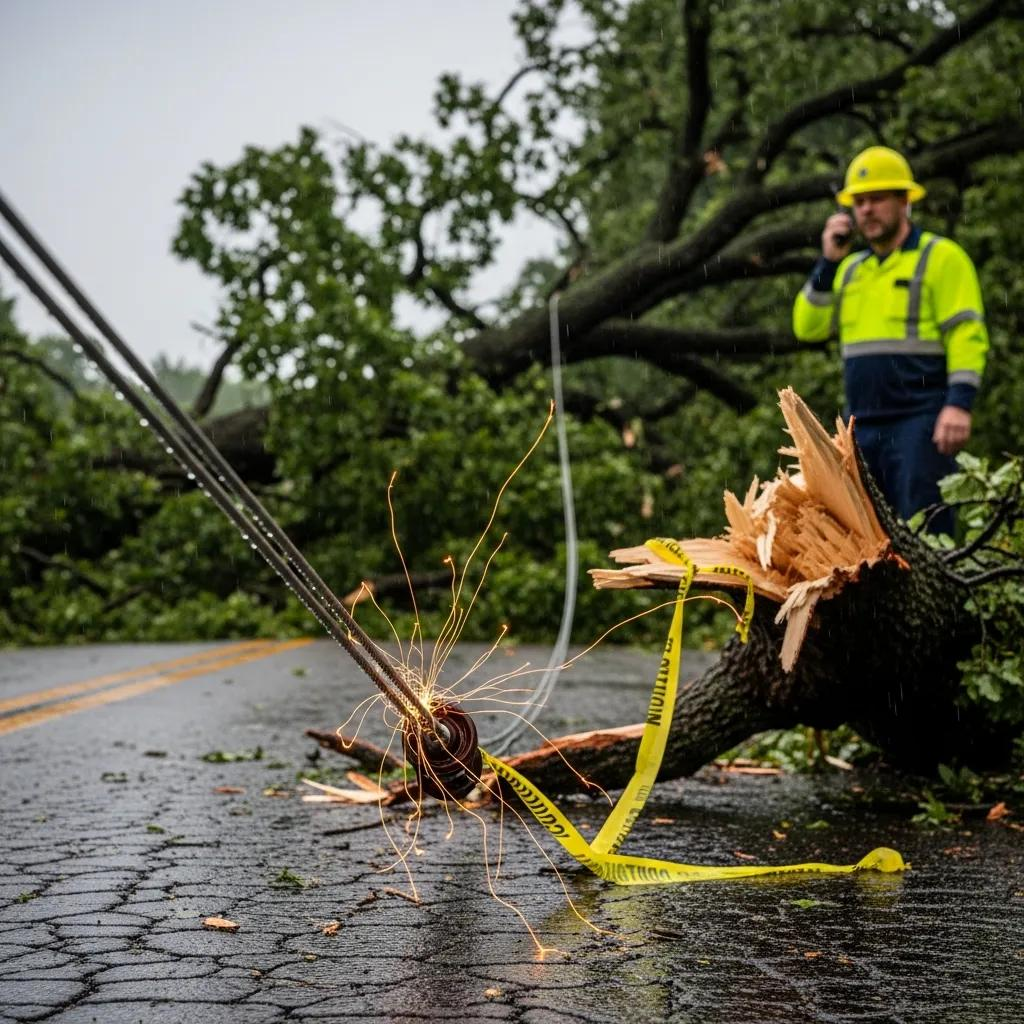
Look for signs that mean urgent danger: sparking wires, buzzing sounds, smoke, the smell of gas, visible roof penetration, sagging rooflines, or movement when wind shifts. Even if a tree is only resting on a roof and hasn’t pierced it, the load can cause sudden collapse or allow water in — don’t re-enter the home. If you suspect a gas leak or live electrical hazard, keep a safe perimeter and wait for utility crews. If the tree is fully on the ground in the yard with no utility or structural contact, you can document the scene and plan removal on a non-emergency timeline. These visual cues help you decide whether to call emergency services or schedule a professional tree crew.
Who Should You Contact First: Emergency Services, Utility Companies, or Tree Professionals?
The first call depends on the threat. Life-safety always comes first, then utilities, then tree pros. Call 911 for injuries, entrapment, fire, or obvious structural collapse. For downed or sparking lines and suspected gas leaks, call the utility company and keep a wide safe zone — utility crews have the authority to make the area safe. If there’s no immediate danger to people or utilities but the tree threatens structures or blocks access, call an emergency tree service or certified arborist to stabilize and schedule removal, and notify your insurer to start a claim. When you call, give a short, clear report: location, visible hazards, whether the tree hits the house or lines, and photos if you can.
What to Do When a Tree Falls: Safety Steps & Professional Removal
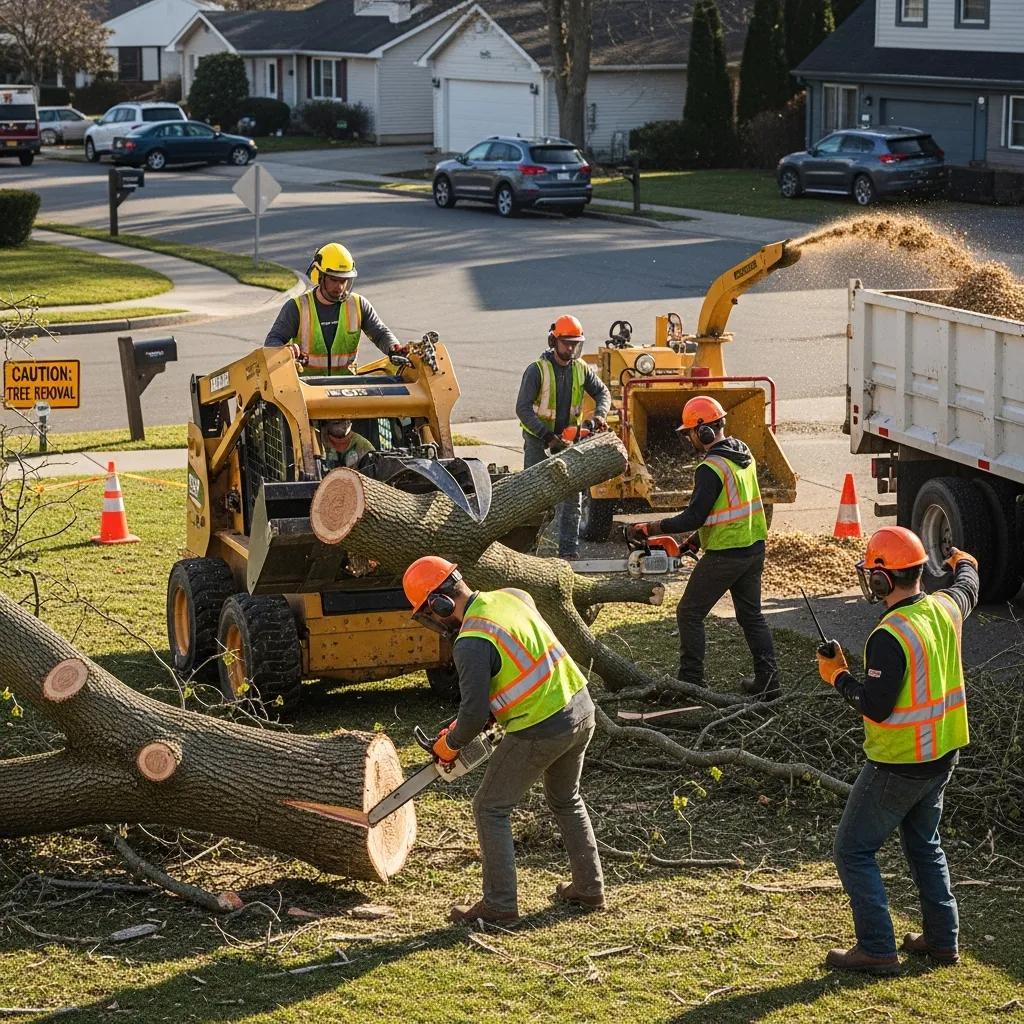
Call 24/7 emergency tree services whenever a fallen tree creates a risk to people, utilities, or a building that you can’t handle safely. Emergency crews bring trained teams, rigging know-how, and heavy equipment to remove trees with minimal extra damage. Waiting can lead to collapse, more water damage from an exposed roof, and insurance headaches — insurers often expect prompt mitigation. Professionals work with utilities, structural inspectors, and insurers to make a safe removal plan and temporarily protect damaged areas. A 24-hour crew shortens the window for secondary damage and helps meet insurer expectations for emergency mitigation.
Before the table below: this compares common high-risk scenarios and the recommended professional responses so you can prioritize calls.
| Situation | Risk/Complexity | Recommended Response |
|---|---|---|
| Tree on roof with penetration | High risk of collapse and water or gas entry | Call 911 for injuries, notify utility if lines are involved, then contact a 24/7 emergency tree crew |
| Tree leaning on structure but not penetrated | Moderate to high instability | Call an emergency arborist to stabilize and schedule removal |
| Tree entangled in power lines | Electrocution and fire hazard | Contact your utility immediately; do not approach; request coordinated work with an emergency tree crew |
| Large uprooted tree in yard | Low immediate structural danger but heavy debris | Schedule urgent removal by pros with lifting equipment |
| Partial trunk failure with elevated limbs | Unstable, unpredictable collapse | Call an emergency crew for rigging and sectional removal |
This matrix helps you decide when to escalate to emergency professionals and how their skills match each situation. The next sections cover DIY risks and what certified arborists do.
What Are the Risks of DIY Fallen Tree Removal?
DIY removal is risky: electrocution, dangerous falls, and making structural damage worse are all real possibilities. Chainsaws used without rigging knowledge can cause limbs to spring, roll, or bind unpredictably. Working on roofs or ladders increases fall risk. Trying unsafe removal can also complicate insurance claims if the insurer finds further damage resulted from untrained attempts. The safest route is to document the scene and leave complex cuts, rigging, and hoisting to certified crews who control load paths and use cranes, slings, and proper safety gear.
How Certified Arborists Ensure Safe and Efficient Tree Removal
Certified arborists run formal risk assessments, build removal plans, and use specialized gear — rigging systems, cranes, stump grinders — to remove hazardous trees safely. They check root-plate stability, canopy tension, and likely collapse paths to choose a sectional sequence that protects structures and crews. Arborists also coordinate with utilities to de-energize lines, document work for insurers, and provide temporary protection like tarping roofs or shoring openings. Their knowledge of tree biology helps them recommend follow-up work — stump grinding, targeted pruning, or full removal — that lowers future risk. This professional approach reduces safety hazards and improves the chances of a smooth insurance process.
Industry specialists emphasize that specialized rigging is essential when structures or utilities limit safe free-falling of tree sections.
Professional Tree Removal Rigging for Safety
Rigging is required when free-falling sections isn’t possible because a structure is in the way, sensitive landscaping must be protected, or energized conductors or other obstacles create hazards. In short, rigging’s main job is to reduce worker exposure to danger.
Rigging for removal, 1989
How to Navigate Insurance Claims for a Tree That Fell on Your House
Start your claim by notifying your insurer quickly, mitigating immediate hazards safely, and documenting damage and expenses. After safety is handled, take time-stamped photos and video, keep receipts for emergency repairs (tarps, boarding), and record names and contact details of responders and contractors. Many homeowner policies cover sudden storm damage that harms a structure, but coverage varies by cause (storm vs. neglect), limits, and deductibles — read your policy so you know what to expect. Keep a dated log of calls with adjusters, contractors, and utility crews to make the claim process smoother when the adjuster inspects.
The legal and insurance landscape around storm-related tree damage can be complex, so thorough documentation is key.
Legal & Insurance Aspects of Storm Tree Damage
Over the last decades, tree-related legal disputes have become more common: damage during storms, root intrusion into neighbor properties, overhanging branches, and similar issues. This comparative study reviews damage caused by fallen or broken trees, root cases, and other tree-related impairment, considering private, insurance, and public law angles.
Fault or Risk? A Comparative Study on the Liability for Damage Caused by Trees, 2012
| Damage Type | Typical Coverage | Homeowner Action/Documentation |
|---|---|---|
| Tree fell through roof (storm) | Often covered for structural repair and removal | Photos, emergency repair receipts, contractor estimates |
| Tree on fence/landscaping | Usually limited; removal may be covered but not full replacement | Photos, invoices, itemized replacement estimates |
| Tree contacting power line | Utilities handle lines; structural damage addressed by insurer | Utility report, photos, adjuster notes |
| Damage from root decay or neglect | Often excluded if maintenance was lacking | Prior inspection records can help if available |
| Stump and debris removal | Sometimes covered when tied to structural damage removal | Itemized removal receipts and professional statements |
Use this table to anticipate what an insurer may request and gather the right evidence. The next section answers common coverage questions and what to prepare.
Does Homeowner's Insurance Cover Emergency Tree Removal Costs?
Often, yes — if the tree fell because of a covered peril (windstorm, lightning) and damaged a covered structure. Coverage can include removing the tree from the structure, repairs, and reasonable emergency mitigation costs, but limits and deductibles apply and some policies cap removal amounts per incident. Insurers may deny coverage if damage is linked to neglect or pre-existing disease. Keeping inspection records and a history of maintenance helps show you exercised reasonable care. Notify your insurer promptly, save receipts and estimates, and clarify with your adjuster what documentation they need.
What Documentation Is Needed to Support Your Insurance Claim?
Insurers expect clear, dated documentation showing the damage, cause, and costs for mitigation and repair. Take wide shots and close-ups, capture roof penetration and utility damage, and keep date/time metadata when possible. Write a short, dated account of events and communications. Get professional assessments from certified arborists or emergency crews that explain cause and needed work, and keep receipts for temporary repairs. Keep a log of calls, names, and reference numbers from your insurer and utilities until the adjuster completes their inspection.
What Are the Steps in the Emergency Tree Removal and Cleanup Process?
The emergency removal process follows a clear order: assess and stabilize hazards, prioritize removal by risk, perform controlled sectional cuts with proper rigging, then haul debris and hand off restoration work. Pros begin with a site assessment to find life-safety risks, utility involvement, and structural issues, then map a removal sequence to avoid sudden shifts or extra damage. Sectional dismantling, cranes, or lifts are used to lower heavy parts safely, followed by chipping, stump grinding if needed, and coordination with roofers or restoration crews for repairs. Expect communication between utilities, tree crews, and insurers so the job is safe, documented, and efficient. The table below outlines typical stages, who’s involved, and expected timelines.
| Stage | Who Is Involved | Timeline / Tools / Output |
|---|---|---|
| Initial assessment | Emergency arborist, homeowner, possible structural inspector | 1–6 hours; inspection, photos, scope report |
| Stabilization | Tree crew, utility company if lines involved | Immediate to 24 hours; bracing, de-energizing, tarping |
| Sectional removal | Arborists, crane operators, rigging crews | Same day to several days; controlled cuts, lifted sections |
| Debris cleanup | Tree crew, debris haulers | 1–5 days; hauling, chipping, stump grinding |
| Restoration handoff | Restoration contractors, roofers | Days to weeks; permanent repairs, insurance billing support |
This map sets expectations for timelines and deliverables. The next sections explain how crews triage damage and what cleanup includes.
How Is Damage Assessed and Removal Prioritized?
Crews use a triage that puts threats to life, utilities, and structural stability first, then access and property value concerns. Inspectors check for active hazards (live lines, gas leaks), structural penetration (roof or deck compromise), and stability signs (new lean, root-plate failure). Life-safety issues trigger immediate stabilization and emergency services. When a building is at risk, crews remove load-bearing sections that threaten collapse and tarp or shore openings to limit weather damage. Lower-priority debris like landscaping or driveway blockage is cleared after the urgent work is done.
What Does Debris Cleanup and Property Restoration Involve?
Cleanup means sorting hazardous material, hauling logs and brush, grinding stumps, and preparing the site for restoration contractors who will fix roofs, walls, and landscaping. Crews separate salvageable timber from waste, chip or recycle material when possible, and provide documentation and weight tickets if insurers or municipalities require them. Stump grinding timing depends on homeowner preference and restoration needs. Clear handoffs between tree crews and restoration contractors reduce duplication and give you consolidated paperwork for your insurer and a plan to return the property to pre-loss condition.
How Can You Identify and Prevent Hazardous Trees Before Storm Damage Occurs?
Spotting hazardous trees early and taking preventive action lowers the chance of emergency removal after storms. Routine inspections look for structural defects — large cracks, fungal fruiting bodies, root heave, notable lean, and dead or hanging branches. Document these signs and get a professional evaluation before problems escalate. Preventive work — timely pruning, cabling, selective removal of risky trees, and root-zone care — reduces storm vulnerability and often costs less than emergency response and structural repairs. Keep inspection records and hire certified arborists for high-risk mitigation to protect people, utilities, and structures.
Professional tree risk assessments give clear guidance on acceptable risk levels and the modifications needed to protect people and property.
Professional Tree Risk Assessment for Property Safety
All trees carry some risk to nearby people, structures, and utilities. As trees age or face pests, disease, or stress, owners must decide what risk level they can accept and what changes are needed. Experienced arborists help by assessing the likelihood of whole or partial failure, the possible consequences, and what targets are at risk.
Tree risk assessment methods: A comparison of three common evaluation forms: ENH1226/EP487, 11/2013, AK Koeser, 2013
- Early-warning signs can identify trees that need professional assessment before storms.
- The list below shows visible indicators of compromised health or structure and when to call an arborist.
- Large vertical or horizontal cracks in the trunk that suggest possible structural failure.
- Fungal fruiting bodies (mushrooms) at the base that signal internal decay.
- Exposed or heaving root plates, which mean the tree has lost anchorage and is at higher risk in strong wind.
- A significant or recent change in lean direction, indicating shifting stress and potential failure.
- Dead or hanging branches, poor canopy vigor, or severe crown dieback, all signs of overall decline.
Regular inspections and record-keeping let you act early. The next section lists the signs of dangerous trees and proactive steps you can take.
What Are the Signs of Weak or Dangerous Trees?
Dangerous trees show structural defects, decay, or root and soil problems that predict failure in storms and should prompt a professional check. Watch for bark loss, conks or fungal growth at the root flare, cavities or hollow sections, large trunk cracks, and exposed roots. Canopy signs — sudden dieback, excessive shoots, or uneven crown weight — can also signal internal problems. If you see several signs together (for example, decline plus root damage), book a certified arborist inspection to quantify the risk and recommend next steps. Early detection cuts the chance of emergency removals and costly damage.
What Proactive Measures Can Protect Your Property from Tree Damage?
Preventive steps include regular professional inspections, pruning to reduce wind resistance, cabling and bracing weak limbs, and removing trees that pose unacceptable risk. Get inspections at least once a year for mature or high-risk trees and after big storms; keep records of work to show reasonable care to insurers. Pruning removes deadwood and rebalances crowns, cabling and bracing can extend a tree’s safe life, and early removal avoids emergency scenarios and often lowers total costs compared with crisis repairs. These measures protect safety and reduce disruption during storm season.
For urgent, certified professional help with emergency tree removal or hazardous-tree assessment, Henry’s Tree Service is one local company homeowners commonly contact for fast response and removal; always verify credentials and insurance coverage before work begins. We mention this to help you find qualified help while keeping the focus on safety, documentation, and coordinated recovery.
Conclusion
Quick, calm action after a tree falls is essential to protect people and limit damage. Knowing the right steps, when to call 911, the utility company, or a certified arborist, and how to document the scene will speed recovery and support insurance claims. Prioritize safety, keep good records, and call licensed professionals when a situation exceeds what you can handle safely. If you need help, reach out to certified tree removal services in your area for prompt, experienced support.