
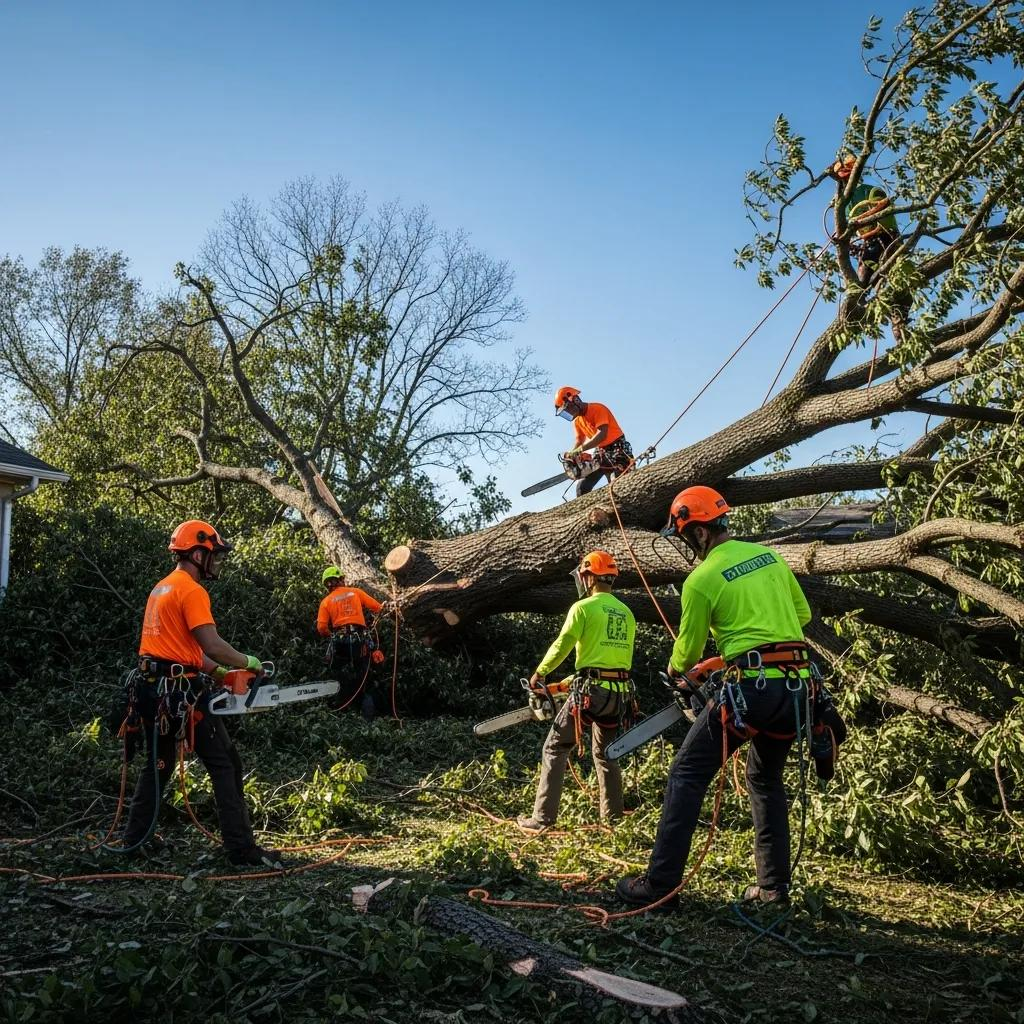
Emergency Tree Removal Services: 24/7 Storm Damage & Fallen Tree Solutions
Storms can turn healthy-looking trees into immediate hazards, and emergency tree removal is the rapid, safety-first process that removes storm-damaged or fallen trees to protect people, property, and critical infrastructure. This article explains what emergency tree removal entails, why timing matters after storm damage, and how trained crews assess and mitigate risks to prevent further loss. You will learn how storm forces—wind, saturated soils, ice, and lightning—create different failure modes, when a fallen tree requires immediate action, and which on-site techniques and equipment minimize secondary damage. The guide also breaks down typical cost drivers, how homeowners can document and work with insurers, and practical preventative care to reduce future emergencies. Finally, the piece outlines provider workflows for 24/7 response, the specialized machinery used for hazardous removals, and how to contact Henry’s Tree Service for emergency support. Throughout, keywords like storm damage tree removal, fallen tree removal, 24/7 tree service, and emergency arborist are integrated to help homeowners quickly identify risks and the next safe steps to take.
What Is Emergency Tree Removal and Why Is It Crucial After Storm Damage?
Emergency tree removal is an expedited service that eliminates trees or large limbs that pose imminent danger to people, structures, utilities, or access routes after storm events. The mechanism is straightforward: trained crews rapidly triage hazards, stabilize or remove dangerous elements, and clear debris to prevent collapse or secondary incidents, which reduces immediate liability and future structural damage. Rapid removal protects occupants from falling limbs, prevents roofs and vehicles from further crushing, and helps utilities and first responders regain safe access. Homeowners should prioritize safety, keep clear of damaged trees, and contact professional emergency tree services rather than attempting DIY removal. Henry’s Tree Service maintains 24/7 emergency availability and deploys certified arborists and trained crews for storm-damage response, which ensures expert risk assessment before removal.
How Does Storm Damage Affect Tree Safety and Property?
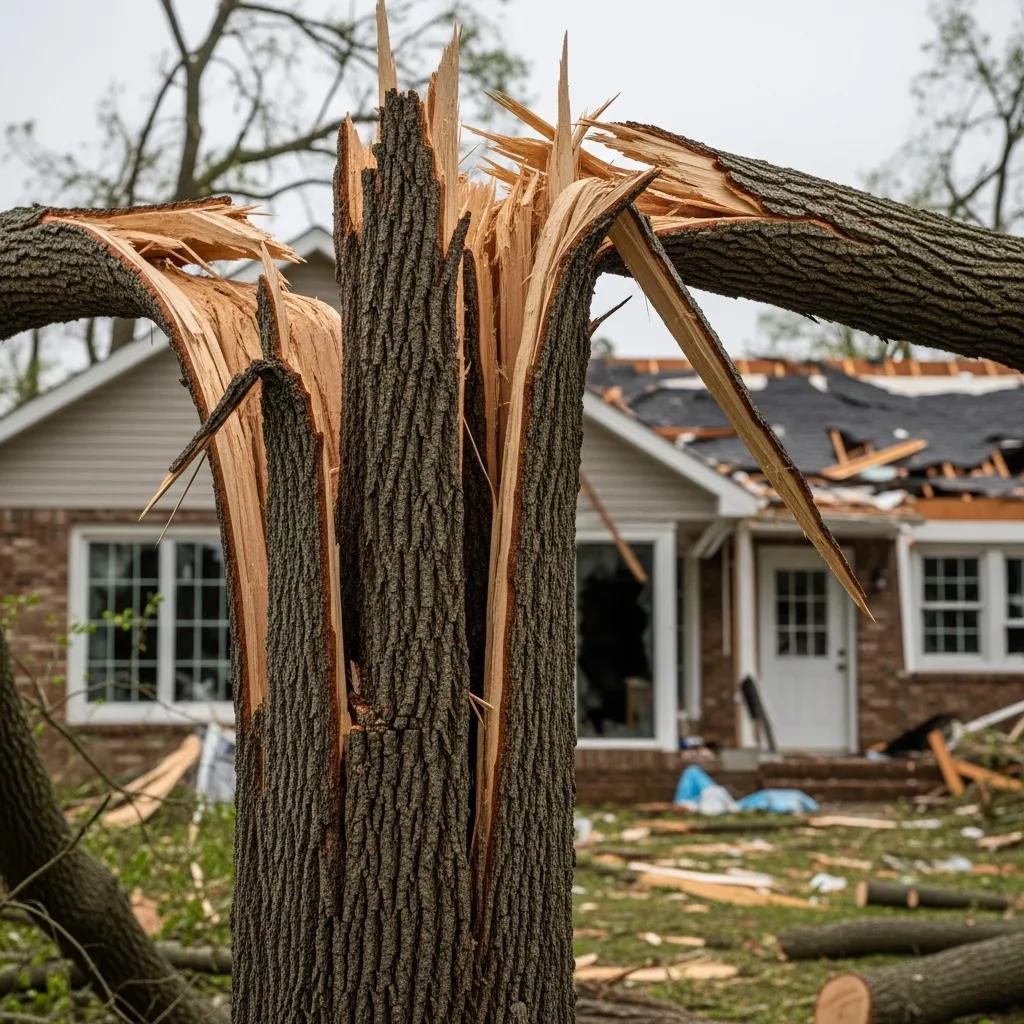
Storms damage trees through windthrow, trunk failure, limb shear, root saturation, and lightning strikes; each mechanism reduces structural integrity and increases collapse risk. Wind applies lateral forces that can split trunks or pry roots from saturated soil, while ice and snow add weight that causes limb failure and crown collapse; lightning can vaporize wood and create internal fractures that are not immediately visible. These failure modes often produce hidden hazards—such as split trunks or cracked roots—that can catastrophically fail hours or days after the initial event, threatening homes, fences, vehicles, and power lines. Recognizing the specific failure pathway helps decide whether monitoring is possible or immediate removal is required, and that assessment drives the mitigation plan the crew will execute next.
When Should You Call for Immediate Fallen Tree Removal?
If a tree presents an active hazard, call emergency services and a professional emergency tree service immediately. Use this checklist to decide on immediate action:
- The tree or a large limb is resting on a house, garage, or vehicle.
- The tree is entangled with or leaning on power lines or utility equipment.
- The tree blocks primary access or egress routes and impedes emergency responders.
- The tree shows a sudden, severe lean, audible cracking, or exposed, lifted root plate.
These scenarios require urgent professional intervention and may also necessitate contacting utility companies before crews attempt removal. If the tree is down in an open yard without immediate danger, removal can often wait for daylight and a scheduled crew; however, visible structural cracks or shifting soil merit faster assessment. When in doubt, maintain a safe perimeter and arrange for an emergency arborist to evaluate risk.
How Does Our 24 Hour Tree Removal Service Ensure Rapid Response?
A 24-hour emergency tree service coordinates intake, triage, dispatch, on-site assessment, and mitigation to deliver fast, safe outcomes after storm damage. At first contact, critical information—location, type of hazard, immediate threats—is collected so a trained dispatcher can prioritize responses and mobilize the appropriate crew and equipment. The push-pull of speed and safety means crews aim to arrive quickly while ensuring they bring the right machines and personnel for hazardous scenarios, which reduces time on site and limits secondary property damage. For urgent needs, Henry’s Tree Service emphasizes continuous availability and a documented response workflow to streamline emergency mitigation for homeowners.
Intro to the rapid-response table: The following table clarifies typical stages of a rapid-response workflow, showing how call intake moves to on-site action.
| Stage | Typical Timeframe | Key Actions |
|---|---|---|
| Call Intake & Triage | 0–30 minutes | Collect location, hazard type, photos; prioritize response level |
| Dispatch & Mobilization | 30–90 minutes | Assign crew, route planning, equipment selection |
| On-Site Assessment | 15–45 minutes | Certified arborist evaluates hazards, containment plan created |
| Immediate Mitigation | 30–180 minutes | Limb stabilization, partial removal to secure area |
| Full Removal & Cleanup | 1–6+ hours | Sectional removal, stump considerations, debris hauling |
This response-stage breakdown demonstrates how structured triage and equipment staging reduce on-site time and contain immediate hazards. The next section explains the step-by-step removal sequence crews follow once on site.
What Is the Step-by-Step Process of Our Emergency Tree Removal?
Emergency removal follows a clear sequence: intake, assessment, containment, sectional removal, and cleanup—each step designed to prioritize safety and property preservation. First, call intake captures essential details and, when available, photos that help triage the severity of the hazard before dispatch. Upon arrival, a certified arborist performs a rapid tree risk assessment, identifies failure points, and defines exclusion zones to protect people and structures; this assessment determines whether cranes, bucket trucks, or rigging are required. During removal, crews work from the top down with controlled sectional cuts and rigging to lower heavy sections safely, then remove debris using chippers and grapple trucks while protecting nearby surfaces. Final steps include stump management options and hauling storm debris to restore safe access and reduce secondary hazards.
Which Specialized Equipment Do We Use for Safe and Efficient Tree Removal?
Specialized equipment matches the challenge: cranes lift large sections near structures, bucket trucks provide safe aerial access, and rigging gear controls heavy cuts to prevent collateral damage. Cranes are used when a tree or large limb must be lifted clear of a roof or delicate structure; bucket trucks enable arborists to access crowns safely for precise sectional cuts; winches, slings, and rigging systems control descent paths to avoid striking property. Chippers and grapple trucks handle rapid debris reduction and hauling, and stump grinders remove remaining hazards at ground level. Choosing the right equipment shortens job time and reduces the chance of accidental impacts, which is particularly important when working near houses or power infrastructure.
Understanding the specific applications of rigging is crucial for safe and precise tree removal, especially in complex environments.
Rigging Principles for Safe Tree Removal
1. The intent of this paper is to briefly detail principles and concepts of rigging for tree and tree limb removal. This paper is intended as a reference tool for tree workers already skilled in tree removal techniques. It is in no way a substitute for hands-on instruction by skilled professional arborists. Rigging becomes necessary when free-falling is not possible because: a) a structure is in the way, b) sensitive landscaping would be damaged, or c) energized conductors or some other obstacle present a hazard.
Rigging for removal, 1989
What Are the Costs Associated with Emergency Tree Removal and How Does Insurance Help?
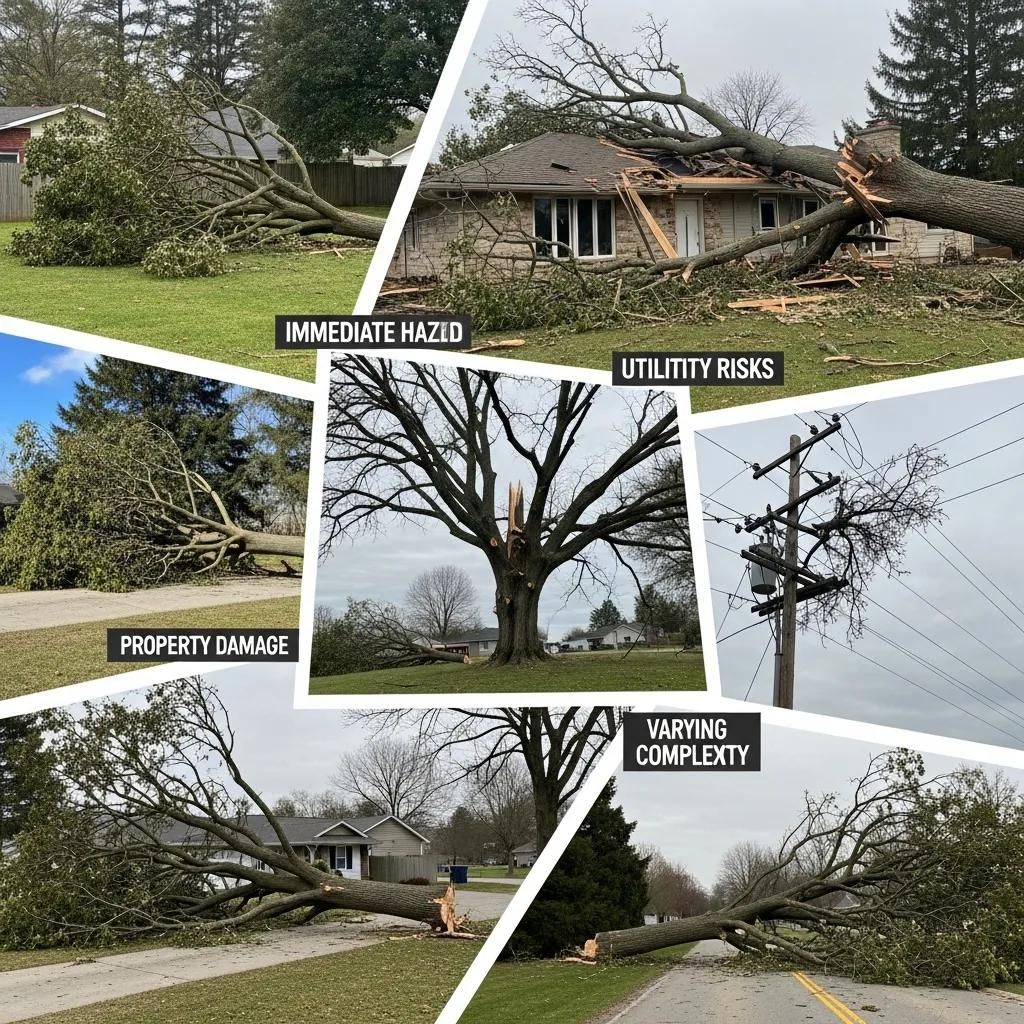
Emergency tree removal costs vary widely because each event differs in tree size, location, hazard complexity, and required equipment; homeowners should expect a range rather than a fixed price. Typical scenarios span small fallen tree cleanups to complex removals when a large trunk rests on a home; insurers commonly cover removals that are a direct result of a covered peril, but policy details and limits vary. Understanding major cost drivers—access, crew size, equipment needs, and time of day—helps homeowners anticipate expenses and present better documentation to adjusters. Henry’s Tree Service assists homeowners with estimates and documentation to support insurance claims while keeping pricing discussions objective and transparent.
Intro to cost comparison table: The table below outlines common emergency scenarios, typical cost ranges, and how homeowners’ insurance often responds to each.
| Scenario | Typical Cost Range | Typical Insurance Response |
|---|---|---|
| Small fallen tree in yard | $150–$1,000 | Often covered if caused by a covered peril; check deductible |
| Large tree on house/vehicle | $1,000–$8,000+ | Frequently covered for removal and repair; structural damage claims apply |
| Uprooted/root-ball removal | $500–$3,000 | May be covered for hazard mitigation; stump/root work sometimes excluded |
| Tree entangled with utilities | $500–$5,000+ | Utilities may handle line clearance; homeowner/insurer coordination required |
This scenario-based comparison helps homeowners frame expectations and gather appropriate evidence for claims. The next sub-sections explain factors influencing cost and practical steps for insurance claims.
What Factors Influence Emergency Tree Removal Cost?
Several factors drive emergency removal cost, and understanding these variables clarifies why estimates can range dramatically. Size and weight of the tree determine required crew size and machinery—larger trunks need cranes or additional rigging. Accessibility matters; confined spaces, proximity to roofs, fences, or landscaping require extra labor and protective measures, increasing time and cost. Hazard level and time—nighttime or immediate-response calls—typically incur premium rates due to overtime and rapid mobilization. Finally, debris disposal, stump grinding, and site restoration are add-on services that affect the final invoice. Considering these elements helps homeowners prioritize immediate risk reduction versus full restoration, with the next section detailing how to document claims effectively.
How Can Homeowners Navigate Insurance Claims for Tree Removal?
Successful insurance navigation combines prompt documentation, mitigation, and clear communication with adjusters; following a structured checklist speeds claim resolution and maximizes eligible coverage. Begin by photographing the scene from multiple angles, noting visible roof, vehicle, or structure damage, and preserving any time-stamped media; next, arrange emergency mitigation to prevent further loss and keep receipts for all services performed. Obtain a written estimate from a qualified emergency tree service that outlines the hazard, recommended work, and urgency; submit documentation to your insurer promptly and ask about policy-specific coverages or exclusions. If utilities are involved, document any communications and any work they perform, since overlap between utility restoration and homeowner responsibility can affect claim outcomes.
- Photograph and document the full scene immediately with timestamps.
- Secure the area and keep receipts for emergency mitigation efforts.
- Obtain written estimates from licensed emergency tree professionals.
- File the claim promptly and provide organized documentation to the adjuster.
Following this sequence ensures faster processing and more accurate evaluation of coverable losses. The next section explains how hazardous trees are assessed and removed to minimize property damage.
How Do We Handle Hazardous Tree Removal to Protect Your Property?
Hazardous tree removal begins with a precise risk assessment that identifies structural defects, decay, pest or disease indicators, and loading conditions that could precipitate failure. Certified arborists evaluate visual cues and, when necessary, use probing or decay detection tools to understand internal defects; they then prioritize mitigation options—pruning, bracing, cabling, or full removal—based on the likelihood and consequence of failure. When removal is required, crews design a protection plan for adjacent structures and vegetation, select equipment to control descent paths, and implement staged removal to minimize impact. This expert-driven approach reduces property damage and ensures that risk reduction measures are proportionate to the hazard identified.
Intro to equipment comparison table: Different removal scenarios call for distinct equipment; the table below summarizes common gear and when each is most appropriate.
| Equipment | Best For | Operational Benefit |
|---|---|---|
| Crane | Large-section removal near buildings | Lifts heavy pieces safely clear of structures |
| Bucket truck | Aerial access for crown work | Safe operator platform for precision cuts |
| Rigging & winches | Controlled sectional lowering | Prevents uncontrolled drops and property strikes |
| Chipper & grapple truck | Debris reduction and hauling | Quick site cleanup and reduced disposal time |
This equipment comparison clarifies why selecting the right tools matters for property protection. The following sub-sections list hazard signs and describe arborist assessment methods.
What Are the Signs of a Hazardous Tree Needing Immediate Removal?
Homeowners should watch for visible indicators that a tree presents imminent failure risk and needs professional evaluation or removal. Common warning signs include large vertical or horizontal cracks in trunks, significant crown dieback or dead tops, fungal conks or shelf fungi indicating internal decay, root plate lift or heaving soil after saturation, and sudden new lean or audible cracking during or after storms. Presence of multiple indicators raises urgency and often triggers immediate mitigation to protect nearby structures. If any of these signs occur near homes or high-traffic areas, a certified arborist should be engaged promptly to determine whether removal is the safest option.
How Do Certified Arborists Assess and Mitigate Tree Risks?
Certified arborists use structured assessments—visual inspection, decay probes, and load-path analysis—to evaluate tree integrity and determine mitigation strategies. The process includes mapping defects, estimating failure probability, and quantifying potential consequences to people and property, which together form the risk assessment guiding action. Mitigation options range from selective pruning and cabling to full removal; the choice depends on species, defect severity, and site context. By combining diagnostic methods with industry standards for risk thresholds, arborists select interventions that balance cost, safety, and long-term landscape objectives while preparing the site for the next phase of restoration or preventative care.
The systematic approach to evaluating tree health and potential hazards is a cornerstone of professional arboriculture, as highlighted by research on risk assessment methodologies.
Professional Tree Risk Assessment Methods
Experienced arborists can aid in this decision process by conducting a professional risk assessment that specifies the likelihood of whole or partial tree failure, the consequences of such a failure, and the potential targets affected. A variety of risk assessment methods have been developed to guide professionals through the tree inspection process.
Tree risk assessment methods: A comparison of three common evaluation forms: ENH1226/EP487, 11/2013, AK Koeser, 2013
What Preventative Tree Care Practices Can Reduce Emergency Situations?
Preventative tree care reduces the likelihood and severity of storm-related emergencies by maintaining structural health and addressing defects before they fail. Regular inspections identify decay, unfavorable crown architecture, and root issues early, allowing targeted pruning, cabling, or corrective treatment that reduces wind exposure and load concentration. Planting site-appropriate species, ensuring proper root-zone care, and maintaining soil health make trees more resilient to saturated soils and high winds. Proactive measures lower the long-term cost of emergency removals, and scheduled care programs help homeowners prioritize interventions based on risk and value. The next sub-section explains recommended assessment cadence and inspection priorities.
How Can Regular Tree Assessments Prevent Storm Damage?
Scheduled tree assessments—annually for high-value or high-risk specimens and every 2–3 years for general landscape trees—help detect incremental changes before they escalate into emergencies. During an assessment, professionals evaluate root stability, crown structure, signs of decay, and historical storm impacts to create a risk profile and maintenance plan. Early corrective pruning reduces sail area and asymmetric loading, while identifying soil compaction or drainage issues informs root-zone remediation that improves anchorage. Regular monitoring establishes a baseline, making it easier to detect rapid deterioration after weather events and to trigger preventive action rather than emergency removal.
What Pruning and Care Techniques Enhance Tree Resilience?
Structural pruning, crown reduction, and selective thinning are targeted techniques that redistribute mechanical loads, reduce wind resistance, and remove weak crotches that commonly fail. Correct timing—dormant-season pruning for many species—minimizes stress and disease susceptibility, while avoiding over-pruning preserves canopy health and root energy reserves. Additional care practices include mulching to conserve moisture, targeted watering during drought to reduce stress, and soil aeration when compaction threatens root health. Applying these techniques as part of a maintenance schedule strengthens trees over time and reduces the probability of catastrophic failure during storms.
Where Do We Provide Emergency Tree Removal Services and How Can You Contact Us 24/7?
Henry’s Tree Service provides emergency tree removal and storm-damage response with 24/7 availability and a focus on rapid, safe mitigation; homeowners should consult the company’s service information for exact coverage and to request immediate assistance. Because response times depend on distance, demand, and access conditions, checking service area details on the provider’s official web presence helps set expectations for arrival windows. When contacting an emergency provider, having concise information ready—exact location, nature of hazard, photos if safe—speeds triage and helps dispatch the appropriate crew with necessary equipment. After contact, expect an intake, estimated arrival timeframe, and an on-site safety assessment to determine next steps.
Which Areas Are Covered by Our 24/7 Emergency Tree Service?
Service area coverage reflects operational logistics and response capacity; homeowners should verify local availability directly through Henry’s Tree Service resources to confirm whether 24/7 emergency dispatch is offered in their neighborhood. Proximity to the provider affects estimated response times, and densely storm-impacted regions may experience extended wait times during peak events. For planning, identify high-risk properties and review local service area maps or contact channels provided by the company to understand how coverage boundaries could influence rapid-response options. Verifying coverage in advance helps homeowners prepare a plan for storms and reduces uncertainty during emergencies.
How to Reach Our Emergency Tree Removal Hotline Anytime?
When you need emergency tree removal, prepare a concise briefing to share with dispatchers that accelerates safe arrival and effective mitigation. Have the exact address or clear location description, note whether the tree is on a structure or power line, describe visible damage, and, if safe, provide recent photos to assist triage. While waiting for crews, establish a safe exclusion zone, avoid touching the tree or downed wires, and, if utilities are involved, notify the utility provider before attempting any action. After you contact Henry’s Tree Service through the company’s emergency contact pathways, expect intake confirmation, an estimated arrival time, and instructions for immediate safety measures until professionals arrive.
- Prepare location details and hazard description to speed dispatch.
- Provide photos if safe to do so for triage and equipment planning.
- Establish a secure perimeter and stay clear of the hazard until crews arrive.
These steps streamline emergency response and reduce the chance of secondary incidents while professional crews prepare to mitigate the hazard.
| Scenario | Attribute | Value |
|---|---|---|
| Emergency Intake | Required Info | Location, hazard type, photos, access notes |
| Dispatch | Typical Prep | Equipment staging, route planning, safety PPE |
| On-Site Response | Expected Outcome | Exclusion zone, mitigation plan, debris removal |
This final table summarizes information homeowners should have and what to expect during emergency contact and response.
This article has walked through the critical aspects of storm damage tree removal, rapid-response workflows, cost and insurance considerations, hazardous tree handling, preventative care, and how to engage 24/7 emergency services. For urgent situations, contact Henry’s Tree Service directly through the company’s emergency contact channels to request immediate assessment and rapid mitigation.