
Professional Tree Service in Wake Forest NC: Expert Tree Removal and Care Solutions
Professional tree services in Wake Forest, NC provide comprehensive solutions for tree removal, pruning, stump grinding, and long-term tree health to protect property, enhance landscapes, and manage risk. This article explains how certified arboricultural practices, modern equipment, and systematic diagnostics work together to maintain safe, healthy trees while preserving landscape value. Homeowners and property managers face hazards from storm-damaged limbs, diseased trunks, and problematic stumps; this guide shows how to recognize risks, what professional crews do on-site, and when to call a pro for emergency or hazardous removal. You will learn about removal types, arborist diagnostics and treatments, pruning strategies that improve structure and appearance, the process and benefits of stump grinding, and how a reputable local service approaches safety and permits. Throughout the guide, targeted terms like tree service Wake Forest NC, arborist Wake Forest, and emergency tree removal Wake Forest are used to help you find the right service and understand what to expect. Practical lists, comparison tables, and step-by-step explanations make it straightforward to compare options and take action for trees on residential and commercial properties.
What Tree Removal Services Does Henry's Tree Service Offer in Wake Forest NC?
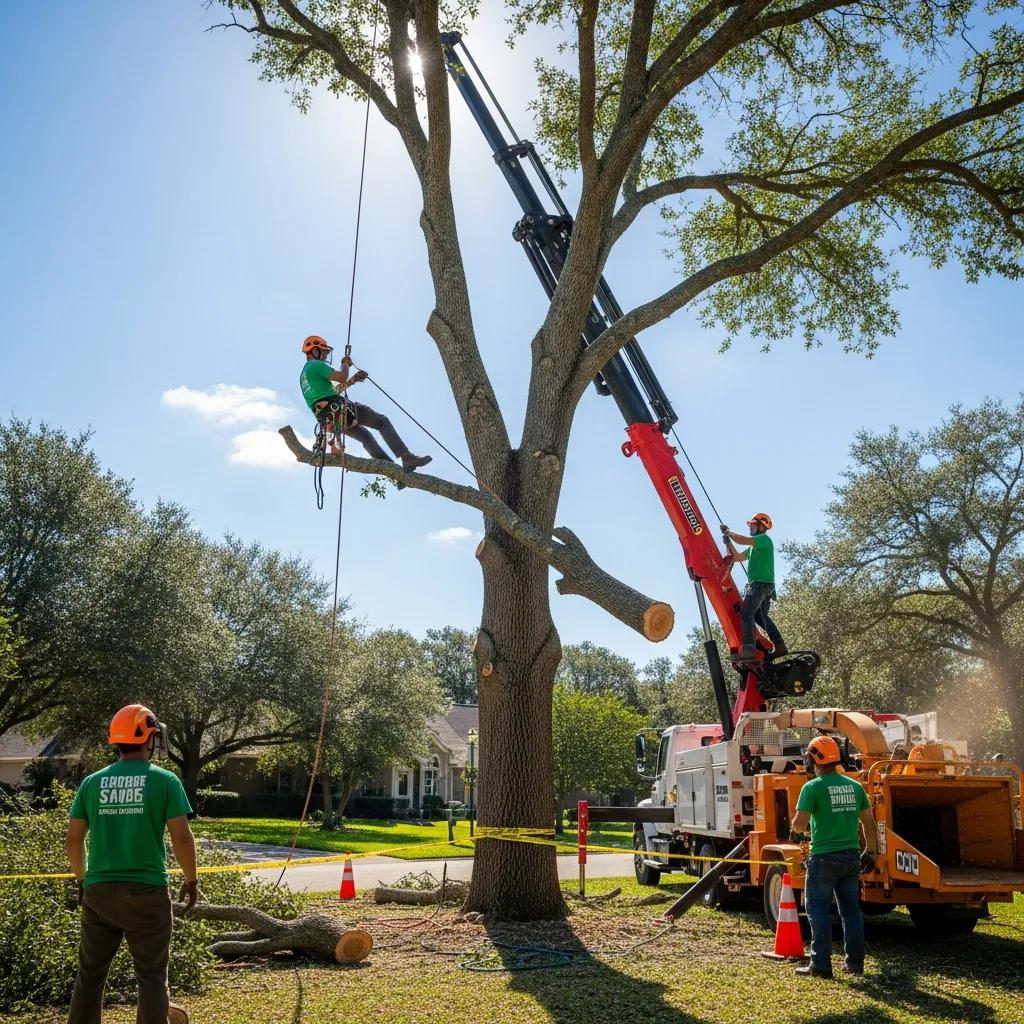
Tree removal services refer to the planned or emergency dismantling and removal of whole trees when they pose a risk, obstruct development, or are otherwise unsuitable for retention. Professionals use a combination of risk assessment, sectional dismantling, rigging, and heavy equipment to remove trees safely while minimizing property impact, and the result is a cleared site ready for restoration or replanting. Typical removal types include standard removal for non-hazard trees, hazardous removal for structurally compromised specimens, emergency tree removal after storm damage, and large tree takedowns that require cranes or sectional rigging; each approach balances safety, speed, and preservation of surrounding landscape features. Understanding these distinctions helps property owners choose the appropriate response and prepare the site, including clearing access points and identifying utilities before work begins.
Below is a concise comparison of common removal service types so homeowners can quickly see differences and know when to call a professional.
| Service Type | Typical Use Case / Risk Level | Typical Process Steps / Outcome |
|---|---|---|
| Standard Removal | Routine removals for dead or unwanted trees; low to moderate risk | Site assessment, sectional cutting, chip and debris removal, stump option discussed |
| Hazardous Removal | Trees with severe decay, lean toward structures, or large dead limbs; high risk | Detailed rigging plan, sectional dismantle, safety perimeter, debris cleanup |
| Emergency Removal | Storm-damaged or fallen trees blocking access or posing immediate danger | Rapid assessment, priority stabilization, expedited removal and debris haul |
| Large Tree Takedown | Very large diameter trees near structures or utilities; high complexity | Crane or advanced rigging, staged lifts, property protection measures |
This comparison clarifies when to call for standard, hazardous, or emergency services and sets expectations for process and outcomes. The following subsection outlines how emergency response protects property and what homeowners should do initially to support safety.
How Does Our Emergency Tree Removal Service Protect Your Property?
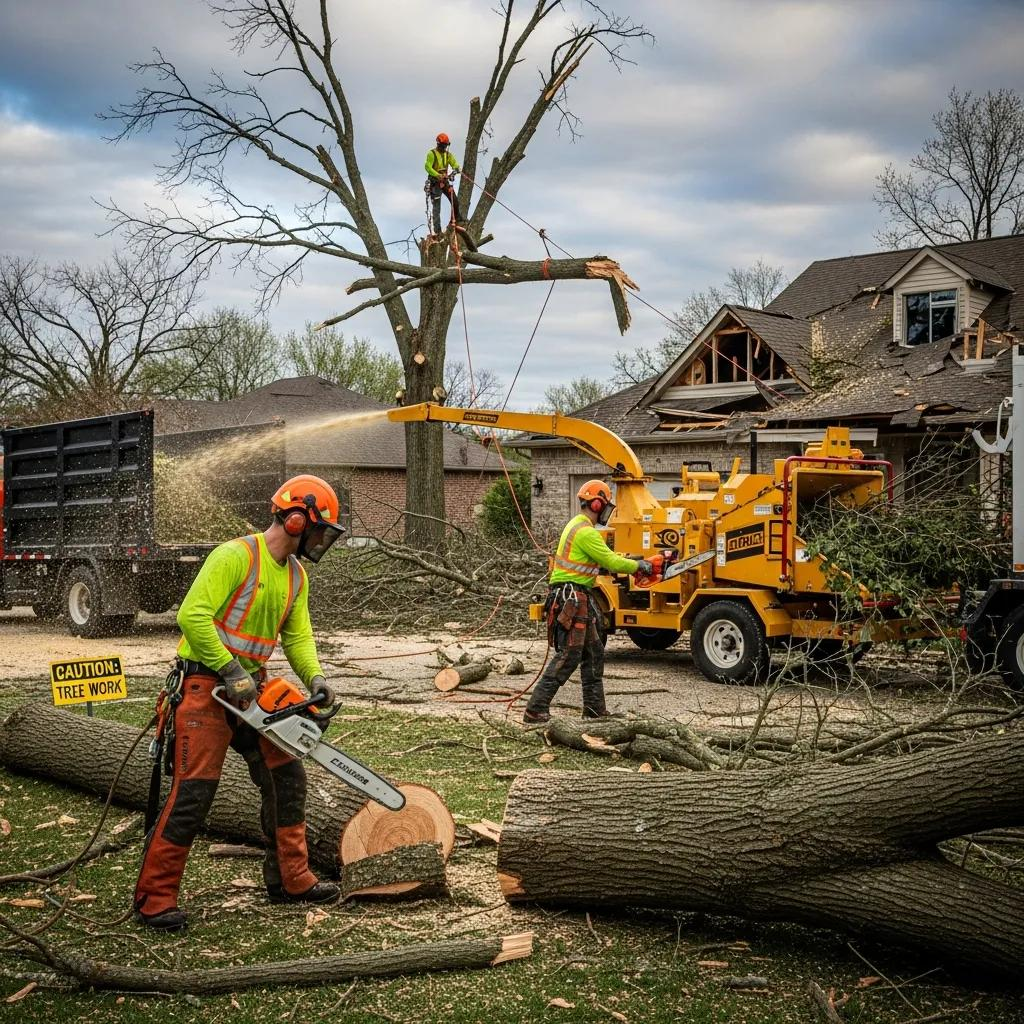
Emergency tree removal focuses on rapid hazard mitigation to protect life and property by prioritizing stabilization, safe dismantling, and debris control. Crews begin with a quick visual triage to identify immediate failures, then secure the area with safety rigging and exclusion zones to prevent secondary damage, followed by sectional removals that reduce load on damaged limbs or trunks. Equipment such as chainsaws, mobile chippers, and rope-and-harness systems are deployed to control falling material, and debris is separated for chip, salvage, or disposal while access routes are kept clear for emergency vehicles. Homeowner steps typically include staying clear of the hazard zone, documenting damage for insurance, and notifying professionals rather than attempting DIY removals.
This rapid approach reduces the chance of secondary collapse and prepares the site for either temporary stabilization or full removal, and the next subsection explains the indicators that make removal necessary rather than repair.
When Is Hazardous Tree Removal Necessary for Safety?
Hazardous tree removal becomes necessary when structural indicators suggest a high likelihood of failure that could damage property or harm people, such as significant trunk decay, large cavities, a sudden lean, or major root loss after flooding or soil disturbance. Homeowners can look for signs like visible rot, fungal conks, large splitting, dead crown sections, or progressive leaning; if several signs co-occur, a certified assessment is warranted to quantify the risk. Delaying hazardous removals increases the chance of catastrophic failure during storms or high winds, leading to higher damage and emergency costs, so timely professional evaluation and intervention are critical. When in doubt, arrange a formal tree risk assessment by an experienced arborist to weigh preservation options against removal for safety reasons.
The importance of systematic risk assessment in arboriculture is further emphasized by research highlighting the potential for tree failures to cause significant harm.
Systematic Tree Risk Assessment & Management
In the presence of a target, tree failures have the potential to damage property, disrupt services, or threaten public safety. Worldwide, several qualitative methods have been developed to provide a systematic approach for tree risk assessment and management. The consistency and accuracy of these methods, the values placed on the tree in question and its potential targets, and the risk perceptions and levels of acceptance of the evaluator and tree owner all influence how risk is managed.
Risk assessment and risk perception of trees: A review of literature relating to arboriculture and urban forestry, RW Klein, 2019
Understanding risk indicators helps you prioritize interventions and prepare for the next topic: why certified arborist services matter for diagnosing and managing tree health.
Why Choose Certified Arborist Services for Tree Health in Wake Forest NC?
A certified arborist is a trained professional who evaluates tree health, structure, and risk using standardized diagnostics and treatment methods to extend tree life and improve safety. Arborists apply visual inspections, tree risk assessments, soil analysis, and targeted treatments—such as corrective pruning, pest management, or soil amendments—based on observed symptoms and local species considerations. Choosing certified arborist services supports long-term landscape value by preventing avoidable decline, reducing emergency removals, and advising on species selection to match site conditions; these outcomes yield safer properties and healthier urban forests. The following table summarizes common diagnostic methods and treatment outcomes so property owners can understand what to expect from an arborist visit.
| Diagnostic / Treatment | Attribute (method) | Outcome / Benefit |
|---|---|---|
| Visual Inspection | Crown, trunk, root zone assessment | Early detection of decay, pests, or structural defects |
| Tree Risk Assessment | Quantified likelihood × consequence framework | Prioritized mitigation plan: pruning, cabling, or removal |
| Laboratory Testing | Tissue or soil analysis | Accurate disease/pest ID and targeted treatment prescriptions |
| Pruning & Structural Work | Selective limb removal, cabling | Improved stability, disease reduction, and storm resilience |
| Soil & Root Treatments | Amendments, aeration | Improved root health and long-term vigor |
This EAV-style comparison demonstrates how diagnostic methods map to clear treatment benefits, enabling evidence-based care plans. The next subsection details specific diagnostics and disease treatments typically performed by arborists.
What Tree Health Diagnostics and Disease Treatments Do We Provide?
Arboricultural diagnostics begin with a visual inspection of the canopy, trunk, and root collar, supplemented by resistograph or increment boring when needed to detect internal decay; laboratory analysis may confirm pests or pathogens for targeted treatment. Common treatments include corrective pruning to remove infected wood and improve airflow, targeted pesticide or fungicide applications when appropriate, soil remediation and fertilization to correct deficiencies, and injectable trunk treatments for systemic control in certain cases. The decision to attempt treatment versus removal depends on species value, extent of structural compromise, and long-term prognosis; where safety is compromised, removal may be the most responsible option. Follow-up monitoring and scheduled maintenance ensure treatments are effective and that recovery progresses, leading into how professional planting and care contribute to landscape health.
How Does Professional Tree Planting and Care Enhance Your Landscape?
Professional planting optimizes species selection, planting depth, and initial root-zone care to ensure high survival rates and attractive long-term growth that fits the site’s soil, light, and infrastructure constraints. Arborists recommend species that match mature size expectations and resist common local pests, then use best-practice planting—proper root flare placement, minimal soil compaction, and initial watering and mulch strategies—to establish healthy root systems. Early care in the first one to three years focuses on staking when needed, formative pruning to encourage strong structure, and monitoring for irrigation and nutrient needs to avoid transplant shock. Proper planting reduces future maintenance and mitigates risks such as root interference with utilities, which bridges directly to pruning and trimming practices that maintain health and appearance.
Clear planting choices reduce later corrective interventions and promote resilient urban canopy, paving the way to practical pruning guidance in the next section.
How Can Tree Pruning and Trimming Improve Tree Health and Appearance?
Tree pruning and trimming encompass targeted removals of branches to improve structural integrity, reduce disease risk, and enhance aesthetic form; when done correctly, these practices extend lifespan and increase resistance to storm damage. Structural pruning removes competing leaders and weakly attached limbs to create strong branch architecture, corrective pruning addresses defects like rubbing branches or narrow crotches, and aesthetic trimming shapes trees for landscape design without compromising health. Pruning improves light penetration and airflow, reducing fungal growth and pest pressure, while also managing crown weight to decrease failure risk in severe weather. Below are practical benefits and timing guidance to help property owners schedule appropriate pruning interventions.
- Improved Safety: Removes weak or hazardous limbs that could fail and damage property.
- Disease Prevention: Opens canopy to reduce moisture retention and fungal growth.
- Structural Strength: Corrects form to reduce future splitting and failure.
- Aesthetic Enhancement: Shapes trees to complement landscape design and sightlines.
These benefits explain why regular, properly timed pruning is a cornerstone of professional tree care and lead into specifics about aesthetic trimming and timing.
What Are the Benefits of Aesthetic Tree Trimming and Shrub Pruning?
Aesthetic trimming and shrub pruning improve curb appeal, control growth to maintain sightlines and clearances, and encourage desirable flowering or fruiting by removing deadwood and shaping structural form. Consistent, professional pruning guides plants toward balanced growth, reducing the need for corrective interventions later and preserving property values through maintained landscape quality. Improper pruning, by contrast, can cause decay, encourage weak regrowth, and impair structural integrity, so trained pruning techniques ensure cuts are placed correctly and wounds heal efficiently. Understanding seasonal timing and species response helps owners decide when aesthetic pruning will yield the best visual and health outcomes.
These practical outcomes set up a seasonal calendar for pruning, which is described in the next subsection.
When Is the Best Time for Tree Pruning in Wake Forest NC?
Optimal pruning timing depends on the objective: dormant-season structural pruning minimizes sap flow and insect attraction, spring pruning of flowering trees is timed after bloom to preserve flowers, and emergency or safety pruning occurs as needed regardless of season. For species common to Wake Forest, NC, dormant pruning is often recommended for structural corrections and to reduce disease spread, while deadwood and hazard removals are performed immediately to mitigate risks. The trade-offs include temporary loss of flowers if pruning is done in spring for bloomers versus greater disease control and reduced stress when pruning in winter. Coordinating pruning with species-specific needs and scheduled maintenance ensures recovery and preserves tree health over the long term.
With pruning and trimming clarified, the next section explains how stump grinding completes removals and restores site usability.
What Are the Advantages and Process of Stump Grinding Services in Wake Forest?
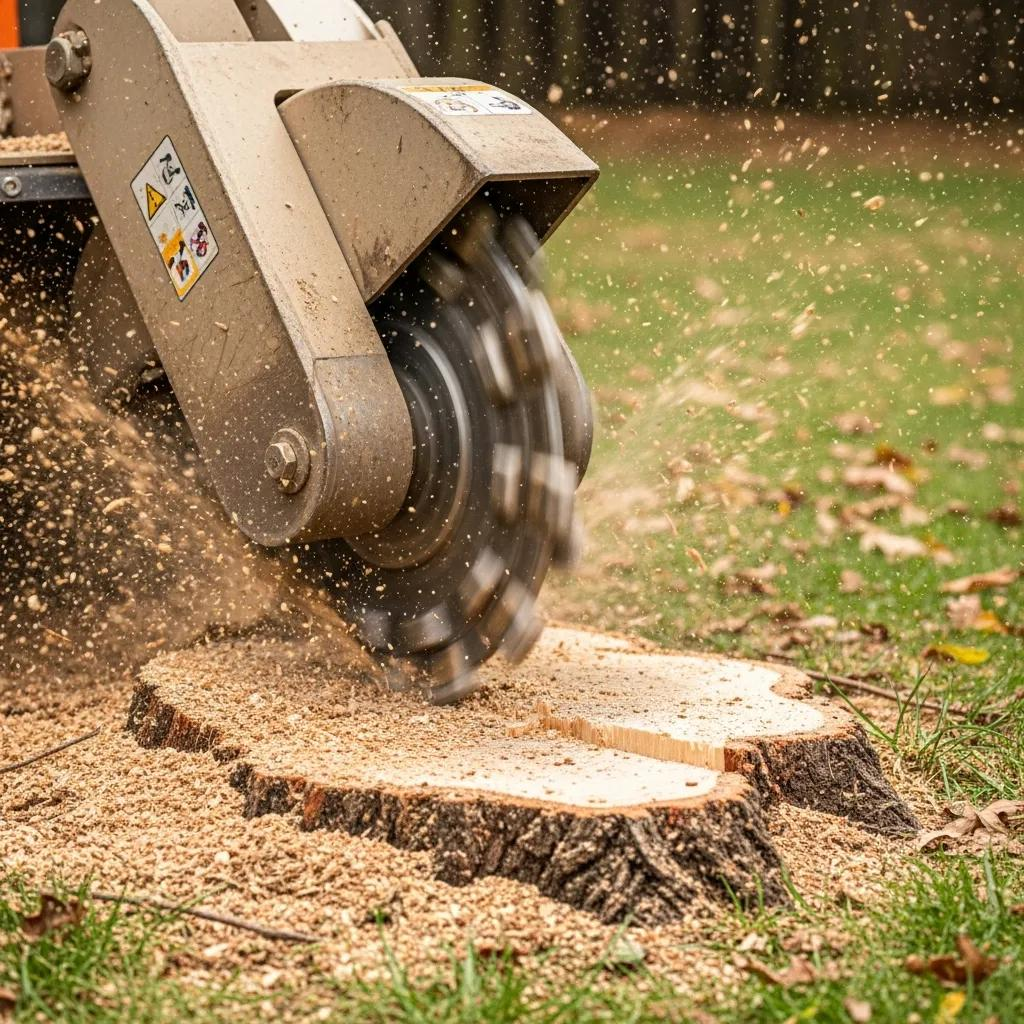
Stump grinding removes the visible portion of a tree stump using specialized grinders, preventing trip hazards, inhibiting pest habitat, and clearing space for landscaping or construction while preserving most roots below grade. The process typically includes site prep, grinding to a prescribed depth, removal or redistribution of grindings, and optional backfilling and seeding or mulching, producing a safe, usable surface in a short timeframe. Benefits include improved aesthetics, reduced mower and tripping hazards, elimination of rot-attracting habitats for pests, and streamlined landscaping or hardscaping installations after grinding. The table below outlines common equipment and expected results to help property owners choose the right approach.
| Equipment / Technique | Purpose | Typical Results / Timeframe |
|---|---|---|
| Walk-behind stump grinder | Small stumps in tight spaces | Grinds to 6–12″ below grade; same-day completion |
| Mid-size grinder | Residential stumps up to large diameters | Faster removal, 12–24″ below grade; efficient chipping |
| Excavation/root removal | Full root ball extraction | Complete removal for construction; longer timeframe |
This equipment comparison clarifies trade-offs between grinding depth, site impact, and readiness for replanting, and the next subsection explores safety and aesthetic improvements after grinding.
How Does Stump Removal Improve Property Safety and Aesthetics?
Removing stumps eliminates tripping hazards, prevents damage to lawn equipment, and reduces areas where pests like termites or carpenter ants might concentrate, thereby improving both safety and long-term property maintenance. A removed or ground stump opens usable yard space for planting or construction, increases curb appeal, and simplifies mowing and landscaping tasks that would otherwise be complicated by exposed wood. For homeowners planning patios, walkways, or new plantings, stump grinding with appropriate backfill allows immediate reuse of the site with minimal delay. Considering these practical benefits helps property owners decide between simple grinding and full root extraction depending on future site plans.
What Equipment and Techniques Are Used in Professional Stump Grinding?
Professional stump grinding operators select machine sizes based on stump diameter, access, and desired grind depth, using walk-behind grinders for constrained sites and larger track-mounted units for big or multiple stumps. Operators also use safety rigging, protective barriers, and personal protective equipment to control flying debris, and they plan chip handling—either hauling grindings away, leaving them as mulch, or backfilling the hole depending on client preference. Site prep includes marking utilities, clearing obstructions, and ensuring stable access for heavy equipment; these precautions minimize landscape damage and speed restoration. Proper technique and equipment choice deliver safe, predictable results while preparing the site for whatever landscape use follows, and service providers can offer estimates based on access and stump size.
How Does Henry's Tree Service Ensure Safety and Customer Satisfaction in Wake Forest NC?
Ensuring safety and customer satisfaction requires consistent use of industry-standard safety protocols, clear communication from estimate through job completion, and adherence to local regulations and permit processes where applicable. Professional crews follow established procedures: pre-job assessment, safety briefings, exclusion zones, proper rigging and equipment checks, and debris management plans that prioritize property protection and minimize disruption. Customers benefit from transparent estimates, explained scope of work, and a predictable workflow that includes site cleanup and post-job checks, all of which contribute to satisfaction and long-term professional relationships. The following list outlines common customer-facing steps that lead to smooth project delivery and confidence in service.
- Provide a clear written or verbal scope of work that outlines removal, pruning, or grinding tasks.
- Establish on-site safety protocols including exclusion zones and equipment staging.
- Communicate timelines and expected disruption while ensuring thorough cleanup after completion.
These operational practices reflect industry standards for safety and customer service and lead into details about team qualifications and equipment.
What Makes Our Team and Equipment Stand Out for Tree Services?
Professional tree crews combine trained personnel, standardized safety training, and specialized equipment—such as chainsaws, mobile chippers, bucket trucks, and stump grinders—to perform complex removals and care tasks safely and efficiently. Training focuses on safe cutting techniques, rigging, and emergency response protocols, while quality equipment reduces job time and minimizes landscape impact by allowing precise sectional dismantling and efficient debris processing. Insurance coverage, documented processes, and quality control checks further protect clients and ensure jobs meet expected standards; these safeguards build trust and reduce liability for property owners. Describing team qualifications and equipment capabilities helps homeowners evaluate proposals and choose a provider equipped for their specific needs.
How Do We Handle Local Regulations and Permits for Tree Removal?
Permit requirements for tree removal vary by municipality and depend on tree size, location, and whether the property is in a protected zone or subject to HOA rules; professionals typically advise clients on likely permit needs and coordinate documentation when required. A standard process includes initial research into local codes, preparing necessary permit applications or notifications, and scheduling inspections when municipal approval is mandated, thereby reducing delays or fines. When permits are not clearly required, arborists still document decisions and removal rationale to support compliance and provide records for clients and local authorities. Advising owners to check municipal resources and relying on experienced professionals to assist with the process streamlines project execution and ensures regulatory alignment.
After reviewing permit handling, property owners should be better prepared to assess proposals and schedule the right services for their trees.