
Crane-Assisted Tree Removal: Costs, Safety Protocols, and Solutions
Crane-assisted tree removal uses a mobile crane and trained crews to lift heavy or unstable tree sections clear of houses, cars, and landscaping so work can proceed safely. This guide lays out when crews choose a crane over traditional rigging or felling, how the process works, what to expect in price, and the safety steps certified arborists and rigging teams follow. You’ll get a step-by-step look at crane removal, the main cost drivers, examples of situations that need a crane, emergency-response basics, and practical tips for work near power lines and buildings. Throughout, clear lists and comparison tables help you plan, weigh risks, and prepare for an on-site assessment with a professional crane team.
What Is Crane-Assisted Tree Removal and How Does It Work?
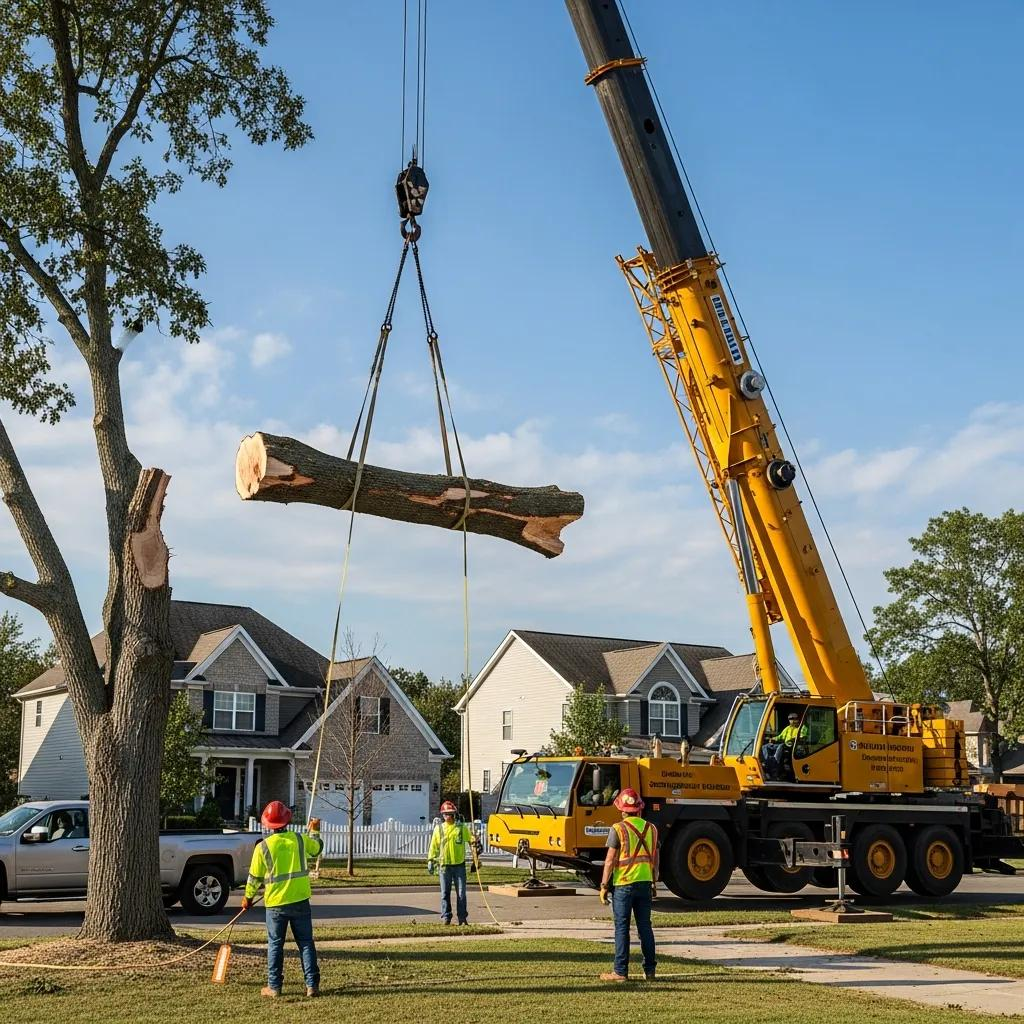
Crane-assisted removal uses a mobile crane and purpose-built rigging to lift cut sections of large or hazardous trees away from structures and drop them to a safe landing area. The operation combines the arborist’s inspection, the crane operator’s lift plan, and rigging gear—slings, shackles, and choker lines—so heavy pieces are supported by the crane boom instead of relying entirely on ground ropes. That control lowers the chance of branches swinging into roofs or power lines and makes it possible to work in tight yards or near fragile features. Because tight coordination is essential, certified arborists, the crane operator, and the rigging crew must work together. If you’re a homeowner or property manager facing a complex removal, knowing the staged process helps set clear expectations for time, cost, and site access.
The typical crane-assisted removal sequence looks like this:
- Site assessment and removal plan are completed, including utility checks and any permit reviews.
- Crane placement and outrigger setup establish a safe lift footprint.
- The arborist and rigging crew section the crown, attach slings, and the crane lifts each piece away.
- Cut sections are lowered to the ground for cleanup, stump work, and hauling.
That stepwise flow prioritizes safety and control and leads into a closer look at how cranes make lifts safer and the role certified arborists play on site.
How Do Cranes Facilitate Safe Removal of Large and Hazardous Trees?
Cranes keep heavy sections from depending on weak branches or complex ground rigging by carrying the load on the boom and lowering pieces precisely to a safe spot. Rigging hardware—slings, shackles, and choker lines—secures each cut section so it won’t swing or fall uncontrolled. In practical terms, a crane lets crews remove a compromised limb in one controlled lift instead of risking a rope-lowered drop that could fail. That mechanical control is why crane-assisted removal is often the safest choice for very large or structurally unsound trees, especially where roofs, fences, or utilities are close by.
Because the crane changes how loads are managed, the certified arborist’s assessment and cut sequence become the job’s central safety plan.
Who Are Certified Arborists and What Is Their Role in Crane Tree Removal?
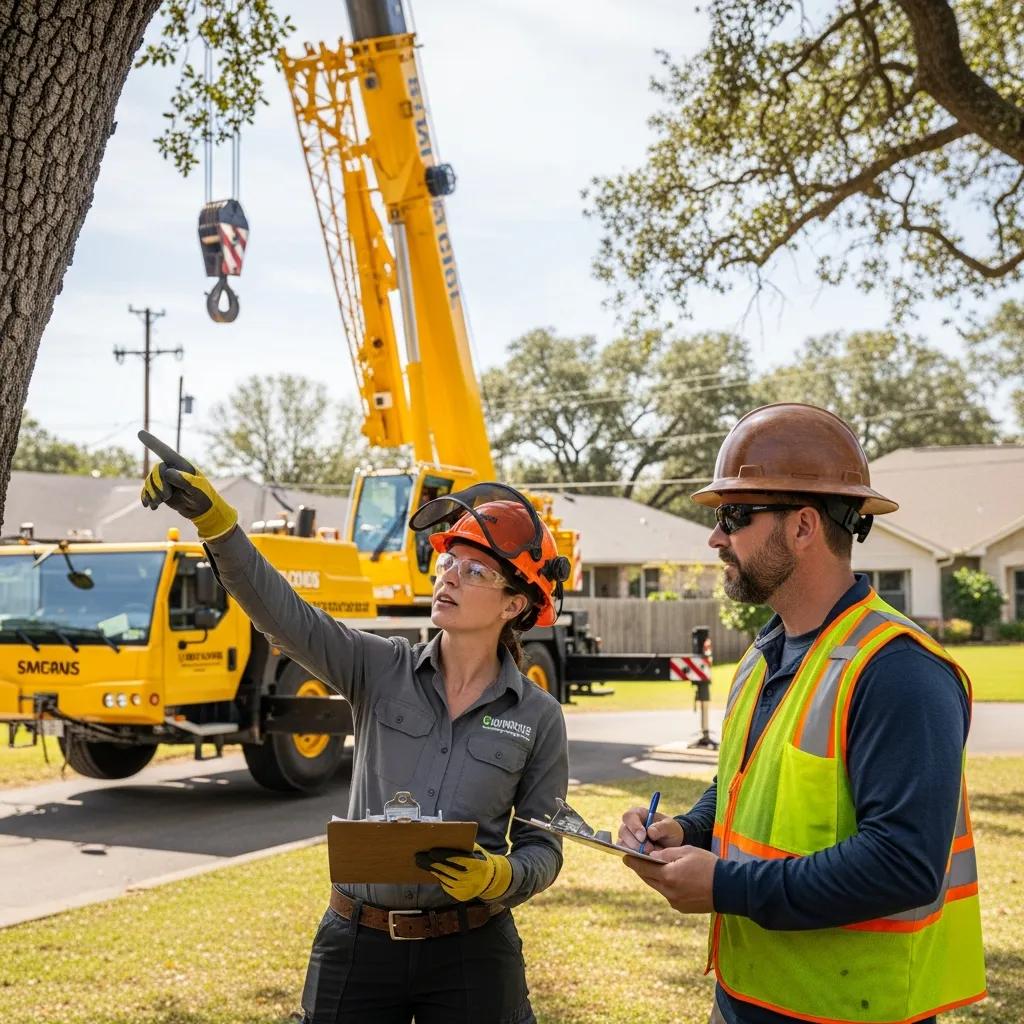
Certified arborists evaluate tree health and structural risk and create the removal plan that guides crane operations. They look for decay, trunk and root stability, and other failure indicators; specify where to section the crown; and pick safe rigging attachment points. On site, the arborist supervises cuts and coordinates timing with the crane operator and rigging crew. Their training lets them recommend alternatives—pruning, cabling, or full removal—based on objective risk factors. Because the arborist’s inspection informs crane placement and lift strategy, their input reduces uncertainty and keeps the team aligned with safety protocols and local regulations.
With that oversight in place, the team can move on to logistics and cost decisions that determine feasibility and final pricing.
How Much Does Crane Tree Removal Cost?
Crane tree removal costs vary widely based on tree size, access, complexity, and permit needs; jobs commonly range from several hundred dollars to several thousand for very large or complicated removals. The main cost drivers are tree height and trunk diameter, the difficulty of crane placement and outrigging, closeness to structures or utilities, and any permits, traffic control, or special hauling required. A simple way to compare pricing is with scenarios: an 80-foot oak next to a house needs more crane time and rigging than a 40-foot oak in an open yard, and that shows up in mobilization and hourly crane charges. Reputable companies itemize labor, crane mobilization and hours, rigging crew time, stump options, and disposal so you can see where costs concentrate. For the most accurate price, a free on-site assessment is often the best way to capture site-specific variables and avoid surprises.
Henry’s Tree Service provides free on-site estimates and detailed quotes that list crane fees, labor, and disposal choices so you can compare options. During an estimate we measure tree dimensions, note access constraints, and identify any utility coordination required, then package those details into a clear written quote with separate line items such as crane mobilization and debris hauling. That level of transparency makes it easier to weigh tradeoffs—partial crown removal versus full removal—and budget for permits or temporary protections. A solid estimate also sets expectations for mobilization timing and cleanup, which affects total cost and scheduling.
| Cost Factor | How It Affects Price | Typical Impact |
|---|---|---|
| Tree size (height/diameter) | Larger trees require bigger cranes and more lift cycles | High |
| Access & crane placement | Tight or awkward access raises setup time or needs a larger crane | High |
| Proximity to structures/utilities | Requires more rigging and slower, safer sectioning | Medium-High |
| Permits and traffic control | Adds administrative and operational expense | Medium |
When Is Crane Tree Removal Necessary?
Crane removal is chosen when a tree’s size, condition, or location makes conventional felling or ground rigging too risky or likely to damage property. Typical scenarios include very tall trees, trees leaning toward structures, storm-damaged specimens, and trees next to power lines. The decision balances risk to people and property, feasibility of alternatives, and whether crews can safely control sectioning without a crane. Many crews use height and trunk-diameter thresholds as a guide: trees above about 60–80 feet or with very large trunks often push the job toward crane use, especially in confined urban yards. Choosing a crane is a risk-management decision—higher equipment cost can mean less liability, quicker completion, and far lower chance of collateral damage. Talk with a certified arborist to compare crane-assisted removal with complex ground rigging or staged felling for your site.
- Trees over roughly 60–80 feet where falling large sections could hit structures.
- Trees with heavy lean, internal decay, or unstable root plates that raise the chance of unpredictable failure.
- Trees in small lots, on steep slopes, or on rooftops where ground crews can’t safely control large sections.
- Trees immediately adjacent to critical utilities or historic structures that cannot tolerate impact.
Those situations show why the arborist’s hazard assessment—looking for decay, dieback, or root damage—determines urgency and the best removal method.
Which Large Trees Require Crane-Assisted Removal?
Trees most often needing crane removal are those beyond practical felling heights or with species and trunk sizes that make manual lowering unsafe. Thresholds depend on site specifics, but many crews flag trees around 60–80 feet tall or with very large diameters as candidates when structures are nearby. Species with long, heavy limbs or brittle wood add risk because cut pieces can be heavy and unpredictable; a crane reduces manual strain and prevents uncontrolled drops. Site context—limited equipment turnarounds, steep slopes, or soft ground—also affects the choice. A certified arborist evaluates species, structural defects, and access together to recommend crane-assisted removal when appropriate.
That size-and-species logic leads into how crews spot hazard signs that may require urgent crane work.
How Are Hazardous Trees Identified and Assessed for Crane Removal?
Arborists identify hazardous trees with a structured check for visible decay, lots of deadwood, a pronounced lean, damaged root plates, fungal fruiting bodies, or canopy dieback—signs that point to structural weakness and possible failure. Inspections are mostly non-destructive: visual surveys, sounding with a mallet, and checking for cavities or other indicators. The arborist then rates failure potential and likely fall paths relative to people and property, and recommends stabilization, cabling, pruning, or full removal. When uncontrolled failure is likely and exposure includes buildings or utilities, crane-assisted removal often becomes the safest option. Early identification lets crews plan and mobilize a crane on a schedule, which is safer and usually less costly than an emergency response.
A thorough assessment feeds directly into a safe removal plan and a reliable cost estimate during the site visit.
What Are the Benefits of Choosing Crane Tree Removal Services?
Crane removal offers measurable benefits in safety, property protection, efficiency, and access—making it the right choice for many complex jobs. The core advantage is controlled lifting: the crane reduces the chance of uncontrolled drops and lowers the risk of damage to roofs, fences, vehicles, and landscaping. Cranes also speed the job by letting crews remove larger sections in fewer cycles and by cutting down on time-consuming ground rigging, which can offset higher equipment fees with lower labor hours. For cramped yards, steep slopes, or tree work right next to buildings, a crane makes tasks possible that would otherwise be unsafe or impractical. Together, these factors translate to fewer repairs, fewer insurance claims, and faster cleanup—often a better economic choice when risk and complexity are high.
| Benefit | Measurable Outcome | Typical Result |
|---|---|---|
| Safety | Fewer uncontrolled drops and injuries | High reduction in risk |
| Property protection | Less collateral damage to roofs and landscaping | Significant savings |
| Efficiency | Shorter project hours and faster removal | Time saved |
| Access | Work in confined or steep sites made feasible | Task achievable |
Those outcomes help property owners weigh tradeoffs and plan the logistics for a safe crane removal.
How Does Crane Removal Enhance Safety and Minimize Property Damage?
With crane-assisted work, heavy sections are supported during cutting and lowered to a controlled landing area, so large branches don’t hit structures or trigger cascading failures. Controlled lifts mean less ground disturbance than felling with extensive rigging, protecting roots, hardscapes, and lawns. Close coordination between the arborist and crane operator keeps the cut sequence stable and places rigging where it won’t split wood or create unexpected loads. Since the crane carries most of the weight, ground crews guide and secure pieces instead of managing heavy lowering lines—reducing worker injury risk. Combined, these practices produce measurable drops in property damage and crew liability.
Those safety advantages pair naturally with the efficiency and access benefits cranes provide on difficult sites.
In What Ways Does Crane Use Improve Efficiency and Access in Difficult Locations?
Cranes speed removal by letting crews take larger pieces down in fewer lifts and by shrinking the need for complex ground rigging or manual lowering, which shortens overall job time. In tight backyards, on steep slopes, or where vehicles and utilities limit ground work, a crane’s reach and load control let teams do jobs that would otherwise need extensive staging or temporary removals. Time savings from crane lifts often balance higher hourly crane rates because labor hours, traffic control, and site protection are reduced. For commercial work or time-sensitive residential projects, predictable crane cycles and quick debris handling improve throughput and limit neighborhood disruption. That efficiency makes crane-assisted removal the practical choice when access constraints would make manual methods slow or unsafe.
Because of these benefits, clients often ask how crews respond in emergencies after storms or sudden hazards.
To schedule an assessment, property owners can contact Henry’s Tree Service online to arrange a site visit and quote.
How Is Emergency Crane Tree Removal Handled?
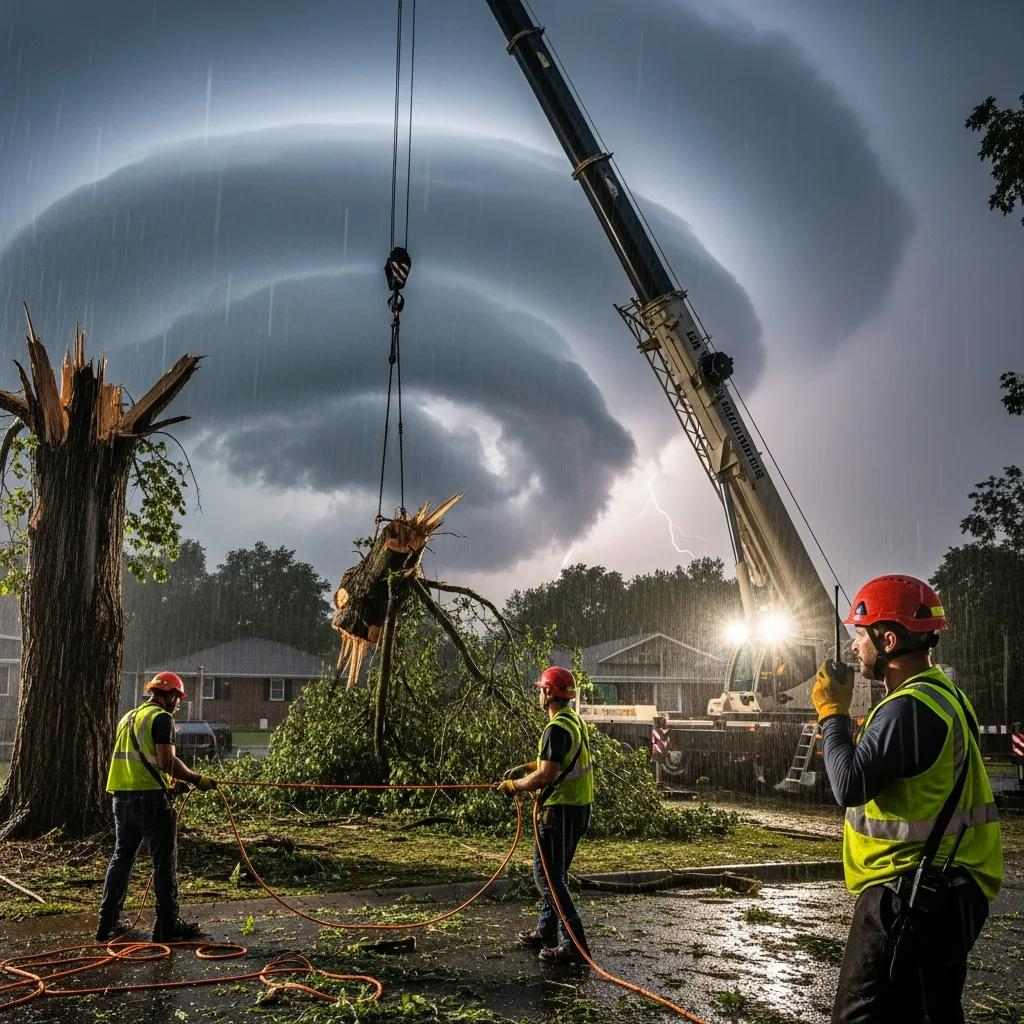
Emergency crane removal follows a triage-first workflow: identify immediate dangers, stabilize the site, then mobilize the right crane and crew as quickly as safety allows. First, crews do a rapid risk assessment to spot imminent threats such as hanging limbs, utility strikes, or unstable trees near structures. Teams apply temporary stabilization—ropes, bracing, or limited pruning—while coordinating with utility companies if power lines are involved. Once the site is temporarily secure, the crane is positioned and lifts are sequenced to remove the most dangerous elements in a controlled way, followed by fast debris clearance to reopen access. Response time depends on crane availability, permit or utility coordination, and access, but safety is always the top priority.
- Emergency call and rapid triage to identify immediate hazards.
- Mobilize crew and crane with temporary stabilization as needed.
- Controlled sectioning and crane lifts remove the most dangerous elements.
- Clear debris and stabilize the site for safe re-entry.
What Are the Procedures for 24/7 Emergency Crane Tree Removal?
Round‑the‑clock emergency response follows a clear sequence: intake, triage, temporary stabilization, mobilization, and removal sequencing. Intake captures the location, hazard type, and any utility impacts; triage decides if the situation needs immediate public-safety action or can wait for scheduled removal. Stabilization may include short-term bracing, ropes, or securing dangling limbs until the crane arrives. Mobilization timing depends on crane availability and site access, and crews focus first on the sections that pose the greatest risk. Throughout, crews communicate with property owners and utility companies to ensure safety steps—like de‑energizing lines—are in place before full removal begins.
Emergency work differs from planned storm cleanups in priority and logistics, which is discussed next.
How Does Crane Removal Address Storm-Damaged and Dangerous Trees?
Storm damage brings extra hazards—shifting loads, broken root plates, and soaked soils—that make crane control especially valuable. Crews account for unstable ground when setting outriggers, a higher chance of hidden defects, and possible interference from debris or emergency vehicles. Utility and road authorities often need urgent coordination, and priorities shift to reopen lanes and remove life‑safety threats quickly. Crews may stage temporary lowerings to clear access for emergency services before completing full removals. Although storm response requires more coordination and resources, crane-assisted work directly reduces the most dangerous outcomes by enabling controlled removal of compromised sections without relying on uncertain ground anchors or manual lowering.
How Do Crane Tree Removal Services Manage Trees Near Power Lines and Structures?
Work near power lines and buildings requires close coordination with utility providers, strict separation distances, and physical protections to prevent accidental contact or property harm. The process starts with notification and, when necessary, de-energizing lines or scheduling certified line‑clearance crews to work with the crane team. Crane lifts near utilities use insulated practices and planned standoff distances; rigging paths are chosen to avoid pendulum effects. Near buildings, crews plan outrigger placement with cribbing and pads, pad sensitive surfaces, and sequence cuts so sections are lowered away from facades. Responsibility is shared: the arborist identifies hazards and sequences cuts, the crane operator controls the lift, and utility crews manage live-line safety when required.
This kind of coordinated approach reduces long-term costs and improves safety when removing hazardous trees near critical infrastructure.
Cost-Benefit Analysis for Hazardous Tree Removal Near Utilities
This pilot project examined the challenge of large, city-owned trees that posed risks to reliable electric service and were costly to trim to required clearances. The study had two main aims: 1) test whether a coordinated tree removal and replanting program between the city and the electric company was operationally feasible; and 2) determine whether the electric company’s participation could be cost justified.
Assessing the feasibility of collaborative utility-municipal tree removal and replanting, 1994
| Safety Task | Responsible Party | Typical Action |
|---|---|---|
| Utility coordination | Utility provider / line-clearance crew | De-energize or provide insulated work support |
| Lift planning & separation | Crane operator & arborist | Define standoff distances and lift paths |
| Ground protection | Crane rigging crew | Use cribbing, pads, and soft-paths for outriggers |
| Structural protection | Arborist & removal crew | Sequence cuts to lower sections away from buildings |
What Safety Measures Are Taken When Removing Trees Close to Power Lines?
Work near power lines always begins with formal utility notification and, when needed, de‑energizing the line or bringing in qualified line‑clearance personnel. Crews maintain strict separation distances during lifts; when de‑energizing isn’t possible they use insulated rigging and follow special safety protocols only trained line crews should perform. The arborist and crane operator plan lift vectors together to avoid any chance of contact, and spotters watch clearances during every lift. Crews won’t proceed without documented utility arrangements and a site‑specific safety plan that covers electrical and structural hazards.
How Is Property Protection Ensured During Crane Tree Removal Near Buildings?
Protecting property during crane work combines physical barriers, outrigger cribbing, protective padding, and careful cut sequencing to avoid impacts on facades, roofs, and landscaping. Crews lay temporary soft-paths over lawns, place boards over fragile hardscapes, and set exclusion zones to keep bystanders out. Outrigger pads spread crane loads to protect underground utilities and soft ground, and controlled lowering keeps sections from swinging toward structures. The arborist’s cut sequence removes highest-risk pieces first and always provides a predictable load path for the crane. Together these measures reduce collateral damage and help preserve valuable landscape and structural elements during complex removals.
With these safeguards in place, crews can plan and execute safe, effective crane-assisted removals for large and hazardous trees.
Frequently Asked Questions
What types of trees are most commonly removed using crane-assisted methods?
We use cranes mainly for large trees that exceed safe felling heights—often those over 60–80 feet—or trees with big trunk diameters. Species with heavy limbs or brittle wood also favor crane work because sectioned pieces can be heavy and unpredictable. Trees in tight spaces, near structures, or showing decay or instability are also prime candidates for crane-assisted removal since the method allows a safer, more controlled extraction.
How can property owners prepare for a crane tree removal service?
Prepare by clearing access for the crane and crew—move vehicles, garden furniture, and other obstacles—and let neighbors know about possible disruption. Check whether local permits are needed and flag any nearby utilities so we can coordinate. Ask the arborist about timeline expectations and any temporary protections you should set up; a clear site makes the job faster and safer.
What should I expect during the crane tree removal process?
Expect a structured sequence: a site assessment, crane placement and rigging setup, then the arborist sections the tree and the crane lifts each piece to a safe landing area. Crews will clean up sections and manage the stump and debris according to your chosen options. Safety protocols and crew communication are maintained throughout to keep the work controlled and efficient.
Are there any risks associated with crane tree removal?
Cranes reduce many risks but don’t eliminate them entirely. Potential hazards include equipment failure, miscommunication, and unseen structural defects in the tree. Certified arborists and experienced crane operators assess risks and put safety measures in place—proper rigging, lift planning, and clear communication—to minimize those dangers. Working with a licensed, insured company further reduces your exposure.
How does crane tree removal compare to traditional methods?
Crane removal gives precise lifting and lowering, greatly reducing the chance of uncontrolled falls and property damage. It also lets crews access difficult locations where ground-based methods would be unsafe. While equipment costs are higher, the safety and time savings often lead to lower overall project costs and less liability for property owners.
What factors influence the cost of crane tree removal services?
Costs depend on tree size and condition, site accessibility, and job complexity. Taller trees and larger diameters require more crane time and heavier rigging, raising costs. Tight proximity to buildings or utilities increases planning and execution time. A detailed, on-site estimate will clarify which factors affect your price.
How can I find a qualified crane tree removal service?
Look for local companies with certified arborists, solid reviews, and clear, written estimates. Free on-site assessments, transparent pricing, proper licensing, and insurance are key. Ask for referrals from neighbors or check recent project photos to confirm experience with crane-assisted removals.