
When to Remove a Tree: 10 Warning Signs You Shouldn't Ignore
Trees add shade, value, and beauty to a property, but they can also become serious hazards when health or structure fails.
This article explains what “removal-worthy” means, why delaying action increases risk, and how to recognize ten clear warning signs that often indicate removal is the safest choice. You will learn practical identification tips, short homeowner checks you can perform, criteria for when to call a professional arborist, and how removal costs compare with potential property damage. The guide also covers preventative maintenance to extend tree health and reduce future risk.
Throughout, targeted phrases like when to remove a tree, signs a tree needs to be removed, and dangerous tree warning signs are used to help you find and act on critical problems quickly.
Read on to gain a step-by-step checklist and decision framework so you can protect people, structures, and landscape value with confidence.
Why Is Early Detection of Tree Problems Essential?
Early detection means spotting structural or health decline before a tree causes injury or damage. Detecting problems early reduces the chance of falling limbs, trunk failure, and root destabilization, and it makes any corrective work simpler and less costly. Rapid identification also limits disease and pest spread to neighboring trees, preserving overall landscape health and lowering long-term maintenance expenses. Homeowners who act early can often choose targeted pruning or treatment instead of full removal, while waiting increases the likelihood of emergency removal and property claims.
While the potential for harm is a serious consideration, research indicates that the overall risk of injury or fatality from trees remains relatively low.
Assessing Tree Harm Likelihood & Property Damage Risk
An important aspect of tree management is to assess the likelihood of a tree causing harm (e.g., injury, death, property damage, disruption of activities). In recent years, the potential for trees to cause harm has been highlighted by elevated media coverage of tree caused injuries or fatalities. The reality, however, is that the risk of being killed or injured by a tree is extremely low.
Review of QTRA and risk-based cost-benefit assessment of tree management, MG Stewart, 2013
How tree health links to safety becomes clearer when we look at specific mechanisms of failure and the benefits of timely action.
How Does Tree Health Affect Property Safety?
Tree health directly affects property safety because weakened parts—branches, trunk, or roots—are the usual points of failure. A decayed trunk can fail under wind load and send large sections onto roofs, vehicles, or people, while compromised roots can allow whole-tree overturning during storms. Simple visual indicators such as progressive crown dieback, wide trunk cracks, or heaved soil at the root flare usually signal structural compromise. If you spot these signs, restrict access near the tree and document the condition for an arborist; timely assessment often prevents costly structural repairs and lowers personal injury risk.
Watching for early signs naturally leads to understanding the benefits of timely removal when problems are serious.
What Are the Benefits of Timely Tree Removal?
Timely removal reduces immediate risk to people and property by eliminating unstable biomass before it fails. Removing a hazardous tree before it causes damage can be far less expensive than repairing a roof, replacing a fence, or dealing with an insurance claim after a collapse. Prompt removal also controls sources of disease or pests that might spread to adjacent trees, protecting landscape value and long-term canopy health. Additionally, planned removal allows for safer, more efficient work—contractors can schedule equipment and traffic control rather than responding to an emergency—and often improves property aesthetics and resale appeal when performed with a clear remediation plan.
These benefits highlight why recognizing warning signs early matters; next we present a detailed checklist of the ten most important signs to watch for.
What Are the 10 Warning Signs Your Tree Needs Removal?
Below is a numbered checklist of the ten warning signs that commonly indicate removal is warranted. Each entry explains how to identify the issue and the homeowner’s recommended next step.
- Dead or dying branches: Look for leafless or brittle branches in season and snapped limbs; prune isolated dead wood but consult an arborist when large scaffold limbs are affected.
- Cracks or splits in the trunk: Vertical or seam-like splits that expose wood often mean internal decay; schedule a professional assessment if cracks are deep.
- Progressive leaning: A sudden or increasing lean, especially after a storm, can indicate root or soil failure; safety assessment is needed.
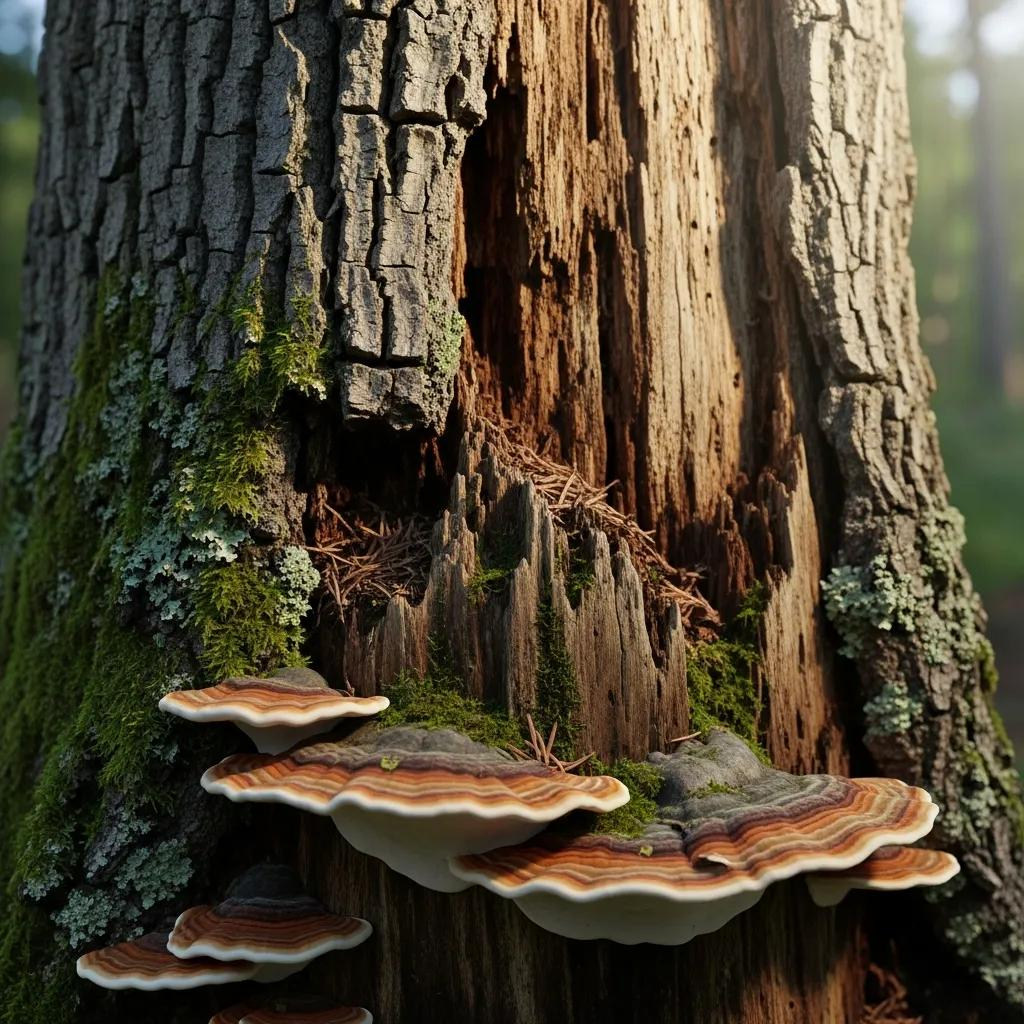
- Fungal growth at the base: Fruiting bodies and conks reveal internal rot; significant fungal colonization often leads to removal.
- Root damage or exposure: Erosion or construction damage that exposes roots reduces anchorage and raises failure risk; remediation may not suffice.
- Hollow or soft trunk: Large cavities or soft wood weaken load-bearing capacity; hollow trunks with significant load above typically require removal.
Advanced tools like ultrasonic tomography can provide precise insights into internal decay, helping arborists make informed decisions about structural integrity.
Ultrasonic Tomography for Tree Decay Detection
Ultrasonic tomography demonstrated to be a very effective tool for the detection of internal decay, accurately locating the position of the anomalies and estimating their size, shape, and characteristic in terms of mechanical properties.
Application and comparison of three tomographic techniques for detection of decay in trees, LV Socco, 2003
- Pest infestation signs: Exit holes, frass, and canopy thinness indicate destructive pests; severe infestations can necessitate removal to stop spread.
- Significant storm damage: Split crowns, root lift, or extensive limb loss after storms can create irreparable structural weakness; emergency removal may be necessary.
- Proximity to structures or power lines: Trees encroaching on roofs, foundations, or utilities pose ongoing risk; removal may be safer than repeated aggressive pruning.
- Overall decline or advanced age: Continuous crown thinning, repeated dieback, or species-specific lifespan limits justify proactive removal to avoid sudden failure.
This checklist serves as a rapid reference; the table below pairs each warning sign with key homeowner actions for quick scanning.
| Warning Sign | Key Indicators | Recommended Action |
|---|---|---|
| Dead or dying branches | Leafless limbs in season, brittle wood, snapped branches | Prune minor deadwood; consult arborist for scaffold limb death |
| Trunk cracks or splits | Vertical seams, deep fissures, sap flow | Immediate professional assessment; restrict nearby access |
| Leaning tree | Recent increase in lean, rootplate lift | Emergency safety evaluation; likely removal if progressive |
| Fungal growth at base | Mushrooms, conks, bracket fungi | Arborist inspection for internal decay; removal if advanced |
| Root damage/exposure | Exposed roots, soil heave, trenching nearby | Assess root loss; removal if anchorage compromised |
| Hollow/soft trunk | Cavities, dull percussion sound | Structural assessment; removal when strength is insufficient |
| Pest infestation | Exit holes, frass, canopy dieback | Targeted treatment for minor cases; removal if widespread |
| Storm damage | Broken crown, split trunk, root uproot | Emergency pruning or removal based on structural integrity |
| Proximity to structures | Overhang, root pressure on foundation, utility conflict | Prune when possible; remove when clearance unattainable |
| Overall decline/age | Thin crown, repeated dieback, slow recovery | Risk-based removal planning to prevent failures |
This table helps you match visible signs to practical next steps; the following sections explain each sign in more detail so you can perform basic checks and decide when to escalate to professional help.
1. How to Identify Dead or Dying Branches
Dead or dying branches stand out because they fail to leaf out during the growing season and snap easily when bent. Conduct a scratch test on small branches—green cambium under bark indicates life; dry, brown tissue indicates death. Isolated dead branches can be pruned safely by homeowners if small and accessible, but widespread limb death or dead scaffold limbs near structures require an arborist. Removing large dead branches reduces immediate falling hazards and prevents further canopy decline, so document the extent of dieback and monitor progression after pruning.
2. What Do Cracks or Splits in the Trunk Indicate?
Cracks and splits are signs of mechanical or internal failure; shallow fissures may be superficial, but deep vertical seams often expose decay that compromises trunk strength. Horizontal splits or longitudinal seams can indicate internal rot or failure of the tree’s heartwood. If you observe fresh sap flow from a crack or pieces of bark separating widely, restrict the area beneath the tree and seek a professional evaluation. An arborist will assess whether bracing, selective pruning, or removal is the safest option based on structural integrity and defect extent.
3. How to Recognize a Leaning Tree and Its Risks
Some trees grow with a natural lean, but a recent or increasing lean—especially after soil disturbance or a storm—is a red flag for root system failure. Signs of root problems include lifted soil, visible root plate movement, or tilting that worsens over weeks. A tree that suddenly leans more after wind or rain likely has compromised anchorage and poses a falling risk. When leaning coincides with other defects like root loss or trunk cracks, arrange a prompt arborist inspection to evaluate removal necessity and safe mitigation options.
4. Why Is Fungal Growth Around the Base a Warning Sign?
Fungal fruiting bodies—mushrooms, brackets, or conks—often indicate internal wood decay because fungi decompose heartwood and root tissue. Presence of multiple or perennial fruiting bodies at the base typically means advanced internal rot, reducing the tree’s load-bearing capacity. Since internal decay can be invisible externally, any significant fungal growth warrants professional assessment. In many cases where decay is extensive, removal is the recommended choice to prevent sudden trunk or limb failure and to stop pathogen spread.
5. What Does Root Damage or Exposure Mean for Tree Health?
Root damage from erosion, construction, or trenching reduces a tree’s ability to anchor and absorb water and nutrients, creating both stability and vitality problems. Exposed or severed roots accelerate decline and increase the chance of uprooting in storms. Look for uplifted root plates, soil washout around the trunk, or nearby ground-level construction as indicators. When root loss is large or the root flare is compromised, mitigation is often unreliable and removal becomes the safer long-term solution.
6. How to Detect a Hollow or Soft Trunk
A hollow or soft trunk indicates that internal wood has decayed, which decreases the tree’s capacity to support vertical and lateral loads. Perform a gentle percussion test—hollow sounds or dull thuds suggest cavities—then examine for large wounds, cavities, or excessive wood loss. While some hollows coexist with healthy crowns, cavities under heavy canopy loads increase collapse risk. When hollowing affects the main stem or multiple scaffold attachments, professional removal is typically advised to eliminate the chance of sudden failure.
7. What Are the Signs of Pest Infestation?
Pest infestations reveal themselves through exit holes, sawdust-like frass at the trunk base, epicormic shoots, or rapid canopy thinning. Certain pests can cause structural tunneling that weakens branches and trunks quickly, turning a previously stable tree into a public hazard. Early detection may allow targeted treatment, but when infestation is widespread or combined with other defects, removal can prevent spread to nearby trees. Monitor for unexplained dieback and consult an arborist to identify the pest and evaluate treatment versus removal.
8. How Does Storm Damage Affect Tree Stability?
Storm damage ranges from minor limb loss to catastrophic trunk splits or root uprooting, and the repairability depends on the extent and location of the damage. Broken leaders, a shattered crown, or a split trunk often mean permanent structural weakening, while isolated branch loss can be pruned. After major storms, prioritize trees with compromised trunks, exposed roots, or branches hanging over structures for emergency assessment. If structural integrity cannot be restored through pruning and bracing, removal prevents further emergency situations.
9. Why Is Proximity to Structures or Power Lines a Concern?
Trees growing too close to homes, garages, foundations, or power lines pose persistent hazards because even normal limb failure can cause severe damage in constrained spaces. Clearance standards vary, but when repeated pruning would be required to maintain safety or when root systems threaten foundations or underground utilities, removal may be the best option. For trees near power lines, coordinate with utility providers before any work; when proximity creates unavoidable risk, removal by professionals trained to work near utilities is the safer course.
10. How Does Overall Decline or Age Signal Removal Need?
Chronic decline—manifested as reduced canopy density, repeated dieback, and slowed recovery after stress—often signals systemic issues that will eventually increase failure risk. Advanced age in combination with chronic decline typically reduces the benefit-to-risk ratio of preservation efforts. When a tree shows ongoing deterioration despite treatment, planning removal proactively avoids emergency removal costs and reduces the chance of sudden failure. Consider removal when the aggregate signs indicate a low likelihood of meaningful recovery.
When Should You Call a Professional Arborist for Tree Removal?
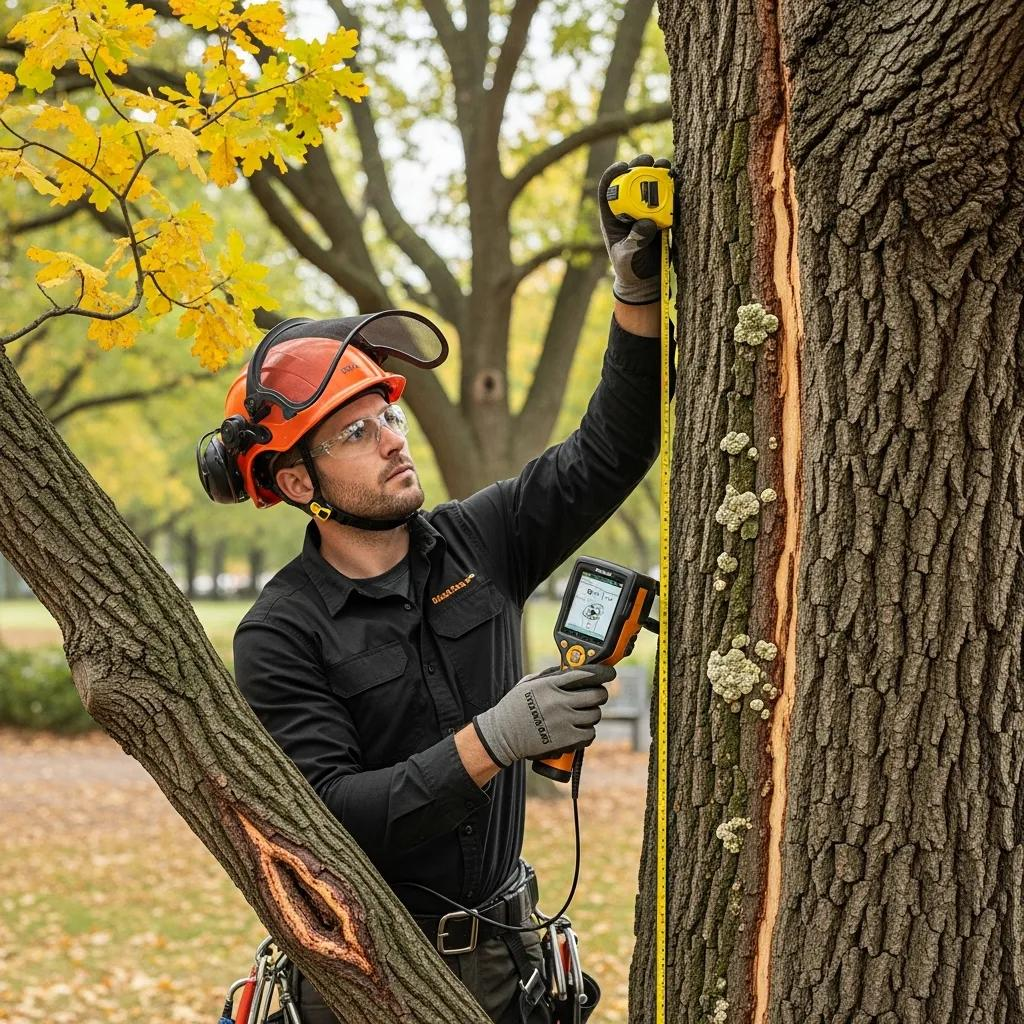
Call a professional arborist whenever the tree poses a safety risk you cannot control safely, when removal complexity is high, or when disease/pest spread threatens other trees. Certified arborists evaluate structural integrity, root stability, and disease progression and provide risk-rated recommendations that balance safety, cost, and landscape value. An expert assessment is the right step when defects are near structures, utilities, or public areas where consequences of failure are significant.
An arborist’s assessment often includes an inspection report and a recommended action plan; knowing what to expect helps you prepare for the next steps.
What Qualifications Should a Certified Arborist Have?
A qualified arborist should hold recognized credentials, be insured for liability, and be experienced with the local species and risk scenarios. Relevant qualifications typically include certification from a professional arboriculture body such as the International Society of Arboriculture (ISA) and proof of insurance for property and workers. Ask for references for similar jobs, inquire about safety procedures for working near structures and utilities, and confirm the arborist’s approach to waste removal and site cleanup. These checks ensure the provider can perform complex removals safely and provide documentation if needed for insurance.
Knowing credentials prepares you for the assessment process and clarifies expectations for safety and quality.
How Does an Arborist Assess Tree Health and Removal Necessity?
An arborist assesses tree health using a systematic process: visual crown inspection, trunk and bark examination, percussion or sounding tests, root flare and soil evaluation, and detection of fungal fruiting bodies or pest signs. They then rate risk by combining defect severity, target value (people/structures under the tree), and probability of failure to recommend pruning, treatment, monitoring, or removal. The arborist documents findings with photos and a written recommendation, which helps homeowners compare options and obtain reliable quotes for any required removal.
Arborists employ systematic methods for risk assessment, acknowledging that the perception and management of these risks can vary.
Tree Failure Risks: Property Damage & Public Safety
In the presence of a target, tree failures have the potential to damage property, disrupt services, or threaten public safety. Worldwide, several qualitative methods have been developed to provide a systematic approach for tree risk assessment and management. The consistency and accuracy of these methods, the values placed on the tree in question and its potential targets, and the risk perceptions and levels of acceptance of the evaluator and tree owner all influence how risk is managed.
Risk assessment and risk perception of trees: A review of literature relating to arboriculture and urban forestry, RW Klein, 2019
This assessment framework ensures decisions are evidence-based and aligned with safety priorities. For homeowners seeking professional help, Henry’s Tree Service provides arborist consultation, risk assessments, and emergency removal services tailored to these criteria, emphasizing safe removal, protection of property, and clear next steps.
What Are the Costs and Considerations of Tree Removal?
Understanding cost drivers helps homeowners compare the price of removal to the potential cost of property damage. Tree removal pricing varies with size, location, access, and hazard level; complex removals near structures or utilities require extra labor and equipment, which increases cost. When balanced against repair bills for roofs, fences, or vehicles after a failure, proactive removal often represents sound risk management. Below is a table that compares common cost drivers and why they influence final estimates.
Different factors change both risk and complexity, so consider how each applies to your property before accepting a quote.
| Tree Size / Location | Typical Cost Range | Risk / Removal Complexity |
|---|---|---|
| Small, accessible | Lower | Low complexity; homeowner-accessible pruning and small removals |
| Medium, near structures | Medium | Requires careful sectional removal; higher labor/time |
| Large, over structures/utilities | Higher | High complexity; may need cranes, traffic control, specialist crew |
| Storm-damaged or hazardous | Variable (often higher) | Emergency response, stabilization, and safe removal increase cost |
- Tree height and diameter directly increase labor and equipment needs.
- Accessibility and proximity to structures or power lines alter safety procedures and may require special equipment.
- Presence of decay, pest infestation, or storm damage increases time and disposal requirements.
After evaluating these variables, homeowners should request written estimates that describe scope, cleanup, and liability coverage. Henry’s Tree Service can provide site-specific estimates and explain how tree size, location, and hazard level affect pricing, helping you weigh removal cost against the potential financial exposure from a failure.
How Does Tree Removal Cost Compare to Potential Property Damage?
Comparing removal cost to potential damage clarifies the return on proactive action: while removal has an upfront expense, repair bills for a collapsed tree can be multiples higher when factoring structure repair, interior damage, temporary housing, and liability. Studies indicate that tree-related property damage claims often exceed the cost of preventive removal in high-risk scenarios, particularly when trees are large or near structures. Use that perspective to assess whether the risk justifies removal now versus the chance of emergency costs later; an arborist estimate tailored to your property provides the data you need to decide.
What Factors Influence Tree Removal Pricing?
Removal quotes vary for many reasons; a clear checklist helps you compare apples to apples when soliciting bids. Factors include tree species and weight (wood density), height and trunk diameter, site access and proximity to power lines, need for cranes or traffic control, disposal volume, and regulatory permits where required. Seasonal constraints and emergency response needs can further raise costs. When getting multiple estimates, ensure each includes the same scope of work, cleanup expectations, and proof of insurance to make informed comparisons.
A consistent checklist lets you evaluate quotes objectively and choose a provider based on safety, transparency, and value rather than price alone.
How Can You Prevent Tree Problems and Extend Tree Health?
Prevention and routine care are the most cost-effective ways to reduce future removal needs. Regular inspections, proper pruning, root and soil management, and prompt treatment for pests and disease keep trees structurally sound and resilient to storms. Implementing a seasonal maintenance plan and tracking tree health over time allows early interventions that preserve canopy value while minimizing safety risks. These practices support long-term landscape health and can delay or eliminate the need for removal in many cases.
Maintaining trees well naturally leads to specific maintenance practices homeowners can follow or delegate to professionals.
What Maintenance Practices Promote Tree Longevity?
Key maintenance practices include routine structural pruning to remove crossing limbs and reduce wind sail, correct mulching to protect root flare and retain soil moisture, targeted watering during drought, and avoiding soil compaction or root damage from construction. Pruning frequency depends on species and growth rate, but a visual inspection annually or after severe weather helps identify needed work. Homeowners should perform small, safe pruning tasks but turn to professionals for large cuts, high branches, or work near structures. These practices reduce failure risk and extend useful life.
Consistent maintenance also makes professional assessments more effective, as documented histories reveal trends and responses to past interventions.
How Does Regular Tree Health Assessment Help?
Regular professional assessments—annually or after major storms—catch subtle decline before it becomes an emergency and create a maintenance record useful for long-term decisions. An arborist can detect early pest infestations, root issues, and structural defects that are easy to miss during casual observation, and they provide prioritized recommendations to manage risk cost-effectively. Keeping a simple log of inspections, treatments, and major events supports better decision-making and can reduce insurance disputes after incidents. For homeowners seeking comprehensive support, Henry’s Tree Service offers arborist consultations and tree health assessments that document condition, risk, and recommended actions to protect property and people.
These preventative steps close the loop between ongoing care and strategic removal planning, helping you keep the landscape safe and sustainable.